A goal

Political party heuristics

There’s only so much time in the day.  After working, spending time with your family, and doing whatever you do to relax, there’s simply not that much time to be able to pay attention to politics, unless you really care.  We use heuristics to help explain the world and how we interact with various policies.  That’s one of the major benefits of having a political party used for an identity.  If you do identify with a particular political party, you can rely on how your political party reacts to a particular set of policies before you decide how you feel.  For the most part, that works wonders.  You have a way to decide on policies that is particularly quick and easy to recite.

When a politician or a political party talking head talks about a particular issue, you can immediately agree or disagree with them as soon as you know their political affiliation.  We trust that only those who agree with us are the ones telling us the truth.  The ones that aren’t a member of our political party are practicing ways to deceive us and we are the ones who are smart enough to see through it.

This is a part of our cognitive biases at work.  The most prevalent one is confirmation bias.   Confirmation bias leads you to look for and notice information that confirms your original beliefs and discount or ignore information that contradicts our previously held views.  This especially holds true for beliefs that we haven’t researched thoroughly.  We will talk about this later.  Another cognitive bias that is prominent in reading and understanding politics is negativity bias.  This is an evolutionary trait that has helped us avoid predators.  In our brains, we prioritize bad or negative news over the positive outcomes.  For instance, the other day Amanda found bugs in her uncooked pasta similar to the ones that are found in flour.  I was eating a different pasta but I had to check every single noodle to make sure there wasn’t a bug there.  Consequently, I didn’t like the pasta very much.

These biases are particularly powerful.  They can convince us of things that didn’t actually happen.  The stimulus bill that was passed in 2009 contained almost $300 billion in tax reductions.  The nonpartisan Tax Policy Center found that 96.9% of households enjoyed a tax cut of an average of $1,200.  One of the larger tax credits was the Making Work Pay tax credit, it was designed for less tax to be withheld from people’s paychecks because the evidence suggested that more people would spend this tax cut rather than saving it.  The idea was to stimulate the economy.  Other portions of the tax cuts was to extend the Alternative Minimum Tax and to increase the Earned Income Tax Credit (EITC).  In 2008, George W. Bush proposed a tax cut that was about half as large, ($145 billion), and issued a rebate check to households.  The problem with Obama’s tax credits is that nobody noticed.    The New York Times and CBS issued a poll that found that half of those polled said that they thought the taxes for most Americans had stayed the same, a third thought that their taxes had gone up, fewer than 10% said that taxes had been lowered, and about a tenth said they did not know.  During this same time, there was a tremendous push by Republicans saying that Obama was raising their taxes with hikes that didn’t materialize.

Or let’s give a more recent example. Public Policy Polling (PPP) recently did a poll of North Carolina and polled a number of statements by Republican nominee Donald Trump.  The poll asked if you viewed the video of Iran collecting money from the US that Trump claimed to have viewed.  47% of Trump supporters agreed that they viewed the video.  The video, of course, doesn’t exist.  Trump also admitted he had never seen the video. In that same poll, 40% of Trump supporters believe the defunct organization of ACORN will steal the election for Hillary Clinton.  It’s not to say that Republicans or Trump supporters are the only ones guilty of it.

Or if we want to see a better example of both negativity bias and confirmation bias in action we can look at social welfare programs.  For some people, they know someone who has taken advantage of a social welfare program such as Temporary Assistance for Needy Families (TANF).  Because they know of someone that took advantage of the system, they assume that most has taken advantage of it and that we should drug test those who receive welfare.  Despite that when they are implemented, 5% or less of welfare recipients fail drug tests that cost states money and suspicionless drug testing for welfare recipients has been ruled unconstitutional.

Political compromise

When I talk to other people about politics who don’t spend the majority of their personal time reading about politics or following politics outside of every four years for the Presidential election, they indicate to me their problem with government is that nothing seems to be happening with the federal government which is fairly true with the idea of passed and enacted laws.  According to a Gallup poll in 2013, 21% said that they are critical of Congress because they are not getting anything done.  Related to that is the idea held by 28% of those polled saying that they are critical due to party gridlock/bickering/not compromising.

During the years of 2009-2013 when Democrats controlled both the Senate and the White House, there were 307 motions to end a filibuster.  During the time period where Republicans held the White House under George W. Bush and the Senate, there were 130 motions to end a filibuster from January-May 2001 and January 2003-2007.  The filibuster is used by the minority party in Senate to halt legislation, appointments, etc. from passing the senate.  This requires 3/5 of the Senate to defeat each filibuster, or 60 votes.

I do believe that compromise is a good thing in politics.  I believe that having opposition to a party or a policy allows us to be able to view things in a new light.  It forces us to at least look at new evidence.  As we’ve seen, though, we do not necessarily embrace the new evidence.  It might lead us to ignore the evidence.  Perhaps the minority amendments to the bill would lead to actual reforms that help the bill.  It allows for progressive legislation to be shaped by a variety of voices and thoughts.  But most of the opposition that we’ve seen at this point is political grandstanding where one member holds up legislation to score political points.  Rarely, do we even see a talking filibuster.  And in the rare cases that we do see a talking filibuster, they are fun to watch but serve no real purpose.

Passing bills requires a large number of veto points in our Madisonian democracy.  Whether it is the subcommittee, the committee, the house where the bill originated, the house where it did not, the president, or the Supreme Court.  Progressive legislation is hard to come by.  It has to be able to pass each of these procedural hurdles (I am leaving some out, still).  Potentially each member of Congress (either house) can derail legislation from being passed.  It’s a wonder it hasn’t been so derailed before.

The typical response to this legislation is that we need to have outsiders to go to Washington to clean it up.  But this assumes that they have knowledge of how to write legislation, forge compromises, and to understand legislation.  Or maybe it doesn’t assume that, but this I believe necessitates more gridlock.

Where to go from here

I can’t change your mind.  If you are open to arguments that challenge your original beliefs, I may be able to give you some pause.  But if you believe that raising the minimum wage will destroy the economy and lose thousands  of jobs, my post about the minimum wage isn’t going to convince you otherwise.  If you don’t believe in progressive legislation, I’m not going to convince you otherwise.  If you believe that the death penalty is required to deter crime, I can’t convince you.  But I might be able to convince you that the death penalty is a drag on our state’s budget.  I might be able to convince you that we should think about the morality of those living in poverty and help them with a living wage.  I might be able to convince you that increasing the Earned Income Tax Credit helps lift people out of poverty, as well.

To quote Barack Obama:

We may not agree on abortion, but surely we can agree on reducing the number of unwanted pregnancies in this country. The reality of gun ownership may be different for hunters in rural Ohio than for those plagued by gang-violence in Cleveland, but don’t tell me we can’t uphold the Second Amendment while keeping AK-47s out of the hands of criminals. I know there are differences on same-sex marriage, but surely we can agree that our gay and lesbian brothers and sisters deserve to visit the person they love in the hospital and to live lives free of discrimination. Passions fly on immigration, but I don’t know anyone who benefits when a mother is separated from her infant child or an employer undercuts American wages by hiring illegal workers. This too is part of America’s promise – the promise of a democracy where we can find the strength and grace to bridge divides and unite in common effort.

In nearly every speech for the last 12 years, Obama has talked about the efforts to perfect our union.  This is an incrementalist approach to politics that if we take steps in the right direction, we can continually perfect this union that we have.  We might disagree on issues but there are steps that we can compromise.  You may not like the ACA but you certainly prefer that health insurance companies can’t discriminate based on pre-existing conditions.  You may not agree with any politician 100% about the policies that they are taking to make the country better but there are certainly useful allies across the aisles across political spectrums.  Instead of vilifying each other, instead of denigrating our opponents, we need to work together.

The founders wrote about the ways in which we can try to perfect our union and I believe we should continue.  We can’t continue this with one person dictating what is right or wrong or one party holding too much influence over our political lives.  What we need is healthy opposition, a way to challenge old beliefs, and work together to form new solutions.  That is my goal here to lay out what I believe should happen in policies and various politicians.

I certainly don’t believe that I hold all of the right answers.  I read a lot, I have worked with non-profits and members of Congress.  I am going to write about posts that interest me.  I believe in progressive legislation to help with a number of issues.  I’ll be honest and straightforward with what I believe and lay out the reasons for why I believe it.  I will back up my claims that I make with cites and links where I can.  If you disagree with me, that’s great.  Explain to me why you disagree.  I’m going to respect you enough to not just repeat talking points back at you why I support certain legislation and policies.  Have the same respect to me.  Don’t think that you can make unsubstantiated claims about politics without me arguing about it.  If you’re wrong, I’m going to tell you why you’re wrong.  If you think I’m wrong (and I certainly am some of the time) then explain why.  While we may have disagreements, I think we should work to find our common ground instead of focusing on the parts that we disagree about.



Yes, we built it; can we repair it? Pt. 16

Reagan’s tax reform did not make much sense at the time.  Most of the tax favors in his tax plans would help out the well-off.  He argued that he was defending the tax payer from what Barry Goldwater would call the Leviathan of government.  Perlstein writes in The Invisible Bridge of Reagan’s response:

Are we automatically destined to tax and spend, spend and tax indefinitely, until the people have nothing left of their earnings for themselves? Have we abandoned or forgotten the interests and well-being of the taxpayer whose toil makes government possible in the first place? Or is he to become a pawn in a deadly game of government monopoly whose only purpose is to serve the confiscatory appetites of runaway government spending?

California had a budget surplus at the time so it didn’t quite make sense.

During the 1973 energy crisis, there was some concern of various states running short of energy and having to go through drastic measures to keep it going.  Reagan would not have anything to do with it. Reagan decided to blame environmentalists for preventing California from building nuclear power plants.  Besides, he argued, the state wouldn’t be able to do a lot in the event of a fuel shortage.That was news to the head of the state government’s resources agency, Perlstein writes, the nuclear facilities weren’t being built because “their sites were on earthquake faults.”

Wednesday’s Washingtons

Of course, the big news of yesterday was that Donald Trump decided not to endorse Paul Ryan or John McCain in their primary battles that are upcoming.  Some are trying to frame it as a test on the anti-establishment mood of voters this election year.   Only one incumbent member of Congress has lost his primary and that was yesterday with Tim Huelskamp.  In Trump’s non-endorsement, he decided to parrot Paul Ryan’s words that were used when Ryan wasn’t ready to endorse Trump. Trump continues to think that the presidency is a way to settle old grudges and for vengeance.  If McCain or Ryan rescind their endorsement of Trump now, it will look like politics as usual.  My guess is they’ll wait for the next insane thing Trump says and try to weasel their way out then.  They shouldn’t have to wait long.

Ami Bera, like most Democratic congressional candidates are going after their Republican opponents for being silent on Donald Trump.

The ACLU of Southern California found that more than one-fifth of California charter schools have “discriminatory admission policies such as illegally excluding students for having low grades or requiring parents to donate money.”

Martha McSally and John McCain hit Trump hard on his comments about Khan.

New ad buys are in the competitive Senate elections of Ohio, Nevada, and Pennsylvania.

Tuesday’s Trumans

Sorry for taking the day off yesterday. I had two crowns put in and was not feeling up to it.

Jill Stein thinks that Wi-Fi might be hurting kids.  She also is teetering on anti-vax territory.  This leaves as the only Presidential candidate who thinks there should be mandatory vaccinations. Even if you think all of that is ok, her interview with Salon was just terrible. The views expressed in that interview are extremely troubling.  I get that you may not want to vote for either of the two major political party candidates; Jill Stein is not the answer.

The brilliant Scott Lemieux has the five worst Roberts court rulings.  Spoiler: Citizens United does not appear on the list. The more important campaign finance decision is still and will probably be forever Buckley v. Valeo.

Hillary Clinton made her first appearance post-convention in Omaha to #defendthedot or more succinctly wanted to poke a finger in Trump’s eye by having Warren Buffet talk about being rich. Brad Ashford decided not to attend.

Ted Strickland had to respond to Teamsters Union endorsing Rob Portman over him in the Ohio Senate race.

Loretta Sanchez, again, made comments that she probably should not have. She said that Barack Obama endorsed her opponent Kamala Harris because they’re both African-Americans. Due to jungle primaries, Sanchez and Harris are both Democrats facing each other in the general election.  More than half of the Republican backers of Donald Trump say that they will not vote in the Senate election.


Friday’s Fillibusters

We officially have a female candidate for President.  I know that one or two superdelegates may not have technically voted and that the ballots aren’t printed until closer to November but

onto the general election.

Donald Trump has called on the Russian hackers to get to Hillary’s 30,000 plus e-mails from her private server.

Speaking of Trump, it turns out he was against increasing social security before he was for increasing social security. Buzzfeed has surprisingly been invaluable on their research on Donald Trump.

Republicans are on the defensive in Indiana.  They’re trying to prevent Evan Bayh from taking a Senate seat.  This will prove to be one of the more expensive Senate races this year.

Barack Obama subtweeted Rahm Emanuel during his speech two nights ago.  Emanuel has been criticized for years.


Wednesday’s Washingtons

Donald Trump was asked about the federal minimum wage yesterday by Bill O’Reilly.  The transcript makes it seem like it’s an incoherent answer to the question.

The video doesn’t make it seem any better. I honestly have no idea what his answer means.  So CNN spins it as Trump wanting to raise the minimum wage to $10/hour.

The LAPD refuses to hand over documents about mapping Muslims in Los Angeles.  Muslim advocacy groups argue that their refusal is a violation of California public records law.

Pinal County in Arizona is under investigation for policing for profit and misusing RICO funds.  Sheriff Paul Babeu is under some fire for his role in misusing the fund.  Babeu’s spokesperson thinks that the investigation is purely political.

Florida Congressman Alan Grayson who is running for the Democratic nomination for Senate in Florida has been accused of abuse.  Following that report,  Grayson had a clash with Politico‘s reporter.    Harry Reid who has a bad relationship with Grayson said through a spokesperson that he didn’t think his opinion of Grayson could get any lower but it was.

Sean Maloney, who is New York’s first openly gay member of Congress, gave an interview to South Florida Gay News.  Maloney had this to say about the upcoming election:

This is why LGBT people need to get out and vote and bring their neighbors with them. It really matters. We are going to win this because the American people are with us. We demonstrated that in last month’s majority support in the House under Republican control for a pro-equality measure, if it had gotten the fair process. We need to be demanding a democratic process, plain and simple. We need to demand a vote on things like the Equality Act. It will win if it comes to a vote, but the only way of stopping the rigging progress is to demand a vote and a fair process. [LGBT equality has] won in the court of public opinion, in corporate America, among the American people. The only people still standing in the doorway blocking progress is the Republican leadership in Washington. We need to move them out of the way.

Also said this: “It was an extraordinary couple days in Congress. Any time you’re fighting hand in hand with John Lewis, the legendary civil-rights leader, you feel like you must be doing the right thing.”

It’s a good interview, read the whole thing, etc.

One of the things not getting a lot of attention is the Democratic platform plank to abolish the death penalty.

Yes, we built it; can we repair it? pt. 2

1960: The Making of a Myth

Dwight D. Eisenhower was finishing his second term in office as President.  He had been highly regarded as a great president and more importantly, a great man.  But even still, those on the right wing were not happy with him.  They viewed his liberal conservatism as unprincipled or that his policies made him not a real conservative.  William F. Buckley Jr, the founder of National Review, was critical of Eisenhower and wrote

It was the dominating ambition of Eisenhower’s Modern Republicanism to govern in such fashion as to more or less please more or less everybody. Such governments must shrink from principle; because principles have edges, principles cut; and blood is drawn, and people get hurt. And who would hurt anyone in an age of modulation?

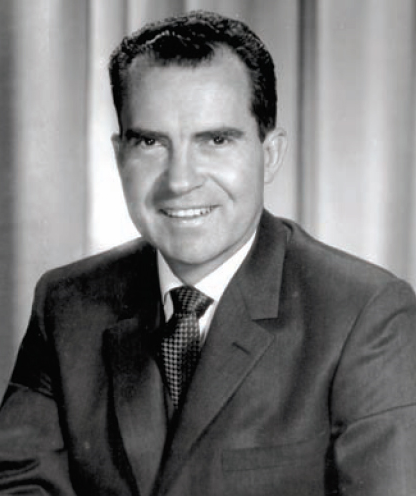
The idea is that the Eisenhower presidency was unprincipled which may have made Eisenhower a Republican in name only (RINO).  Richard Nixon had a falling out with Eisenhower in 1952 that was never fully recovered.  Nixon faced a scandal in 1952 when he was accused of having a fund by his backers to help reimburse him for political expenses.  The scandal threatened Nixon’s spot on the ticket.  He gave a famous political speech known as the Checkers speech that allowed him to stay on the ticket.  Eisenhower never fully forgave Nixon.

Despite Nixon’s record on a number of issues, conservatives within the Republican Party was willing to abandon Nixon at the drop of the hat.  Liberal Republicans were likewise opportunistic possibly exploring jumping ship to New York Governor Nelson Rockefeller. Nixon was trying to play the delicate balance between conservative and liberal factions of the party.

Nixon was afraid that Rockefeller could steal away the nomination of the party.  It is one of the few times in Nixon’s political career where he misread the electorate.  Rockefeller held sway with the liberal Republicans but not much else.  To put it in today’s terms, Rockefeller represented the nearly mythical moderate Republicans that candidates are supposed to pander to.  Nixon fearing his chance at the presidency, slipping away met with Rockefeller to discuss the platform.  Nixon thought that he was safe from a more conservative outrage, as conservatives had always liked him.

Nixon caught an emergency flight to Manhattan to hash out the platform in Rockefeller’s Fifth Avenue apartment.  This was later known as the Treaty of Fifth Avenue.  Part of the treaty included increased defense spending on nuclear weapons; remove segregation in education; and funding for education.

As Rick Perlstein writes in his definitive histories of the rise of the Republican Party in Nixonland, Nixon though that this convention was supposed to be his coronation.  He was outraged by the idea that Rockefeller thought that he could dictate to Nixon what the platform should be.  Conservatives outraged over this treaty tried to draft conservative Senator Barry Goldwater for the Presidency.  The draft movement ultimately failed but Goldwater had nearly the last word.  Speaking at the convention, Goldwater challenged the delegations,”let’s grow up conservatives!  If we want to take this party back, and I think we an some day, let’s get to work.”

Nixon was surprised that the Conservative members of his party would split on him at the last minute for a potential draft Goldwater movement.  The conservative members had long been his champion for his attacks on communists and his appeal as an everyman.  But the ground, as you can see, was already shaking beneath him.  By 1964, Perlstein writes, “in a poll of Republican leaders, only 3 percent said Nixon would make a good candidate.  He was too liberal.”

The 1960 election was one of the closer elections in Presidential history.  Kennedy won the popular election by about 100,000 votes.  The electoral college had him with 303 electoral votes.  Nixon seethed at the results as he always had somewhat of a frenemy relationship with Kennedy.

For the first time that I have been able to find in the modern era, there was widespread accusations of voter fraud.  By widespread, we’re primarily looking at Texas and Illinois.  This wouldn’t be terribly surprising as the election united three of the most ruthless politicians in the Democratic Party: Kennedy, Richard Daley, and Lyndon Johnson.  Nixon’s campaign manager, Leonard Hall, complained as the Chicago votes came in that the “Chicago Democrats were up to their usual tricks.”  Ultimately, he lost Illinois by 9,000 votes.  He lost Texas by 46,000.

Nixon called Eisenhower and was told that there were rumors of voting fraud in Texas and Illinois.  Hall went further telling Nixon that he thought Democrats had stolen votes in Illinois, Texas, Missouri, and New Mexico.  Senator Everett Dirksen of Illinois complained that the Daley machine had stolen the election.  Senator Goldwater said that Chicago had “the rottenest election machinery in the United States.”

Hall and the RNC went to eight different states to try to find fraud and proof that the election had been stolen.  In Texas, Johnson was accused of fraud with the natural suspicion being cast in a number of counties where the votes counted outnumbered the number of registered voters.  John Connally, the Texas Democratic Governor, stated that there would be no recount and predicted that a recount would net Kennedy 50,000 more votes. But there was no recount.

The other natural place for fraud was Illinois.  Daley was known for being ruthless and barely complying within the law (and even if he went outside of it, he had friends in a lot of high places).  Daley in a relatively new biography claimed that his fraud was no worse than the fraud in downstate Illinois.

Nixon conceded the race and said that he accepted the results of the election despite some members of his campaign arguing otherwise.  Nixon claimed in his memoir Six Crises that he “made the decision because he feared American prestige would be damaged by suggestions that the presidency itself could be stolen by thievery at the ballot box.”  Nixon explained to the members of his team that contesting the results could cause great harm to the country.

These charges of fraud would show up in nearly every election that a Democrat has won since 1960.  1960 had a much better case for electoral fraud than any other election I’ve ever looked at.  The claims of fraud that are made, now, by the Republican Party is not about actual cases of fraud but rather the unbelievability that a Democrat could win an election.

In the aftermath of the 1960 election, there wasn’t such a public postmortem of the party as there was after the 2012 election.  The common belief from the Republican faithful after the election was that if they ran a true conservative they would have been able to overcome this electoral fraud.  They would have won the election had a true conservative actually ran.  This was going to set the stage for the next Presidential election.  Nixon was too liberal and they needed a true conservative to be able to run and win.  Both charges of electoral fraud and the idea of a true conservative were born out of this election. We will return to this election, later.


Tuesday’s Trumans

Was the Democratic Primary rigged? Still, no. Regardless of how much you say it. I was pretty clear in my post yesterday about how I feel about it.  But to be clearer: I think the DNC acted inappropriately through a number of issues including e-mailing sensitive information. Does it rise to the level of rigging the primary? No. Hillary’s victory in the primaries was pretty unequivocal. For instance, Michigan and Florida’s delegation actually counted in this primary. As opposed to 2008.

Enough about the e-mails. This happened last night:

In other news, Bernie Sanders gave a full throated endorsement of Hillary Clinton.

Let me be as clear as I can be. This election is not about, and has never been about, Hillary Clinton, or Donald Trump, or Bernie Sanders or any of the other candidates who sought the presidency. This election is not about political gossip. It’s not about polls. It’s not about campaign strategy. It’s not about fundraising. It’s not about all the things the media spends so much time discussing.

This election is about – and must be about – the needs of the American people and the kind of future we create for our children and grandchildren…

By these measures, any objective observer will conclude that – based on her ideas and her leadership – Hillary Clinton must become the next president of the United States. The choice is not even close.

Bernie talked about policies that he supported that Hillary also supports.  It was a great endorsement.

John McCain is busy mavericking his way to linking his challenger to Hillary Clinton’s challenges.

Jim Gray is trailing Rand Paul in fundraising.  


Monday’s Monroes

The big news over the weekend, of course, was the DNC leaks.  If you weren’t paying attention, I’ll explain:

A little over a month ago, it was reported that Russian hackers penetrated the DNC e-mail database and stole a bunch of e-mails, as well as the opposition research on Donald Trump. The e-mails eventually made their way to Wikileaks.  The e-mails were then leaked and people who already didn’t like Hillary Clinton chose to use this as an opportunity to express their outrage at Hillary Clinton.

Despite that reporting by The Washington Post, we’ve now gone to other news outlets saying that Russians are just suspected of hacking.  Others are more definitive and are saying it was definitely the Russians.  Of course, this won’t matter to some.  As people have noted, it doesn’t matter how the e-mails were leaked but rather what they say.

The e-mails themselves are mostly innocuous and as Chris Hayes has noted in the past, “with Hillary Clinton, you can’t convince anybody of anything.”  The worst ones include an e-mail about potentially swiftboating Bernie Sanders’s religion as showing him as an atheist (he is jewish) to potentially help Hillary Clinton in more Christian states.  A strategy, it should be noted, that didn’t even happen.  Other than that, the real problems were that Wikileaks would not redact social security numbers and credit card information from their posts.  This is something that they claim was intentional.  It’s also problematic that the people at the DNC were sharing this information.

To people who think that the primary was rigged, this was a goldmine that ended up full of pyrite. The head of the DNC Debbie Wasserman Schultz has resigned amid the news of the e-mail hack. Of course, this was going to happen after the convention regardless of the news of the hack. Wasserman Schultz did such a good job at rigging the primaries that Hillary Clinton and her team wanted her gone:

John Podesta, Clinton’s campaign chairman – and a former top adviser to Barack Obama – broached the idea of replacing Wasserman Schultz as early as last fall, only to be rebuffed by the president’s team, according to two people with direct knowledge of the conversation.

“It came down to the fact that the president didn’t want the hassle of getting rid of Debbie,” said a former top Obama adviser. “It’s been a huge problem for the Clintons, but the president just didn’t want the headache of Debbie bad-mouthing him… It was a huge pain in the ass.”

But to Sanders’s more ardent supporters, it doesn’t mean much.  They already wanted Wasserman Schultz gone, as did Bernie.  Sanders spent some of his newfound political capital to endorse her primary opponent and raised money for him, Tim Canova.  All in all, Clinton was going to name a person from her campaign team or someone she was very close to as the new head of the DNC.

But if you think the primary was rigged, you do have to address a few questions.  The first of which is that Wikileaks has had most of these documents for a while.  Are they only highlighting the e-mails that they find most damaging for Hillary and the DNC?  We have only the word of Wikileaks that they are being transparent.  They’ve highlighted quite a few e-mails that when context actually comes in, they are not nearly as bad as reported.  One of the e-mails highlighted is someone quoting a Fox News commentator in a recap of the Sunday shows.  This e-mail was supposed to show that Hillary was lying about being a progressive.

While a number of people are saying that the debates were scheduled to help Hillary, it’s important to know that the first Democratic debate attracted over 15 million viewers.  There was a lag in viewers for one of the debates on MSNBC.  This debate took place on Thursday, February 4. In 2016, there  were 9 debates with 72.03 million viewers in total.  In 2008, there were 16 debates with 75.22 million total viewers.  There were another 10 debates that were not rated.  Despite the claim that the debates were scheduled to limit the number of people who viewed them, there’s not very much evidence to back up.  I will note that there were only 6 originally scheduled debates that garnered 48 million viewers.

Finally, you would need to find actual evidence of the DNC trying to rig the primary elections for Hillary.  I haven’t seen any evidence.  Most of the e-mails are dated at the end of April or early May when we all knew the primary was over outside of the most hard-core Bernie Sanders supporters.

Better know a candidate: C.J. Baricevic

Name: C.J. Baricevic

Current position: None

Future position: Candidate, U.S. House of Representatives Illinois’s 12th Congressional District

Key positions:

Opposes the Trans-Pacific Partnership

Supports new trade policies that protect and support the growth of American jobs

Invest in infrastructure

Invest in job training and apprenticeship programs

Supports raising the minimum wage

Supports the Paycheck Fairness Act

Supports raising the child care tax credit

Opposes NAFTA

Supports universal pre-k

Supports investment in trade schools

Opposes any effort to make Medicare a voucher program

Strong supporter of the 2nd Amendment