2016 Election Predictions: Hawaii

Statewide elections:

U.S. Senate:

Brian Schatz (D): Schatz is the incumbent Senator in Hawaii.  Govtrack charts each bill that has been sponsored and cosponsored legislation and who the co-sponsors of legislation were.  Schatz is firmly in the left wing portion of the graph.  The most similar Senator by this methodology is Ed Markey.

Schatz has introduced 34 bills since 2015.  Of the bills that he has co-sponsored, 31% were introduced by someone other than a Democrat. Two bills that he introduced this Congress that I support are S. 2678 STOP Pain Act which would direct studies for pain and help develop alternatives to pain medicine that are not opioids.  As you should be aware, we have a real opioid epidemic happening right now and we should be focusing some energy on developing alternative pain medication.

Another bill is S. 3122 REAL Act of 2016.  This bill would reinstate Pell Grant eligibility for individuals currently in federal or state penal insitutions.

John Caroll (R): He doesn’t even have a real domain for his campaign website. I have a website.  This is dumb.

Prediction: Schatz will win with over 65% of the vote.

Statewide ballot measures:

Amendment 1: This measure would, if passed, increase the threshold value for a civil jury trial to $10,000 from $5,000.

State Farm opposes the measure.  Their testimony to the State Senate relied heavily on the idea that the 7th Amendment guarantees a right to civil trial for damages exceeding $20 and that states requiring a higher threshold are rare.  I’m not 100% sure why State Farm would oppose such a measure, to be honest.

Right now, I think that this Amendment will pass.  As we get closer to November, it’s possible that more insurance companies and more money will be pored into this state for this amendment.

Amendment 2: Ballotpedia has the ballot question on their website

Shall the legislature be provided, when the state general fund balance at the close of each of two successive fiscal years exceeds five per cent of the general fund revenues for each of the two fiscal years, the additional alternatives of appropriating general funds for the pre-payment of either or both of the following:

(1) Debt service for general obligation bonds issued by the State; or
(2) Pension or other post-employment benefit liabilities accrued for state employees?

This would allow state legislators to be able to pre-pay general obligation bonds and pensions.  Currently, excess general gunds can only be used for tax refunds or emergency supplemental funds.

This should pass easily.

Presidential election:

Barack Obama won the 2012 Presidential election in Hawaii with 70.55% of the vote compared to 27.84% of the vote for Romney.  Clinton will get 67% or more of the vote.

Federal elections:

District 1:

Colleen Hanabusa (D)

Shirlene Ostrov (R)

Hanabusa is the former member of Congress from 2011-2014.  She won re-election in 2012 with 54.61% of the vote over Charles Djou who received 45.39% of the vote.  Djou was the incumbent in the 2010 general election where he lost.   Djou received 48% of the vote in 2014.  While the district is a fairly safe Democratic seat, a strong challenger in Congress or a stronger candidate running for President could flip the seat to a Republican.  Djou is probably one of the stronger candidates to do so.  He is currently running for mayor of Honolulu.

I think that it’s still pretty safe.  Barack Obama won 69.7% of the vote in 2012 in this district. I think Hanabusa gets over 55% of the vote in November.

District 2:

Tulsi Gabbard (D)

Angela Aulani Kaaihue (R) – not really anymore

Gabbard has received a lot of praise for being an outspoken supporter of Bernie Sanders throughout the Democratic presidential primary.  She has criticized the Democratic National Committee as being insanely corrupt and resigned her spot with the DNC.  Gabbard is the first Hindu to be elected to Congress.  So of course, her opponent attacked her for being a Hindu and the Hawaii Republican Party terminated her membership. She also said some offensive things about Japanese Hawaiians.

Anyway, this is a very safe Democratic seat and will remain Gabbard’s until she chooses not to run again.

State Senate:

There’s not very many seats that are being opposed by both major parties.

District 9:

Samuel Slom (R)

Stanley Chang (D)

Sam Slom is the only Republican in the Hawaii State Senate. Because of that, he served on every legislative committee.  He is also the Senate Minority Leader  and Minority Floor Leader.  He has served in the Senate since 1996.  In 2010, he received 55% of the vote in his district and won 54% of the vote in 2012.  It seems like he has a pretty high floor for his support.  Chang is a former Honolulu City Council member who ran for the Democratic nomination for Hawaii’s 1st Congressional District.  He received 10% of the vote in the primary.  I find it hard to believe that Chang will be able to win the election.  I think Slom is likely to get around 54-55% of the vote, yet again.

District 11:

C. Kaui Jochanan Amsterdam (R)

Brian Taniguchi (D)

Taniguchi received 73.5% of the vote in 2012.  Amsterdam is more or less a perennial candidate who ran for the state house in 2014 in District 24 garnering 25.6% of the vote.  I do not think that Amsterdam is going to do that well in November.  Taniguchi should get 75% of the vote.

District 13:

Rod Tam (R)

Karl Rhoads (D)

Rhoads is currently a member of the Hawaii House of Representatives for District 29.  He is currently the chair of Judiciary Committee in the Hawaii House of Representatives.  In 2010, State Senate District 13 elected the Democratic candidate with 71% of the vote.  Rhoads is running against an unknown and should be able to get close to 70% of the vote in November.

District 19:

Kurt Fevella (R)

William Espero (D)

Espero is currently the State Senator for this distric and was the Majority Floor Leader from 2013 – 2014.  Fevella won the Republican primary for this district with 989 votes compared to 650 for his opponent.  There doesn’t seem to be enough Republicans for Fevella to make up the ground.  Espero should get close to 60% of the vote.

District 25:

Robert Nagamine (R)

Laura Thielen (D)

Thielen is the state Senator for this district.  She was elected in 2012 with 59.5% of the vote compared to her opponent who received 40.5% of the vote.  Nagamine was able to win the Republican primary election for this district. He seems to not have very much name recognition to be able to compete.  I believe that Thielen will win with close to 55-60% of the vote.

Hawaii House of Representatives:

I am looking at the districts where the candidate did not get 60% of the vote in 2014 (with one exception) AND have both major parties running candidates.

District 20:

Julia Allen (R)

Calvin Say (D)

Say received 54.6% of the vote in 2014 defeating Julia Allen.  Allen actually came in third behind Say and Green Party candidate Keiko Bonk who received 24.2% of the vote.  Allen finished in third in 2012 with 11.8% of the vote.  She received 24.8% of the vote against Say in 2010.

I think it’s pretty safe to say that Say will win this election with about 70% of the vote as there is not a green party candidate this year.

District 22

Kathryn Henski (R)

Tom Brower (D)

Brower was challenged int he Democratic primary by two other candidates.  Brower survived the challenge receiving 71% of the vote in the primary.  In 2014, Brower received 54.5% of the vote with 2,626 votes compared to his challenger Janet Grace’s 1,929 votes.  While I do think Brower will have somewhat of a challenge, I think he will win with more than 55% of the vote.

District 31

Eric Ching (R)

Aaron Johanson (D)

Johanson was elected with 68% of the vote in 2014.  He then switched parties in December of 2014 as he stated that the Republican Party had ideological narrowness with the party as the reason for his switch.  Eric Ching is ap olitical outsider trying to oust Johanson out of his seat to prevent just another “yes” vote for the Democratic Party. I would be a little worried for Johanson in November but I still think he wins the election with around 60% of the vote.

District 34

Jaci Agustin (R)

Gregg Takayama (D)

Takayama is the Democratic incumbent for this district.  He defeated Agustin in the 2014 general election with 58.3% of the vote compared to 38% of the vote for Agustin.  Takayama should easily win re-election to this seat.


District 41

Bryan E. Jeremiah (R)

Matthew Lopresti (D)

Lopresti won the 2014 election over Jeremiah 48.7-35.6.  Tom Berg, the Libertarian candidate received 15.6% of the vote providing the rest of the margin. There is not a third party candidate on the ballot for this general election, which is probably a shame.  I think that the turnout for this district is likely to decrease compared to 2012 and 2014.  My guess is that Lopresti is able to win re-election but I think it’s a fairly close election.  The closest one so far in the state.

District 43

Andria Tupoloa (R)

Stacelynn K.M. Eli (D)

Tupoloa is the incumbent for this district.  She was able to defeat the incumbent Democrat Karen Leinani Awana in the 2014 election 56.1 -41.6%.  Leinani Awana was able to get 69.7% of the vote or 4,029 votes in 2012 compared to 1,484 votes for her opponent. There were only about 500 less votes cast in 2014 in this district.  If you believe that Tupola as able to get elected because of dissatisfaction with Barack Obama in a favored map for the 2014 Republican Party, then you may believe that Stacelynn K.M. Eli is likely to win back the seat.  I don’t think Eli is a particularly strong candidate but she was able to defeat Karen Leinani Awana in the primary and only lost the primary in 2014 by 300 votes.  Maybe I’m not giving Eli enough credit.  I think

District 44

Marc Pa’aluhi (R)
Cedric Asuega Gates (D)

I don’t think this will be a particularly close election unless someone who is upset about Cedric Asuega Gates winning the Democratic nomination.  Gates was the Green party candidate in 2014.  He upset Democratic incumbent Jo Jordan in the 2016 Democratic primary by 240 votes.  Jordan won the general election in 2014 with 58% of the vote.  Gates with the Green Party nomination received 22% of the vote.  There was not a Republican on the ballot in 2014.

District 47

Feki Pouha (R)

Sean Quinlan (D)

Pouha won the 2014 general election by less than 200 votes over Democratic candidate Kent Fonoimoana.  Pouha is the State House Minority Floor Leader.  If we are to believe that 2014 was a good year for Republicans then, again, we may think that Pouha is vulnerable.  Quinlan does not seem like a particularly strong candidate and does not appear to have a website. I think Pouha will be re-elected.


The affirmative case for Hillary Clinton

One of the weird things about election season is the weird alliance between the more ardent Bernie Sanders supporters and Donald Trump supporters that there is simply not a case to be made for Hillary Clinton to be President.  The Bernie or bust supporters believe that the only case to be made for Clinton is of fear of Trump.  Trump supporters feel the same way.  I think there’s a very strong case to be made for Clinton to be president.  But like everything, if you’re not open to the argument, I’m not sure how successful it will be.

Image result for tell me a reason to vote for hillary meme

  1. Supreme Court and the federal judiciary – One of the annoying things that we do in America is that we tend to overrate the power of the American presidency.  Thanks to our Constitution and the system within a Madisonian democracy, there are a high number of veto points and consistently limits the power of the presidency.  Thanks to our hyperpartisanship that is happening in our federal legislature, every single bill that is introduced by a Democrat or supported by Democratic leadership will be instantly opposed by the vast majority of Republican Senators and members of Congress.  This will certainly limit the amount of progressive policies that can be enacted within a Democratic president even if Democrats take back the Senate and make inroads into the House of Representatives.

    The main way that a President can make a lasting impact in our political environment and government structure is the appointments to the Supreme Court and the federal judiciary.  These are lifetime appointments, by and large.  With Justice Antonin Scalia’s death, there is an immediate opening on the Supreme Court that can allow Hillary Clinton to shift the median vote on the Supreme Court to a liberal vote.  Justice Ruth Bader Ginsburg is likely to retire in the next few years and due to the age of the other justices excepting the Obama appointees and Chief Justice John Roberts, there is likely to be another opening within the next 4-8 years.  Shifting the median vote on the Supreme Court to a liberal vote is going to be huge.  This can change voting rights, death penalty, mandatory minimums, public sector unions, LGBT rights and equality, etc.  You can bet that a Democratic Senate will be focusing on environmental issues and there will be court challenges to these laws.  Having a Supreme Court who believes in a living Constitution is going to be friendlier to this agenda.

    Of course, this argument can be considered as only saying that Clinton is better than Trump.  This is true but she is simply better than any Republican in this regard.

  2. Voting rights – When Clinton was a Senator, she introduced a bill that would help voting rights tremendously.  The bill was called the gold standard for voting rights reform.  The bill would make election day a holiday (a cause Bernie Sanders took up this year); restore the right to felons who have been released from jail and off parole; limit ability to throw out voter registration forms; prevent voter id laws from being enacted; create a national standard for early voting; require paper records in all precincts; and automatic recounts in 2% of all polling places or precincts.  All of these things are fantastic and part of a very progressive agenda.

    One of the policies that she is running on in this election and has since the primary is to repair our voting rights problem.  Her policy is to automatically register voters; repair the Voting Rights Act including the section that was struck down in Shelby County v. Holder; set a national standard for early voting; and restore voting rights to felons who have served their time.  Again, these are all very worthy goals.  Restoring the Voting Rights Act alone would help with minority voters, young people, and low-income voters to prevent onerous voter id restrictions.  This could also prevent worse gerrymandering and would require the preclearance that was previously guaranteed.

    More on voting rights can be found here for my thoughts on voting rights.

  3. Repealing Hyde Amendment – The Hyde Amendment is an amendment that is more or less included in every spending bill to prevent federal funds to pay for abortion except to save the life of the mother or if the pregnancy is a result of incest or rape.  The Hyde Amendment is a barrier to prevent health insurance policies from offering abortions.  What’s worse is that while the federal funds prevent funding for abortions, only 17 states provide public funding for low-income seeking abortions.  The Children’s Health Insurance Program (CHIP) bans the use of federal funds for abortions sought by teeenagers.  The Hyde Amendment forbids Medicaid from funding an abortion.

    Clinton has specifically opposed the Hyde Amendment since, at least, 2008.  It’s not an exciting issue.  But the Hyde Amendment is a real barrier for poor or low-income women from being able to obtain an abortion.  As they have to wait longer, it is more likely that the cost will increase and the chances of health complications increase as we the fetus ages.

    If you’re pro-life, though, this does nothing to convince you that Clinton should be elected.

  4. Paid family and Medical leave – Clinton, despite the claims made by the Donald Trump campaign, have been fighting for paid family and medical leave to help provide for up to 12 weeks of medical leave for care for a new child or a seriously ill family member.  I wrote about the need for paid family and medical leave and why it’s important.  This is a very progressive goal and will likely be one of the new fights that will be coming in the next 8 years.
  5. Immigration reform – Clinton has said that she will defend the executive actions of DACA and DAPA to prevent deportations of immigrants who were born here and follow through with protections for them.  She has also talked about the need for comprehensive immigration reform which is certainly needed.  Immigration reform used to be a bipartisan issue and one that was clearly needed to address the issues.  The idea is to get the 11 million undocumented immigrants from out of the shadows and to pay taxes as they assimilate to American society.  This includes a pathway to citizenship which is very important to help these millions of people to be in the formal economy.  Further, she has stated the need to close private immigrant detention centers which are usually the ones that follow through with the worst abuses.
  6.  Campaign finance – The Supreme Court decision in Citizens United is consistently cited by Bernie sanders and his more erstwhile supporters as a grave threat to democracy.  I think that ultimately this decision has been overblown because of people’s  obsession with simple explanations to complex problems.  Yes, there is a problem of money in politics.  Simply overturning Citizens United will not fix this.  At any rate, the group Citizens United made a move about Hillary Clinton in 2008 about how Hillary was a European socialist who wanted to take over the country.  Clinton has denounced the ruling since it was handed down.  She has campaigned heavily on this and has promised to propose a constitutional amendment to overturn Citizens United.  I don’t think this is a very practical solution as it could be overturned with a simple majority on the Supreme Court.   But she wants it overturned.

    I know, that, some of you will talk about how Clinton is taking money from dark money groups in her quest to be President so she is a hypocrite.  I don’t really buy this argument as Clinton will need the money to be able to be President, unfortunately, and can still not like the rule.  She is simply playing the game with the rules that are currently out there.  I’ve never really bought this argument but if you think Clinton is a hypocrite, I’m sure you will. But I think questions about her judgment about foreign policy are simply an excuse not to vote for her.

  7. Foreign policy judgment– Since I was just talking about Citizens United and this will follow naturally.  In 2008, Clinton had Mark Penn as a staffer and had a number of longtime Clinton staffers on her campaign.  This campaign failed.  There were a lot of terrible mistakes in that campaign including the Michigan and Florida fiasco and subsequent fight for the nomination and pledges to fight for the nomination.

    Clinton did not hire these staffers in her most recent campaign.  There were not campaign shakeups after her loss in New Hampshire.  There was not really any surprises in the primary (outside of Michigan which is still not really clear why she lost that state).  She dominated the delegate game without spending a lot of her money and without going negative against Bernie Sanders (by and large).  Poor Clinton judgment on the campaign trail would have had her shaking up her campaign after New Hampshire or Michigan or after a poor showing in a caucus.  She won all of her “must win” states.  While the primary votes seemed to be close,  after New Hampshire, it was never as close as the 2008 Democratic primary.

    But what about her Iraqi war vote and her hawkishness?  Clinton, unlike in 2008, has renounced her vote for Iraq and has talked about it being a mistake.  When she gave her vote in October 2002, she also gave a speech about why she was making this vote.  It seemed to be a straightforward reason for why she decided to make this vote.

    I’m not a fan of her hawishness, overall.  She is more of a hawk than I am.  This is for certain.  Her claims that she made a mistake with her Iraqi war vote in 2002 (unlike in 2008) and her change in her campaign from 2008 show me that she learned from her mistake back then.  When Bill Clinton was asked about the biggest mistake of his presidency, he, almost, without fail would cite the Rwandan genocide as one of his biggest regrets.  I think this played into her overall hawkishness and support for “regime change.”

    Other attacks on her foreign policy regarding Syria, Libya, or Honduras don’t, to me, pass the sniff test.  There were no good answers with regards to Syria.  Especially, when you keep it in mind that there is still the Rwandan genocide still in the minds of the Clinton.  Honduras is a weird thing to criticize her for, considering she is being criticized for not getting involved int he coup.  Damned if you do, damned if you don’t.

    I’d doubt that Clinton would get us into another war, especially in the Middle East.  But to just say that she is forever tainted because of her Iraq vote and can’t learn from this mistake (while very similar to other criticisms of her, in general) are, in my opinion, misleading.

  8. Environmental policy– Clinton has said that she will support the Clean Power Plan and help defend it. Of course, to do so, she would need a majority for the Supreme Court.  In fact, ALL environmental policies will need a majority Supreme Court to help defend it.  This is just something we need to deal with.  I’m not going to spend much time on this but Clinton is supporting a number of actions that will make America cleaner.
  9. Student loan debt, colleges, and single payer– The biggest ideas of Bernie Sanders that was supported by young voters was the idea to get rid of student loan debt and make colleges free and then single payer.  Student loan debt is a big issue for a number of young voters as they have thousands of dollars in debt for a degree that they are, in all probability, not using in their jobs.  The idea is that if we make colleges free we can get rid of student loan debt forever and make it affordable for all Americans to attend colleges.  Clinton’s plan is an actual plan.  Supported by a number of Democrats in the House and Senate, community colleges will offer free tuition.  The other idea is to allow families making less than $125,000 will be able to attend four year public colleges without tuition and students from families making less than $85,000 will be able to attend college without paying tuition.  In true Clintonian fashion, this would also require students to work 10 hours/week.  This will be funded through grants in the states.

    For those who already have debt will have an option to refincance their loans and create a payroll deduction to let both employees and employers pay off student loans in a different way.  Her plan will also limit the amount of income that you have to pay back to less than 10% of your monthly income and forgiven after 20 years.  This is paid for by increases in taxes to high income earners.

    As opposed to quantitative easing which is creating a new function for the Federal Reserve and allows for additional powers for the Federal Reserve, this is much more likely to pass and to be implemented.  Beyond that, it’s just a better idea.  There is not a consistent argument to expand the power of the Federal Reserve to take over student loan debt without also letting the Federal Reserve provide for a universal basic income (which I actually support) or other policy ideas that we’re ignoring because they’re not feasible.

    Sanders ran on a platform of Medicare for all plan to allow for a single payer system in healthcare.  His ideas were full of promises for money that simply were not there and misstaed a number of facts about savings and the cost of the program.  I’m not here to relitigate the primaries so I’ll move on. Clinton has long been advocating for an option for people over the age of 55 to buy into Medicare.  Her support for such a system was part of her health care reform in the 1990s.

    While running in the primaries, she criticized Sanders, rightly in my opinion, that his universal coverage was too expensive and not feasible.  But the buy-in for those who are 55 or older will allow for health insurance premiums to also decrease as those who are older are the biggest drivers for health insurance costs increasing.  Removing them from the public marketplace would decrease health insurance premiums for those who are younger and healthier.  Beyond that, it would expand coverage to millions of Americans.  The biggest issue is that states have already blocked Medicaid expansion but a majority in the Supreme Court may uphold such a public option that would move America into universal coverage.

  10. Minimum wage – Senator Sanders ran on a campaign to increase the federal minimum wage from $7.25 to $15/hour.  This idea was largely supported by younger supporters.  Clinton’s proposal more or less mirrored Barack Obama’s proposal to increase the minimum wage to about $12/hour and chain it to cost of living increases that are automatically renewed.  Clinton’s proposal was criticized as not being enough.  She later clarified if there was legislation to increase the minimum wage to $15/hour, she would sign it as President.

    Clinton’s proposal is the better proposal.  I don’t mean that lightly.  Increasing the minimum wage, essentially more than doubling it from its current wage would certainly lead to job losses.  There is a lot of economic research that shows that increasing the minimum wages incrementally does not lead to major job losses.  Increasing it significantly, would almost certainly lead to job losses that would harm the program and harm the idea of a progressive policy that needs to be enacted.

    The Congressional Budget Office’s central estimate for raising the minimum wage to $10.10 would reduce employment by 500,000 with most of the job losses focused on those making less than $10.10/hour currently.  An increase to $15/hour would focus on those making less than $15/hour and would certainly lead to larger job loss.

    Further, a $15/hour minimum wage is not going to be passed and is not supported by a majority of Americans.  While there is certainly a need to increase the minimum wage, increasing it uniformly to $15/hour would hurt workers in the midwest and south and other places that have low cost of living while significantly helping those in higher cost of living areas.  The $15/hour minimum wage probably will have minimal job losses in the Seatac area but if you go into the more rural parts of Washington, increasing it that high will lead to a number of job losses and businesses no longer to be able to afford it.

    There is simply not a policy argument that $15/hour is better than $12 or $17.  It’s just a number that ends in $5.  A minimum wage increase needs to be able to have minimal job losses so that a progressive policy can be supported going into  the future and needs to have large support to be able to be enacted.  An increase in minimum wage will be attacked with every job loss and it needs to be able to withstand these attacks.

    But even if you do believe that $12/hour is insufficient for everyone in the country, you have to admit that such a large increase in the minimum wage would be a tremendous policy achievement for a Democratic president and Democratic Congress.  I don’t believe that $12/hour will be passed by a Congress held by Republicans and would face a lot of difficulties in order to be enacted.  It is more likely than $15/hour.  And is the superior policy.

    There are so many other policies that I can bring up or reasons to vote for Hillary Clinton including gun contorl, the drug epidemic, LGBT rights, etc. that it boggles the mind that people think that there is simply not a reason to vote for Clinton in November.

    I do believe that Trump is a racist who has authoritarian tendencies and would do irreparable harm not only to political discourse but our democracy, overall.  But I think there are a number of positives for Clinton that she should be evaluated in her own right.


The case against the death penalty

The troubling case of Carlos DeLuna

In February of 1983, Carlos DeLuna and Carlos Hernandez went to a bar in Corpus Christi.  The two Carloses looked very similar.  Sometimes they were even mistaken for twins.  They were the same height and weight.  Although, there was a slight difference.  Hernandez had a moustache while DeLuna did not.  After the bar, Hernandez went to a gas station, the Shamrock to buy something.  After waiting a while, Hernandez had not returned.  DeLuna went to see what was taking so long and he saw Hernandez wrestling a woman behind the counter.  Scared because of his prior police record for sexual assault, DeLuna took off running.  When he heard sirens, he got even more scared and hid underneath a pickup truck.

deluna carlos.JPG

Image: Carlos DeLuna from the Corpus Christi Police Department; image from the Atlantic

Forty minutes later, he was found there by Corpus Christi Police.  He was arrested for the murder of Wanda Lopez.  Lopez had been stabbed to death.  Police photos showed blood splattered over three feet high.  DeLuna did not have any blood on him.  Police assumed that the rain washed away the blood.  Less than two hours after the murder, the owner of the Shamrock was allowed to wash down the store washing away crucial evidence that could potentially lead to the killer.  As far as the Corpus Christi police were concerned, they had caught their man.

DeLuna, for his part, claimed his innocence.  He took it one step further.  He named the killer.  Carlos Hernandez was the killer.  Corpus Christi police called Hernandez a “phantom.”  The prosecutors were given the name by DeLuna’s lawyers but they were unable to find any evidence that this person existed.  The chief prosecutor of the case called Hernandez a “figment of [DeLuna’s] imagination.”

hernandez carlos.JPG

Image of Carlos Hernandez from the Corpus Christi Police Department.  Image appeared in the Atlantic.

DeLuna was executed for the murder of Lopez on December 8, 1989.  In October of 1989, Hernandez was arrested for the attempted murder of Dina Ybanez.  This information was not brought to the courts of Texas in order to help exonerate an innocent man.

We know all of the information mentioned above and even more information showing the innocence of DeLuna because of the research of Professor James S. Liebman and his colleagues in the book Los Tocayos Carlos: Anatomy of a Wrongful Execution.

Liebman et al. found even more disturbing information regarding this case.  They found that Hernandez bragged to members of the community that he was a knife murderer and that he was the one who killed Lopez.  Further Hernandez joked that his stupid namesake was the one taking the blame.  Oh yes, they found this information out in less than 24 hours after hiring a private detective.  Yet, Hernandez was so elusive that he was unknown to prosecutors.  These claims that he was the killer reached the police within weeks but was dismissed by the prosecutors.

Hernandez had been on parole for virtually his entire adult life.  As reported by Liebman, Hernandez had been arrested 39 times.  Several of these crimes had been due to wielding his knife.  Some of his arrests were for holding up local gas stations.  What’s worse is that he was arrested twice for a 1979 murder.  Once in 1979 and once after DeLuna was on death row.  This information was not disclosed to the courts.  Instead, Hernandez was a phantom.

Liebman and his team of researchers pored over the crime details and police reports for this crime.  They found a shoeprint in blood at the crime scene that was never investigated.  No usable fingerprints were taken at the scene of the crime.  A beer can, a cigarette butt, chewing gum, a button, and a comb were not forensically examined for saliva and/or blood.  When the researchers went to examine the DNA of the crime after DeLuna’s death, they were told that all of it had disappeared.

Carlos DeLuna was executed for the murder of Wanda Lopez.

Nebraska and the Death Penalty

Picture of Governor Pete Ricketts of Nebraska picture originally appeared on Huffington Post

In May of 2015, Nebraska legislators brought LB268 to be considered for a debate.  LB268 was introduced by Ernie Chambers who had been working to this end for four decades.  LB268 would repeal the death penalty in Nebraska and would instead have life in prison as the maximum sentence for first-degree murder.  Nebraska Attorney General Doug Peterson wrote a letter to the Nebraska legislature that “under current Nebraska law, a sentence to life imprisonment is effectively life imprisonment without (the possibility of{ parole.”

Governor Pete Ricketts said in a statement ahead of the vote, “no one has traveled the state more than I have in 18 months, and everywhere I go there is overwhelming support for keeping the death penalty in Nebraska.  Ahead of this morning’s vote, I am reminding senators that a vote for cloture on LB268 is a vote to repeal the death penalty and to give our state’s most heinous criminals more lenient sentences.  This isn’t rhetoric.  This is reality.”  The stakes were high.  Legislators knew that this bill would face the veto by Governor Ricketts.

Conservative legislators banded together with their progressive counterparts and passed the bill 32-15.  In order to override the veto, they would need 30 votes.  Governor Ricketts criticized the legislature for their votes when issuing a veto saying that “while the legislature has lost touch with the citizens of Nebraska, I will continue to stand with Nebraskans and law enforcement on this important issue.”  After intense lobbying by the Governor and his team, a vote to override the veto succeeded 30-13.

State senator and loyal Ricketts ally Beau McCoy announced that he would do everything he could to stop this bill from being enacted.  McCoy launched a new organization called Nebraskans for Justice to help put the measure on the ballot for the November general election ballot.  McCoy said,”I am standing with Nebraskans who are thoroughly disappointed with Nebraska legislators who voted to end Nebraska’s death penalty.”

McCoy was not the only one disappointed.  State Senator Bill Kintner of Papillion filed an amendment on LB268 to replace the method of execution from lethal injection to the firing squad.  Kintner was disappointed and bitterly complained, “this body is intent on moving the progressive-left agenda ahead.”  Senator McCoy was successful in getting this measure on the ballot in time for the November 2016 election.  If voters in Nebraska vote in favor of the amendment there will effectively be a repeal of the repeal of the death penalty.  Rejecting the measure will keep the death penalty repeal.  I urge all Nebraska voters to reject this measure.  It is time to show Governor Ricketts that he is wrong.  We need to show Senator Kintner that he is wrong.  This is not a partisan issue.  The death penalty as it stands is arbitrary, unconstitutional, and economically infeasible.

Economic costs of the death penalty

The American Law Institute (ALI) is made up of 4,000 judges, lawyers, and law professors.  They helped create the penal system that we currently have and helped create the death penalty, as we know it.  In 2009, they voted to remove the death penalty from their model penal code.  They argued that the death penalty is “so arbitrarily fraught with racial and economic disparities and unable to serve quality legal representation for indigent capital defendants, that it can never be administered fairly.”  As we will see later with regards to the arbitrariness of the death penalty, poorer defendants are more likely to have their crime considered a capital offense.  The American Civil Liberties Union (ACLU) has found that 90% of those on death row could not afford to hire a lawyer at the time of their trial.

In Gideon v. Wainwright, the Supreme Court found that the 6th Amendment’s guarantee of counsel is a fundamental right essential to a fair trial.  Writing for the majority, Justice Hugo Black wrote a fair trial “cannot be realized if the poor men charged with crime has to face his accusers without a lawyer to assist him.”  Even looking at this case, we see that Florida and other states would only allow lawyers appointed for the indigent in capital cases.  This certainly adds to the cost of death penalty cases.

As we see in state, after state, after state, the death penalty is significantly more expensive than other options.  The Nevada Legislative Auditor issued a report studying the cost of the death penalty in Nevada.  They found “the death penalty, from arrest through the end of incarceration, costs about $532,000 more than other murder cases where the death penalty is not sought.”  Where the death penalty was sought, sentenced, but the offender was not executed the cost was $1.3 million and the cost was only slightly lower where the death penalty was sought but not sentenced at $1.2 million.  Where the death penalty was not sought, the costs were $775,000.

Kansas issued a study on the cost of the death penalty and the Kansas legislature approved the linked report.  The total cost for the 9 trial cases where the death penalty was sought costs on average $395,762 compared to $98,963 on average for the 6 trial cases where the death penalty was not sought.  Some of that has to do with the the fact that when the prosecution sought the death penalty, there was an average of 40 days in court compared to 17 days for cases where the death penalty was not sought.

Seattle University commissioned a study on the death penalty in Washington.  The found that the total costs of the death penalty cases were about $3.07 million compared to $2.01 million for non-death penalty cases.  The biggest differences in the costs were found with the defense costs, prosecution costs, and the petition/appeals for death penalty cases.  The defense costs were about 2.8 to 3.5 times more expensive than non-death penalty cases.  Prosecution costs were about 2.3-4.2 times more expensive and the appeals were 5.7-6.3 times more expensive.

Seeking the death penalty is consistently found to be more expensive than non-death penalty cases.  The only question really is how much more expensive it is.  The rebuttal to this is that while seeking the death penalty in trial is more expensive, the costs even out after a criminal is executed compared to the cost of incarcerating a criminal for the remainder of their life.  Intuitively, this argument holds some appeal.  Unfortunately, it does not match reality.  This is because of two main reasons.  The first one is that in 2014, the executions occurred on average about 18 years after the conviction of the defendant.  Because of the lengthy time in prison, it is hard to find easy cost-savings.  The other reason for a lack of cost-saving is that keeping and maintaining death row is fairly expensive.   In fact, death row inmate management costs more on average than the management of non-death row inmates.  There are a couple of factors for this which include greater security, inmates having their own cells, and that there is a disparity in the inmate-to-staff ratios.

The Seattle University studied linked to earlier found that the cost for incarcerating non-death penalty inmates was 0.7-0.8 times the cost of death row inmates.  As they note in their report, though, they used the “same average daily cost post-2013 for both the [Death penalty] and [non-death penalty] groups.  This resulted in an underestimation of DPS/DPI DOC costs.”  The report of the Kansas legislature noted that it cost $49.3 thousand per inmate per year for a death penalty inmate compared to $24.69 thousand per inmate per year for non-death penalty inmates.  The report from the Nevada legislative auditor found that for incarceration costs, the death penalty is the most expensive sentence for those convicted of first degree murder.  Noting “incarceration costs are higher for the death penalty subgroup, since they are typically housed at a higher cost facility.”

All of this is before we even get to the cost of obtaining the drugs needed to execute an inmate with lethal injection.  With a number of pharmaceutical companies no longer offering the drug cocktail, the prices have skyrocketed.  I do understand that we cannot just reduce moral questions of actions such as the death penalty with an economic rebuttal.  It’s not enough to show that a policy is economically unsound to show that the described action is immoral or should otherwise not continue.  With all policies, I believe that we should do a calculus of cost-benefits to see what we should do going forward.  The death penalty as it currently stands is not viable only on economic grounds but is on shaky constitutional grounds, as well.

Unconstitutional?

I should note that before we continue that a lot of the information for this section is based on the brilliant dissent from Justice Stephen Breyer in Glossip v. Gross.

The 8th Amendment of the United States Constitution plainly states “excessive bail shall not be required, nor excessive fines imposed, nor cruel and unusual punishments inflicted.”  In Weems v. United States, the Supreme Court found “that it is a precept of justice that punishment for crime should be graduated and proportioned to the offense.”  Justice John Paul Stevens wrote in the opinion for Atkins v. Virginia “a claim that punishment is excessive is judged not by the standards that prevailed in 1685 when Lord Jeffreys presided over the ‘Bloddy Assizes’ or when the Bill of Rights was adopted but rather by those that currently prevail.”  It is on this precedent where Justice Breyer calls into question the constitutionality of the death penalty.

Justice Breyer writes that the death penalty fails the constitutional question because of “serious unreliability, arbitrariness in application, and unconscionably long delays that undermine the death penalty’s penological purpose.”  As we’ve seen, there have been innocent people executed for crimes that they commit.  Beyond that, there has been a number of cases where people have been sentenced to death but were exonerated.  There have been 115 exonerations in capital cases.  In his dissent, Justice Breyer notes that courts are 130 times more likely to exonerate a defendant when a death sentence is at issue.  Comparing to other murders, they are nine times more likely to exonerate a defendant with a capital murder compared to noncapital murder. Why does this happen?

The simplest explanation is that there is tremendous bias with the jurors.   In an article titled The Principled Executioner: Capital Juries’ Bias and the Benefits of True Bifurcation, Susan D. Rozelle explores the bias found in jurors.  The term used to describe potential jurors who will not convict someone of death even if they are convinced of a defendant’s guilt beyond a reasonable doubt is nullifiers.   She cites a Supreme Court Case Lockhart v. McCree  that allowed nullifers to be excluded from the guilt phase section of a capital case.  Further, the Supreme Court found that each juror should be “willing to consider all of the penalties provided by state law.”  Early social science studies found that once prosecutors were able to eliminate nullifiers from juries, those who remained were more likely to hold beliefs that would help the prosecution.  An example of this belief was “if the police have arrested an individula and the district attorney has brought him to trial, there is good reason tto believe that the man on trial is guilty.”

Moreover, eliminating nullifiers from jury pools made the juries more homogeneous.  This may not sound like a problem.  But similar people see evidence the same way.  When you have more people who are different who have different worldviews and different backgrounds, the same piece of evidence is seen in a different way.  As Professor Cass Sunstein wrote “normative bias is well supported by evidence of confirmation bias, by which people tend to seek out, and to believe, evidence that supports their won antecedent views.”  Or more simply, there is a tendency to see what we expect to see.  When you have the same worldviews or same backgrounds people will have the same expectations for what they should see so it will match up.

The Capital Jury Project (CJP) undertook a large study interviewing 1200 jurors who served on 350 capital trials in fourteen states to help study the behavior of capital case jurors.  Their conclusion was that “capital jurors hold disproportionately punitive orientations toward crime and criminal justice, are more likely to be conviction-prone, are more likely to hold racial stereotypes, and are more likely to be pro-prosecution.”  Over 70% of jurors interviewed felt that death was the only acceptable punishment for a murder committed by a defendant with a prior murder conviction.  Almost 60% agreed that death was the only acceptable punishment for planned or premeditated murder.  There were a few other categories including where the victim as a police officer or prison guard, murders involving multiple victims, and murders committed by a drug dealer.  About half of those interviewed felt that death was the only acceptable punishment in each of those situations.  About 30% of those interviewed stated that death was the only acceptable punishment for all of the above crimes.  About 24% of the jurors stated death was the only acceptable punishment for felony murder where the killing that occurs during another crime.  More troubling, some of the capital jurors offered some situations where they would not vote for the death penalty which included war time, children playing with a gun, hunting accident, or if the guy was not guilty.  Comparatively, only 2-3% of jurors who were interviewed stated that the death penalty is unacceptable in those situations mentioned.

What could be more troubling than that?  Perhaps the fact nearly half of those interviewed admitted that they decided the proper punishment before “they had heard a single piece of evidence on the issue of punishment.”  Or that about 10% of jurors stated that the death qualification question (being asked if they would consider the death penalty) “made them think the defendant must be or probably was guilty and that death must be or probably was the appropriate punishment.”

But before we get to the trial, there is tremendous pressure on the community including police officers and prosecutors to find the person who committed this crime.  Capital cases tend to be horrendous crimes.  There the police face pressure to quickly find the person who committed the crime.  In cases where the defendant was exonerated, the police investigation was shorter than those where the defendants were not exonerated according to the article “Frequency and Predictors of False Conviction: Why We Know So Little, and New Data on Capital Cases.”  Because of this pressure, there is a greater likelihood of of the hallmarks of wrongful convictions as noted in Convicting the Innocent: Where Criminal Prosecutions Go Wrong including false confessions, mistaken eyewitness testimony, and untruthful jailhouse informants.  Because of all of these factors, researchers estimate that about 4% of those sentenced to death are actually innocent.

Justice Breyer notes in his dissent that when the death penalty was reinstated in Gregg v. Georgia that the death penalty would be unconstitutional if “inflicted in an arbitrary and capricious manner.”  A lot of studies found that individuals who were accused of murdering white victims as opposed to minority victims were more likely to receive the death penalty.  The Government Accountability Office (GAO) found in 1990 that 82% of the 28 studies found that “race of victim influences capital murder charge or death sentence.” A similar finding was found in the article Furman, McCleskey, and a Single County Case Study published in 2013.  The geographic location of the defendant and victim make a difference, as well.  29 counties nationwide account for half of all death sentences imposed nationwide.  In 2012, 59 counties accounted for all death sentences nationwide.  The reasons for this are that only some states permit the death penalty, the counties may have weaker public defense programs, or it could be that the federal district that the jurors will be filled are a big racial difference than the county where the crime occurred.

Beyond that arbitrariness, there is an arbitrariness involved with what crimes are going to be charged as capital crimes.  Justice Breyer lists a number of crimes that were prosecuted as capital crimes compared to other murders.  Most of them include a single murder from a defendant who previous felony convictions compared to a murderer with multiple victims or other offenses in the context of the crime that make it seemingly more heinous.  I won’t repeat them all here.  But the crimes he chooses are supposed to show that capital charges are arbitrarily chosen and I believe him.

As we look at Gregg v. Georgia, we know that every safeguard has to be observed when a defendant’s life is at stake.  These requirements take a long time to implement.   As Justice Breyer writes, “unless we abandon the procedural requirements that assure fairness and reliability, we are forced to confront the problem of increasingly lengthy delays in capital cases.”

There were 35 executions in 2014.  These executions occurred on average about 18 years after the initial sentencing.  Some states have even longer waits.  For instance, in Florida, the last 10 prisoners executed spent nearly 25 years on death row before execution.  The delays have only increased in recent years.  The average delay in 1960 was two years.  In 2004, it was 11 years.  According to the Bureau of Justice Statistics, nearly half of the 3,000 inmates on death row now have been there more than 15 years.

The ACLU found that inmates on death row are kept in isolation for 22 or more hours per day.  Solitary confinement can lead to anxiety, paranoia, hallucinations, rage, and panic.  Beyond that as Justice John Paul Stevens wrote in Gomez v. Fierro lengthy delays subject “death row inmates to decades of especially severe, dehumanizing conditions of confinement.”  Or in the denial of cert for Lackey v. Texas, Stevens wrote that “excessive delays from sentencing to execution can themselves constitute cruel and unusual punishment prohibited by the Eighth Amendment.”

The delays are necessary because they provide additional safeguards to make sure that the inmate is guilty but they are damaging in their current form.  These delays undermine the claim that the death penalty is a retributive punishment that effectively deters crime.  This claim is undermined by social science research.  The National Research Council reviewed the empirical evidence saying “despite 30 years of empirical research in the area, there remains no reliable statistical evidence that capital punishment in fact deters potential offenders.”

If we take it all into consideration: the unreliability, the arbitrariness, and the delays, I find myself agreeing with Justice Breyer that we need a wholesale review of the constitutionality of the death penalty.

Conclusion

If ridding ourselves of the death penalty were as straightforward and easy as simply agreeing with Justice Breyer, we wouldn’t have these debates that we’ve been having for over 40 years.  Instead of focusing on concrete issues and what has happened in the past, we are often faced with abstract questions or hypotheticals over would we support the death penalty in what situations.  While it’s impossible to predict how I would respond given a particular situation, based on the evidence that is out there, the death penalty should be repealed.  In Nebraska, it was successfully repealed.  I urge all of you to vote AGAINST the Nebraska Death Penalty Repeal Referendum on November 8.


The Right Way of Nominating a President

A talking point when people discuss the 2016 presidential election and the primaries is to talk about the unlikelihood of having Senator Ted Cruz or someone similar to him, who is considered to be an extremist on the Republican side of the political spectrum.  Often, the claim that the Republican party will nominate the one who has the best chance of winning, meaning that he is either a pragmatist or a moderate Republican, as opposed to someone who is more ideologically pure.

Let’s take a look.  We’re beginning with 1976, as it was the first time a Republican primary was held in every state.  This allows us to compare the past and present without having to rely on deals in the backroom filled with cigar smoke and scotch.

1976


The 1976 Republican primary was slightly confusing.  President Gerald Ford initially announced that he would not seek re-election (technically, election).  But he re-considered and began a campaign to seek the nomination and eventual election.  Former Governor of California, Ronald Reagan, began to criticize Gerald Ford in the summer of 1975 and officially announced his candidacy in the fall of 1975.  Reagan was considered the favorite of the Conservative section of the Republican party.  Reagan and his Conservative allies were critical of Ford on the policy of detente with the Soviet Union, Ford’s refusal of help for South Vietnam, the signing of the Helinski Accords, and giving the Panama Canal back to Panama.  The Heritage Foundation would like to remind people that Reagan also criticized Ford for the centralization of the federal government.  Ford criticized Reagan for being too extreme.  Despite this, there was not a nominee at the time of the Republican Convention.  Ford began with a slight lead in the votes but still shy of the number needed to secure the nomination.  In order to gain some votes, Reagan pledged to nominate moderate Republican Senator Richard Schweiker as vice-president.  The move backfired, as conservative delegates were outraged at Reagan.  Senator Jesse Helms who had helped Reagan’s comeback during primary season, was particularly angry.  Helms tried to draft James Buckley as the nominee.  Many Mississippi delegates also switched allegiances and Ford won the nomination.  The Mississippi chairman allegedly switched support because of the nomination of Schweiker.

Conclusion: Reagan was clearly the Conservative choice for the nomination, but in an effort to gain votes, he tried to placate the moderates within the party and it failed.  I feel uncomfortable saying that Ford was nominated because he was seen as the more pragmatic or moderate choice.

1980


The 1980 Republican Presidential primary more closely resembles the primaries that we see. Ronald Reagan was considered the heavy favorite, almost as soon as the 1976 Republican presidential primary concluded.  Reagan had given a speech at the end that overshadowed Ford’s speech.

Minority Leader Howard Baker was known as the great conciliator in the Senate.  There was a story that Democratic Senators would privately support Baker’s quest to run for President.  Because of this, Baker would get the dreaded RINO tag, today, if he was in the political eye.  Baker lost the Iowa caucus and New Hampshire caucus before withdrawing.  A Gallup poll found him to be in 2nd place behind just Ronald Reagan in 1979.

Former Governor John Connally was a Democrat until 1973.  Then he switched parties.  Connally was friends with President Lyndon Johnson and supported the same candidates up until the 1972 election where Connally supported Nixon, instead of George McGovern.  But anyway, Connally was considered a great fundraiser, a fairly strong leader, and a strong orator.  Connally would probably be compared to Mitt Romney in 2008.  If Reagan had been defeated in 1980,  Connally would have likely re-emerged as a potential candidate in 1984.  But poor campaigning, as well as a lack of electoral chops, ultimately doomed him.

Senator Bob Dole,who ran for vice-president under Gerald Ford ran in 1976, chose to run in the 1980 presidential election.  He received less than 1% of the vote for the New Hampshire primary, and immediately withdrew.  Dole, while he was a war hawk and tough on crime, made his first Senate speech on increasing federal aid for the handicapped and disable.  He also joined Democratic Senator Jim McGovern in an effort to lower eligibility requirements for federal food stamps, a fairly liberal goal.  Dole later pleaded with Gerald Ford to run in 1980 as a stop-Reagan faction.

Congressman Phil Crane was a Conservative member of Congress since 1968.  Crane was one of the most Conservative members of the House of Representatives, who had been raised on Barry Goldwater’s campaign for president.  Crane was the first chairman of the Republican Study Committee to keep watch of the Republican party in Congress, who was considered to be too moderate.  Crane was also the Chairman of the Illinois Citizens for Reagan, trying to help in Reagan’s primary presidential run.  He was unsure if Reagan would run again in 1980, and said that if Reagan ran, he would drop out.  He stayed in, even after Reagan’s entrance, but dropped out in early March.

Congressman John B. Anderson initially started as one of the more Conservative members of the House but eventually shifted, gradually to the left for social issues.  His fiscal conservatism remained, though.  He broke with the administration on the Vietnam War and was an outspoken critic of Richard Nixon.  Anderson was also allies with Gerald Ford.  Anderson was primaried in 1978 but survived the primary by 16% of the vote.  He decided to run for President.  Actually, John Anderson deserves a much longer post all about him.  Anderson had considerable support from Rockefeller Republicans, who were more liberal than Reagan supporters.  He was considered much more liberal than many of the Republican nominees.  At one point, he stated that cutting taxes, increasing defense spending, and balancing the budget were an impossible combination.  Anderson withdrew and eventually ran as an independent garnering 7% of the votes in the general election.

Former CIA director George H.W. Bush supposedly represented the centrist part of the Republican party.  He criticized Reagan’s supply-side economic theory as “voodoo economics.”  This eventually proved to be successful in the Iowa caucus.  He also won a primary where Reagan did not bother to show up.  But for the most part, Bush was dead in the water by the end of April.  Bush finally withdrew on May 26, 1980.  Bush was later named the vice-presidential nominee by Ronald Reagan.

Former Governor Ronald Reagan who was unsuccessful in 1968 and 1976, finally was successful in 1980.  Reagan represented the true conservatives.  He campaigned hard on the idea of supply-side economics, proposing that tax cuts would increase revenues because people would work harder.  Reagan also promised a balanced budget for the first time since 1969.  Reagan was the front-runner and after firing his campaign manager finally started to act like it, culminating in a victory.

Conclusion: The conservatives’ Conservative won the nomination.

1988


The 1988 Republican presidential primary started with Vice-President George H.W. Bush as the front-runner but eventually included Senator Bob Dole, Congressman Jack Kemp, Governor Pierre S. du Pont IV, and televangelist Pat Robertson.

Governor Pierre S. du Pont IV was governor of Delaware and announced his intention to run for the presidency in 1986, before anyone else.  But he had some radical ideas.  He proposed reforming social security by offering private saving options .  He also wanted to wean people off of welfare by offering jobs, even entry level jobs in the government.  He proposed instituting random drug tests to those who flunked driver’s license tests.  He was a novice and bowed out after a next-to-last finish in New Hampshire.

Congressman Jack Kemp had a difficult time convincing people of his ideas if he became president.  Kemp had a libertarian philosophy of supporting individual rights, preaching tolerance, supporting women, minorities, blue-collar workers, and organized labor.  These ideas clashed with the typical conservative view of ideas and values.  To Democrats and those more liberal, his free market philosophies were just a form of anarchy.  His fiscal policy was very similar to Ronald Reagan, in that he argued for supply-side economics.  He also wanted to freeze government spending.  His poor showing on Super Tuesday eventually forced him to withdraw.  Kemp could probably be compared to the libertarian wing of the Republican party, that is in vogue today.

Televangelist Pat Robertson announced he would run in 1986 if 3 million people signed up to volunteer for his campaign.  Robertson supported a constitutional amendment requiring a balanced budget.  He also wanted to eliminate the Department of Energy and the Department of Education.  He also wanted to ban pornography.  He was a true social conservative.  His views are now basically the same as the generic Republicans.  With his true social conservative credentials, he managed a 2nd place finish in the Iowa caucus.  He withdrew before Super Tuesday.

Senator Bob Dole, who had previously lost as a vice-president in 1976 and lost the Republican nomination in 1980, decided to have another go at it.  Dole and Bush did not differ much in their views.  Bush drew criticism for his portrayal of Dole.  Dole was viewed as an angry person by responding to a question by saying Bush should stop lying about my record.  He was also viewed as a micromanager who could not handle a presidential campaign.  At this point, Dole would be comparable to Mitt Romney in 2008.

Vice-President George H.W. Bush was the early front-runner for the presidential nomination.  Bush was still considered to be the leader of the centrist part of the Republican party, but there was no real conservative to challenge him.  Bush finished in third place at the Iowa caucus.  During the New Hampshire primary, Bush ran a campaign ad portraying Dole as a taxraiser which helped contribute to Dole’s response.  But Bush’s organizational strength really helped as he was able to clinch the nomination once Super Tuesday began.  This is likely comparable to John McCain in 2008.

Conclusion: The only “true” Conservative was Robertson who finished 3rd or 4th.  But the two front-runners were both Republicans who appealed to the centrist wing of the party.

1996


The 1996 Republican primary did not have any immediate front-runners.  The only one who was considered in that breath was Senate Majority Leader Bob Dole.


Ambassador Alan Keyes entered the 1996 Republican presidential primary to center the debate around abortion and bring it to the forefront of the political debate.  Keyes did not fare well in the primaries and eventually withdrew.  He would be comparable to what Ben Carson is trying to do, now.

Governor Lamar Alexander ran for President in 1996.  He did not do anything memorable, apparently, and ducked out pretty quickly.  He later served as an adviser to the Dole/Kemp campaign.

Journalist Steve Forbes tried to run in 1996.  He supported a flat tax of 17% on earned income, while maintaining the first $33,000 would be exempt from the tax.  Beside that, he was a traditional Republican.  He supports free trade, school vouchers, downsizing the federal government, and the death penalty. He also opposed drug legalization, same sex marriage, gun control, and environmental regulation.  But his campaign was doomed by his inability to cultivate a winning campaign style.

Presidential advisor Pat Buchanan challenged George H.W. Bush in 1992 because he thought Bush was leading the country in a liberal direction.  Buchanan wanted to challenge the Washington establishment in 1996.  He ran to the right of Bob Dole.  He opposed the North American Free Trade Agreement (NAFTA).  But there were questions about Buchanan’s comments about being a possible Holocaust denier and having a key campaign adviser go to a meeting with a white supremacist group.  Buchanan denied these allegations saying that the media was trying to smear him.  Buchanan is probably most comparable to Newt Gingrich in 2012.

Senate Majority Leader Bob Dole was the front-runner for the 1996 presidential nomination but did not have the support of many of the party’s higher-ups.  George W. Bush, Colin Powell, and Dick Cheney were all approached to run in 1996 but declined to run.  Dole was criticized by the left and the right of his party, over the convention platform and his platform, too.  Dole was criticized for the inclusion of the Human Life Amendment.  He had promised a return to supply side economics, promising a 15% cut across the board to income tax.  He is comparable to Mitt Romney in 2012.

Conclusion: There was not a real strong primary challenge in 1996, Bob Dole rose to the top of the pile.  The more conservative members were not real strong challengers.

2000


Again, in 200, there was not a real front-runner for the nomination but George W. Bush became the favorite among the Republican leadership.  John McCain was a darkhorse but he became quite the challenger to Bush.

Ambassador Alan Keyes: Keyes ran again in 2000, this time on a more Conservative platform than before.  He called for the elimination of all federal taxes except tariffs.  He also campaigned on a ban of homosexuals in the military.  He continued his call for bringing abortion policies to the forefront of the political debate.

Senator John McCain: McCain tried to fight against the political doublespeak and the special interest groups.  His campaign focused extensively on campaign finance reform.  McCain repeatedly held long town halls and frequent meetings with reporters to show his straight talk campaigning.  McCain was repeatedly accused by the Bush campaign as a Manchurain candidate.  The Bush campaign also accused supporters of McCain that they were not really Republicans but Democrats pretending to be Republicans.  McCain’s independent streak in the Senate finally caught up with him and the straight talk campaign was defeated under a slew of negative ads.

Governor George W. Bush ran as a “compassionate Conservative.”  He implied that he was a centrist Republican.  He ran on bringing honor and integrity back to the White House.  He also ran on cutting taxes, increased military spending, improving education, and aiding minorities.  Bush’s campaign was that of a generic Republican.  But he was able to effectively paint McCain as a RINO.  Bush won the South Carolina primary, the nomination, and the election on the backs of Christian Evangelical voters.

Conclusion: While Bush implied that he was more of a centrist Republican, he effectively showed himself to be the more Conservative option between himself and John McCain.

2008


The early front-runner for the 2008 Republican nomination was Rudy Giuliani but he bowed out fairly early after failing to do well in Iowa.  Mike Huckabee won Iowa and seized the early momentum but John McCain finally won the nomination.

Congressman Ron Paul announced his candidacy in March of 2007.  Paul had a large following and a large group of supporters but ultimately he was unable to unseat any of his rivals in the primary elections.  Paul ran on a campaign of balancing the budget, bringing the troops home, non-interventionist foreign policy, an attempt to be a civil libertarian, and being pro-life.  Paul’s supporters claim to be libertarians but it comes from a different brand, overall, than traditional libertarians.  ANYWAY, Paul failed to endorse another Republican candidate in 2008.

Governor Mike Huckabee was the most Conservative candidates in the 2008 Republican primary.  He was a favorite among Christian evangelicals.  He has stood by his comments that we need to take this nation back to Christ.  He drew considerable support from the Christian evangelical activist groups.  Some media outlets looked through his past speeches and claimed that he was a right-wing Christian.  Huckabee won the Iowa caucus but ultimately bowed out of the election because of lack of funds and structural problems with his campaign.

Governor Mitt Romney’s first run as the presidential nomination was a failure.  Romney’s biggest liability was that he ran for Senate and was Governor of one of the most liberal states in the union.  Late in his gubernatorial tenure, he began to shift his social values to align more with the traditional conservatives’ views.  He was derided by social conservatives for lack of core values and opportunism.  He also faced suspicion from Christian evangelicals because of his religious faith.  Romney was charged as being a flip flopper and came off as phony.  Despite his obvious skills as a fundraiser, it was too much to overcome, with a serious challenger.

Senator John McCain attempted to run for President in 2008.  McCain had national name recognition.  But he faced some criticism for his support of the Comprehensive Immigration Reform Act of 2007.  But he mainly got the nomination because of the troubles and inexperience of Huckabee and the phoniness of Romney. McCain’s straight talk and his appeal as an independent thinker showed support from many in the Republican electorate.

Conclusion: McCain was hardly more electable than Romney, but McCain proved to be more Conservative than Romney but less so than Huckabee.

2012


The 2012 Republican primary basically pitted favorite Mitt Romney against the rest of the field.  The rest of the field was supposed to step up to become the anti-Romney candidate.

Speaker Newt Gingrich was one of the favorites for the 2012 Republican presidential nomination in 2011.  Gingrich had some hiccups early on in the campaign having to fire most of his staff.  He appeared back on the upswing and fared well in the South and with evangelical Christians.  Gingrich was a favorite at one point but he struggled and began to lag behind Romney.  Gingrich, typically, fared well in the debates but his campaign was plagued by gaffes such as his ill-fated moon colony idea.  Gingrich lasted well into the primary despite the urging by fellow candidate Rick Santorum.  Gingrich announced he was the “last conservative standing.”  He eventually withdrew and threw his support behind Romney.

Ron Paul ran in 2012 like he had in 2008.  He ran a similar campaign to what he had in 2008.  He eventually ran out of money.  He refused to endorse any Republican candidate or speak at the Republican National Convention.

Rick Santorum decided to run for President to allow the Conservative voice to be heard and articulated.  Santorum initially lagged behind many of those who dropped out and the favorite, Mitt Romney.  But as more of the conservative candidates dropped out, Santorum became the only voice for the true conservatives.  Santorum was able to hold on as long he could before eventually suspending his campaign.

Mitt Romney’s second run for the Republican nomination was more successful than the first.  Always adept at fundraising, Romney was able to compete against lesser opponents.  While charges of his flip-flopping re-emerged in 2011, he was able to defend himself against them.  He focused primarily on the eventual match-up with Barack Obama, as opposed to criticizing his fellow Republicans.  Because of his fundraising ability, he was able to outspend his opponents to the point where he broke them.

Conclusion: I’ve been very critical of the 2012 Republican primary field but Romney was the strongest of the weak candidates.  Romney was easily the most electable candidate of the bunch, but not as a question of his moderate ability.  He was a talented fundraiser and able to effectively communicate his message.  It also helped that Romney seemed to look like a president.

1976: More moderate

1980: More conservative

1988: Senator Bob Dole vs. Vice President George H.W. Bush had Bush as more conservative than Dole.

1996: Weak candidates but Dole was moderate

2000: More conservative between Bush and McCain

2008: This one is tough. Huckabee was more conservative than McCain or Romney but was not as strong as a candidate as either of them.

2012: Weak candidates but Romney was moderate

Overall conclusion: The Republican nominations seem to vary over time but it does not seem that there is a tendency by the party to nominate the most moderate choice.  It seems that there is a bias to elect the most electable candidate with a particular bias toward those who have run for the nomination in the past.  When there are stronger candidates, the Republican party chooses the most Conservative stronger candidate.  But at times when there are weaker candidates, the moderate candidate is allowed to shine and win the nomination.

The Left Way of Nominating a President

I would like to make historical comparisons, if I can.  Some on the Left, make a generalized comment that the Democratic Party chooses the most conservative candidate for the Presidential nomination. I will start with the 1972 Presidential Primary and conclude with the 2008 Presidential primary.

1972

In 1970, Maine Senator Edmund Muskie gave the message of the Democratic Party to Congressional voters before the mid-term elections.  In January of 1971, South Dakota Senator George McGovern announced his candidacy for the Presidential nomination, polling in 5th place among other Democratic hopefuls.  By August of 1971, Muskie was the heavy favorite to win, not only the Democratic nomination but to win the Presidential election.  In January 1972, McGovern was polling at 3% among Democratic voters.  In January 1972, Alabama Governor George Wallace announced his candidacy for the Presidential nomination.  Former Vice-President Hubert Humphrey announced his near perennial decision to run for President in 1972.  In March of 1972, former Governor of North Carolina announced his candidacy for the Democratic presidential nomination.  The Congressional Delegate for Washington, D.C., Walter Fauntroy, announced his candidacy and won the D.C. primary.  After a series of campaign attacks, Muskie ended up losing momentum and withdrew from the nomination before the convention.  George Wallace survived an assassination attempt in May of 1972, but was paralyzed from the waist down.  This effectively ended his campaign and he withdrew during the convention.  Humphrey was well-organized for the 1972 primary season, eventually winning many primaries.  He ultimately withdrew after a delegation fiasco at the convention. Sanford withdrew during the convention after finishing in 5th.  McGovern won the nomination.

Candidates:

Edmund Muskie: Muskie was the vice-presidential nominee for Hubert Humphrey in the 1968 election.  Muskie became the voice of the Democratic party by 1970.  He was also chosen to give remarks to the State of the Union address in 1972 and 1973.  Muskie was the heavy favorite to win the Democratic nomination.  But Richard Nixon and his “dirty tricks team” forged a letter alleging that Muskie insulted French Canadians and that his wife drank and swore.  Muskie made a big deal out of his defense for his wife.  He had melted snowflakes on his face that many people thought were tears.  He was accused of breaking down.  Even though Muskie won the Iowa Caucus and the New Hampshire primary, Muskie’s momentum was halted and he withdrew from the nomination.


Hubert Humphrey: Humphrey served as Vice-President from 1965-1969.  Humphrey was originally a skeptic of the Vietnam War.  But after President Lyndon Johnson gave him the cold shoulder for his criticism, Humphrey became a vocal supporter of the war.  Although Humphrey had major support from labor unions and other key Democratic allies, including civil rights activists, he was eventually troubled from his lack of support from college students and anti-war activists over his support for the Vietnam War.  Humphrey, who had the full faith and credit of the Democratic Party in 1968, tried to skip the primaries in 1972, ultimately failed, losing to George McGovern at the convention.

George Wallace: Wallace was the Governor of Alabama, who ran in 1970 for re-election as Governor, based on pretty racist advertisements including accusing blacks vowing to take Alabama.  Wallace did not support the Vietnam War.  Wallace’s 1968 election has been the platform for the Republican Party, since.  He argued against the federal government and busing laws.  Arguments, that more or less, carried over to today.  But in 1972, Wallace declared himself a Democrat and that he was a moderate on segregation.  Wallace was a great campaigner, but his assassination attempt ended his campaign.

Terry Sanford: Sanford, the former Governor of North Carolina, announced his candidacy to show that not all Southerners were in favor of segregation.  Sanford served as Governor of North Carolina, where he increased the state’s expenditures to public universities.  He oversaw the creation of North Carolina’s Community College System.  He raised taxes to help pay for the expenditure.  He also fought for desegregation in North Carolina.  He also was a vocal opponent of the death penalty.  Sanford did not fare well in the primaries.

George McGovern: McGovern, the Senator from South Dakota, was a vocal critic of the Vietnam War.  He had helped lead protests in 1968 after Humphrey won the nomination.  He announced his candidacy before anybody else, in January 1971.  McGovern was still polling below 5% by 1972.  McGovern ran with a grassroots level organization focusing on his anti-war policies.  McGovern won less primary votes than Hubert Humphrey but won, in part by a winner take all system in California.  McGovern’s campaign was focused on withdrawal of Vietnam, amnesty for draft dodgers,  and a 37% decrease in defense spending,  McGovern’s campaign at the end was attacked by the labor movement and Southern Democrats.

Conclusion: McGovern won over the party’s established candidates in Muskie and Humphrey.  By focusing on college students and appealing to the Left, McGovern won the nomination.  The favorites were both Muskie and Humphrey, they both lost.


1976

There were no heavy favorites for the 1976 Democratic nomination, a record 23 people entered the race, but ultimately, it went to Jimmy Carter. In February of 1975, Henry Jackson, Senator from Washington, announced his candidacy.  He was considered the favorite when he ran for his candidacy.  Governor of Georgia Jimmy Carter announced his candidacy, as late as January of 1976, Carter was polling at 4% among Democratic voters.  After Carter announced his candidacy, Morris Udall, a Congressman from Arizona announced that he would be the liberal alternative to Carter.  Near the end of the campaign, Governor of California Jerry Brown announced that his campaign hoping to stall the conservative Carter’s campaign.

Candidates:

Henry Jackson: Jackson was considered a whore for defense spending.  He criticized President Dwight Eisenhower for not spending enough for defense spending.  He was considered the Senator from Boeing for his all talk about adding additional contracts to his state.  Jackson was one of the biggest supporters for the Civil Rights movement.  But because of his calls for defense spending and his support for the Vietnam War, Jackson’s campaign was initially attacked by the Left.  Jackson had raised his profile by speaking about the Middle East and U.S.-Soviet policy.  Jackson was also supported for his vocal support for Israel.  But because he never got off the ground for his support for Vietnam War and his lack of support from the labor movement, he ran out of money and ultimately dropped out of the campaign.

Jimmy Carter: Carter was not well-known nationally.  But because of the opposition to the Watergate scandal, Carter was able to target people because of his outsider status.  Carter won election as Governor of Georgia, in part because of a nasty racially charged campaign.  While he was Governor, he announced that segregation was over.  Carter merged hundreds of state agencies, as well.  He ran as a moderate in the South to George Wallace’s ideology.  While in the North, he looked Conservative.  Carter grabbed the early momentum by winning Iowa and New Hampshire. His early successes led the Left to find a new candidate to support.

Morris Udall: By the time Udall decided to run, Carter defeated his early challengers with a string of victories.  Udall announced his candidacy as the liberal alternative to Carter.  Udall was known in Congress for his environmental policies, Native American welfare, and commitment to campaign finance reform.  Udall, apparently, made witty speeches, which delighted a lot of his supporters.  Udall did not really emerge as a a formidable foe to Carter.  He was attacked as a racist in the Michigan primary.  He ultimately lost and did not get over the campaign as he endorsed Edward Kennedy’s run in 1980 against Carter.


Jerry Brown: Brown announced his candidacy even later, hoping to challenge the moderate Carter.  Brown was the Governor of California, at the time.  He was a fiscal conservative, championed environmental issues, and opposed the death penalty.  Brown was unable to stop Carter’s momentum, despite ultimate primary wins in Louisiana, New Jersey, California, and Nevada.

Conclusion: There was no clear establishment favorite after Edward Kennedy declined to run.  Jackson was the first favorite, but ultimately dropped out.  Carter was considered a conservative, at the time, but never really earned the support of the Party.  The Carter primary victory was vastly different than any since.


1984

At the beginning of the campaign, vice-president and former Senator from Minnesota, Walter Mondale was the early favorite for the 1984 Democratic nomination.  Despite a primary win in New Hampshire by a moderate Senator from Colorado named Gary Hart, Mondale maintained his front-runner status.  Civil Rights Activist Jesse Jackson was regarded as a fringe candidate and finished in 3rd place, eventually winning 21% of the popular vote from the Democratic primary.  Former astronaut and Ohio Senator John Glenn also announced his candidacy, he was in 2nd place behind Mondale in early polling, but Glenn ultimately failed as a candidate.

Candidates:

John Glenn: Glenn was an astronaut and became a Senator in 1974.  Glenn was considered a choice for Carter’s vice-president nominee but his speech did not impress the Democratic Party.  In November of 1983, Glenn was polling a close second, trailing only Mondale.  Glenn decided to run for President as if he was voting for Senate.  He declined to cater to the interest groups, trying to appeal to everyday voters.  Glenn went deep in debt for his presidential campaign and failed to live up to his early billing.

Jesse Jackson: Jackson was more or less considered a fringe candidate.  He managed to win three to five primaries.  He won more votes in Virginia than any other candidate, but Mondale won more delegates.  Jackson’s campaign was doomed by his anti-Semitic remarks referring to New York City as Hymietown.  He also refused to disassociate himself from Louis Farrakhan.  He also was a supporter of the Palestine state.  Jackson was also critical of Mondale, saying that the last relevant politician from Minneapolis was Hubert Humphrey.


Gary Hart: Hart, Senator from Colorado, started out behind many contenders as someone who was not well known within the Democratic Party.  He began his campaign in New Hampshire earlier than most.  By late 1983, Hart was ahead of the middling contenders and polled in the middle of the pack.  Although, he lost the Iowa caucus, he came back and won the New Hampshire primary.  Hart was a moderate Democrat, who people thought represented the future of the party.  Because he was more independent, his ideas were different than many of the contenders in the Democratic primary.  Mondale jumped on this by claiming that Hart’s ideas were not substantial enough.  Ultimately, Hart lost to Mondale in the Democratic convention.

Walter Mondale: Mondale, by virtue of being Vice-President from 1977-1981 and running in 1980, was the clear front-runner in the 1984 election.  Mondale was a typical liberal Democratic presidential candidate who eventually campaigned against Ronald Reagan by supporting the Equal Rights Amendment, a nuclear freeze, and against Reagan’s economic policies.  His liberal attitudes helped him clinch the Democratic nomination but ultimately failed him in the general election.

Conclusion: Mondale was the most liberal candidate in the field.  He was also the front-runner throughout the entire election.  Some credit his lopsided defeat in the general election as the reason to shift to more moderate candidates from the Democratic party.


1988

After the fairly strong showing in the 1984 presidential primaries, Gary Hart was considered the front-runner for the 1988 nomination.  But in 1987, news broke that Hart had an extra-marital affair.  Hart suspended his campaign and it became a free-for-all for the nomination.  Representative Dick Gephardt initially seized some of the momentum in Iowa by highlighting what he thought was unfair trade practices by Japan and South Korea.  Massachusetts Governor Michael Dukakis portrayed Gephardt as a flip-flopper in commercials.  Gephardt finished second to Dukakis in New Hampshire but his flop-flopping advertisements doomed Gephardt by Super Tuesday.  In early 1988, Jesse Jackson gained momentum by winning in Michigan.  But that was short-lived, as Dukakis won the Colorado primary and Wisconsin primary in back to back days. Senator Al Gore ran, as well, trying to capture the momentum on Super Tuesday as being the only Southern candidate, when 12 states would hold their primaries.  But he failed to account for Jackson, as Jackson and Gore split the Southern votes.  Dukakis did not focus on the Southern states and was able to win the majority of the primaries.


Candidates:

Dick Gephardt: Rep. Gephardt ran for President from his position representing Missouri, the 3rd District.  Gephardt, initially was dependent on labor and union spending as he decided to run.  He, initially, was critical of the decision in Roe v. Wade but later decided that he no longer supports restrictions on abortion rights.  He, also, initially voted in favor of Reagan’s tax cuts before being against them. He supported universal health coverage, fair trade, and progressive taxation.  He was able to capitalize on this spending by running advertisements that included highlighting unfair trade from Japan and Korea.  But after Jesse Jackson’s strong showing in Michigan, many unions and those in the labor movement switched support to Jesse Jackson, Gephardt ran out of money and steam.  Despite his strong showing early, he was out by Super Tuesday.

Al Gore: Gore, initially was a long-shot for the nomination.  But because of his youthfulness and his centrist policies, Gore seemed to be a match made in television heaven.  Gore was a Southern Democrat who opposed federal funding for abortion, supported prayer in school, and voted against banning interstate sales of handguns.  Gore was compared, somewhat favorably, to John F. Kennedy.  But Gore did not foresee Jackson splitting the Southern vote with him on Super Tuesday.  Gore was also criticized for some of the supporting words given by New York City Mayor Ed Koch in defense of Israel.  Many of these views cast others in  negative light and Gore was perceived as being too negative, he soon dropped out of the race.

Jesse Jackson: Initially considered a long shot due to his race and his kind of strange showing in the 1984 Presidential nomination process, Jackson showed to be a formidable foe by giving a rousing speech to the United AutoWorkers in Detroit.  Jackson picked up a lot of support in the union heavy Michigan.  After, he won the state, Jackson was considered the front-runner.  Jackson was considered to be a very liberal candidate supporting a variety of views that were not even on the Democratic party platform.  He was a supporter of single payer health care, going away from mandatory minimum sentences, reviving many of Franklin Roosevelt’s New Deal policies for farmers, providing free community college for all, among others.  Jackson was doomed, in part, because of the criminal activity of his half-brother.  Jackson, also, did not have the support from white voters.

Michael Dukakis: The Governor of Massachusetts at the time, Dukakis merely outspent the rest of his opponents to eventually win the nomination.  It really wasn’t that impressive of a victory.  This seems similar to Mitt Romney in 2012.  Dukakis ate up his competitors by outspending them and appealing to white voters.  By not focusing on the South, Dukakis was able to win other stats while Gore split the South with Jackson.


Conclusion: This election was very strange.  Dukakis was able to pick apart his opponents by using their weaknesses against them.  By focusing on flip-flopping with Gephardt, appealing to white voters to defeat Jackson, and to show that Gore was not liberal enough, Dukakis was able to secure the nomination.  This one had three lead changes for the nomination and the heavy favorite before the election did not even end up running.


1992

As the Iowa caucus came about Iowa Senator Tom Harkin won handily but less than one month later, Harkin was out of the race.  Arkansas Governor Bill Clinton, who was painting himself as a New Democrat, was a relative unknown.  A woman came forward claiming an affair with Clinton, but he re-branded himself as the comeback kid.  He finished in second place behind Massachusetts Senator Paul Tsongas in New Hampshire.  California Governor Jerry Brown won in Maine delaying the momentum of Tsongas.  Clinton began to take the momentum away from Tsongas and Brown, finishing in 2nd place in Arizona before beginning to win states of his own.  Tsongas hoped to push Brown out of the race by Illinois but Brown managed to stick around coming in 3rd place.  A week later, Brown won Connecticut sealing the fate for Tsongas.  Clinton won the vast majority of states after Connecticut.  Brown lost New York after being ahead for awhile.  That was the end for Brown.  Clinton was able to secure the nomination.

Candidates:

Tom Harkin: The Iowa Senator was considered the early favorite for the Democratic nomination.  He had strong support with the labor movement and began his run as a populist.  But he was not well suited for a national campaign.  Poor showings at other primaries doomed Harkin.  He threw his support behind Bill Clinton, early on, and later campaigned for him.

Paul Tsongas: Tsongas ignored the Iowa caucus and decided to focus on the New Hampshire primary.  He began the campaign focusing on his independence and fiscal conservatism.  He decided against campaigning on a tax cut like many other candidates. He was viewed as a social liberal and an economic moderate.  While in Congress, he focused on environmental conservation  and pro-business economic policies.  He was critical of the Democratic party for focusing on wealth redistribution when he thought they should be focusing on the federal deficit.  Tsongas, after his New Hampshire primary win, picked up several other primaries but was unable to match Clinton for fundraising.  His biggest chance was to force Jerry Brown from the race, which he was unable to do.  He was briefly considered the front-runner but Bill Clinton’s popularity and narrative as the comeback kid, placed him as the favorite for the majority of the race.


Jerry Brown: The former Governor of California was considered to be the most left candidate and the candidate who was the most right.  He campaigned by only accepting individual donations.  He also campaigned on populist ideals, calling for Congressional term limits.  But at different points, he campaigned for a flat tax, the abolition of the Department of Education, opposition to NAFTA, and support for living-wage laws.  Brown’s campaign was interesting, not spending for commercials but hosting talk and radio shows.  What allowed him to be a serious contender to Clinton was a narrow victory in Connecticut.  What doomed him was his in the New York primary, he told many Democratic leaders in New York City that he was considering Jesse Jackson as his Vice-President.  Because of his anti-Semitic remarks earlier, Jackson was still a hated figure in New York City.  Brown was unable to win New York.  Ultimately, Brown came in 2nd place overall.

Bill Clinton: Clinton gave a very long speech at the 1988 Democratic National Convention that was poorly delivered.  He should have played the saxophone.  But Clinton was an unknown in Iowa for the nomination, finishing a distant third.  While campaigning in New Hampshire, accusations of an extramarital affair was surfacing.  Clinton went on 60 Minutes with Hillary Rodham Clinton fighting the charge.  Clinton was able to convince enough voters to give him some love.  He finished within single digits of Tsongas in New Hampshire.  This was considered a major victory for Clinton’s campaign because he was not expected to do this well.  Clinton secured most of the South on Super Tuesday but he had failed to win a state outside of the South.  Because of Jerry Brown’s mistake in New York, Clinton was able to win New York which gave him credence that he wasn’t a regional candidate.  Clinton later became the nominee.

Conclusion: The original favorite bowed out early.  Clinton became the favorite by New Hampshire but there were still many questions about his ability to win outside of the South fairly late.  While Brown was never considered a favorite, he gave Clinton a challenge.  As for who was most Conservative and most Liberal?  Clinton was thought to be the leader of the New Democratic Party where it was going to win the middle of America.  Brown was considered the most Conservative and most Liberal candidate.  Tsongas is certainly not a Liberal.  Harkin was the closest to a Liberal in the campaign.  But, yikes. There was not a true Liberal in the Mondale mold.


2000

Vice-President Al Gore was considered the favorite to run for the presidential nomination, as early as 1997.  Meanwhile, New Jersey Senator Bill Bradley formed an exploratory campaign to run for President in 1998.  Bradley was the only candidate to challenge Gore.  He trailed Gore in every poll and every primary.

Candidates:

Bill Bradley: Bradley campaigned as the liberal alternative to Vice-President Al Gore.  He campaigned on universal health care, gun control, and campaign finance reform.  Bradley also advocated for expanding the minimum wage, the Earned Income Tax Credit, expand Head Start, and expand welfare.  He stated that the best tax system would be low rates and no loopholes.  Bradley did not lead in any poll and he lost every primary.

Al Gore: After basically 12 years in the national spotlight, either running for President or being Vice-President, Gore was the Democratic Party’s favorite to win the nomination.  Gore ran to the middle throughout the campaign and distanced himself from Bill Clinton.  Gore was offensive with Bradley during their debates, but thanks to access to the party’s credit card, Gore was able to win the nomination, easily.

Conclusion: If you’re arguing for Hillary Clinton to be the nominee, Al Gore is basically your comparison.  Gore was much more conservative than Bradley and was considered the favorite three years before election.  If this is the nomination process in 2016, I fear for the 2016 Democratic nomination.  As we’ve seen for a number of primaries the favorite failed to secure the nomination, but in 2000, this was remarkably changed.


2004


In May of 2002, Vermont Governor Howard Dean announced he would form an exploratory committee to run for President.  Massachusetts Senator John Kerry announced in December of 2002 that he, too, would form a committee.  North Carolina John Edwards also announced his intention to form a committee.  In April of 2004, fundraising totals for the first quarter of 2003 were announced showing Edwards in the lead, followed by Kerry.  Dick Gephardt and Joe Lieberman were ahead of Howard Dean but they were still over $4 million behind Kerry and Edwards.  Dean showed the first advertisement of the campaign.  A liberal website, MoveOn held a nonbinding Democratic primary for financial support and the website’s endorsement.  Dean came in first, followed by Dennis Kucinich, and Kerry.  By July of 2003, the second quarter fundraising numbers were in and Dean was now able to raise more money than anyone else.  Kerry came in second.  Edwards tied with Lieberman, in third place.  In fall of 2003, Dean was considered the favorite, performing strongly in polls.  Although he was a pragmatic centrist as Governor, in the mold of Bill Clinton, he denounced George W. Bush’s policies, in addition to, Democrats who did not oppose them, enough.  Dean was referred to as a Rockefeller Republican, socially liberal and fiscally conservative.  Despite being a heavy favorite, Dean focused on negative advertisements in Iowa.  After the results of Iowa were counted, Kerry finished in 1st, Edwards in 2nd, and Dean in 3rd.  Dean downplayed the result but Kerry was able to win New Hampshire, as well.  Edwards regained momentum by focusing on positive ads.  Kerry was able to maintain his lead throughout the process and secured the nomination.


Candidates:

Howard Dean: Dean has become a favorite of liberals on the internet who think that Dean represented the only liberal response in 2004.  They forget the criticism of Ralph Nader and others that called him a Rockefeller Republican.  Dean opposed the Iraq War and the Bush tax cuts and drew on the internet for grassroots activism and campaign funding.  This was in the mold of Jerry Brown asking for individual donations for his presidential campaign.  Dean was a longshot candidate to begin with, but because of his early announcement, as we’ve seen, he was able to gain early support.

John Edwards: Edwards was a one-term Senator from North Carolina.  He was the second or third place finisher in almost every primary.  Looking at the fundraising numbers, Edwards was the favorite to win the nomination.  By virtue of staying in the race longer than others, he was able to secure a number of delegates.  He also focused on positive advertisements.  He refused to attack John Kerry.

John Kerry: Despite not being the party favorite or party activists’ favorite, Kerry won nearly every primary or caucus.  You know he’s pretty much the favorite, when they say that the Iowa caucus revitalized his sagging campaign.  It’s the first caucus.  Whatever.

Conclusion: Edwards was initially the favorite if you look at fundraising.  Due to the internet and progressives, more or less seeing the same blogs and websites, Dean was the favorite.  But when it came to voting, there was no doubt, Kerry was the favorite, throughout.  Dean was considered by some to be the most liberal and that’s certainly the popular narrative now.  But that could simply be political posturing.  Edwards was often the one who was characterized as being the populist.  But we know how narratives can be invented years after the fact.


2008


This was the first presidential election I remember paying close attention to. I watched the Democratic Presidential debates and also one of my friends and I volunteered for John Edwards’s campaign.  With respect to the other candidates, the choices were between Barack Obama, Hillary Clinton, and John Edwards.  Barack Obama and Hillary Clinton emerged as the early two favorites in terms of fundraising.  Clinton was the favorite, according to an assortment of polls. In September 2007, she was leading the first six states that would hold primaries and caucuses. After multiple third place finishes, Edwards dropped out of the race.  Barack Obama won the early momentum by winning Iowa after Hillary Clinton declined to show up.  Obama campaigned largely on hope and change.  The Iowa caucus announced his presence to those who had been ignoring politics.  After the Iowa caucus, Obama began to look a little bit better in polls, showing him leading in New Hampshire.  Clinton narrowly won New Hampshire.  She stumbled after New Hampshire, implicitly making a racial remark about Obama.  Bill Clinton later compared Barack Obama’s primary victories to Jesse Jackson’s victories in 1988.  Obama surged on Super Tuesday after a one on one debate with Hillary Clinton.  The idea among Democratic voters and progressives was that Obama would be more liberal than Clinton.

Overall conclusion:

The favorite for the Democratic primary won in 1984 and 2000.

The most “moderate” candidate won in 1976 and 2000.

There is not strong historical evidence for the claim that the Democratic party would nominate the most moderate candidate.  Nor is there strong evidence for the favorite before the primary season to win the Democratic nomination.
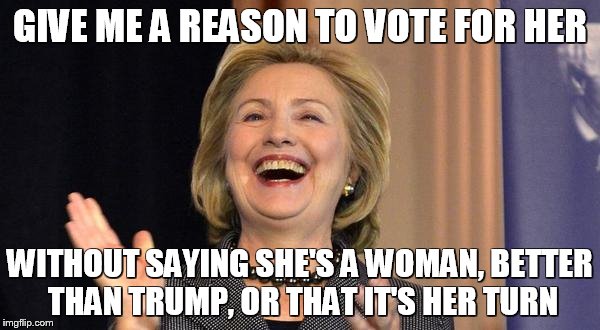
Why I Missed Donald Trump’s Rise

When Donald Trump first announced his candidacy, I remarked that he would pass and fall out of the race relatively quickly.  The basis of my argument was that Trump’s net favorability numbers were too low to be able to sustain a primary campaign, his place in the polls was largely due to name recognition, and that the base of his supporters was too low in the primary to be able to win multiple primaries.  I ultimately concluded that the most likely outcome for his campaign was Herman Cain.  Obviously, that was wrong.  Instead of just saying that was then, this is now, I want to look at why I was wrong and if it would provide any meaningful learning opportunities for me going forward.

Net favorability argument

This was the standard argument that was brought forward against Trump.  Looking at Trump’s favorability numbers, he looked like a general election candidate going up against the electorate as a whole compared to a primary with just members of his party.  Most contenders for the presidential nomination had favorability numbers of (+20-+30) while Trump’s numbers ranged from a low negative to a low positive (-5 – +10).  This included the early states as well as the national polls.  There had not been a major party candidate who was able to survive with these numbers in the modern primary system (1972).  Because there was a lack of historical precedent, it was easy to dismiss Trump’s ability to overcome this and be able to win any primaries, much less be the favorite for the nomination.

The argument has turned out to be wrong for a couple of reasons.  The argument assumed that the field would be winnowed relatively shortly as the voting began.  This would lower the ceiling on any candidate with this low of favorability numbers.  This did not happen as quickly as originally thought.  While Rand Paul, Rick Santorum, and Mike Huckabee dropped out after Iowa, this did not make much of a difference.  Jeb Bush, Chris Christie, Carly Fiorina, and Ben Carson sticking around for longer than they should have also helped Donald Trump win with a lower percentage of the vote than previous candidates.  Although, not by much.  With Super PACs and megadonors essentially being able to financially support a candidate as far as they could go, we could have assumed that the field would not winnow as quickly as we originally thought.

The stronger argument as to why the net favorability wasn’t enough to sink Donald Trump is the one that has been taken up by Harry Enten and his colleagues at Five Thirty Eight.  The argument is that his supporters may be relatively few in number but they support him no matter what.  This plays off of the idea of the field not winnowing.  As the field continued to be large, Trump supporters while small in absolute numbers almost all would end up supporting him.  The vast majority of voters who held a favorable opinion of Trump wound up voting for him.  This is at odds with what usually happens in primaries but not totally unpredictable.    In general elections, almost all of the people who have favorable views of one candidate will end up voting for him or her.

The base of supporters

I did underestimate the level of support for Donald Trump.  I assumed based on the polling information at the time, which showed Donald Trump was mainly picking up supporters from the TEA Party.  I estimated that the TEA Party supporters are about 15-20% of the Republican primary electorate nationally.  I had difficulty believing that Trump would be able to build a successful coalition out of the TEA Party because most other factions of the Republican base had at least one candidate who they could support.  In looking at the South Carolina exit polls and the New Hampshire exit polls, we can begin to see how Trump was able to build a coalition to succeed.

Despite his comments on women in the past and Megyn Kelly’s need to bring it up for debates, Trump does not have that large of a gender gap for support.  While he does slightly better with males than females, an image of him reaching out to just males is incorrect.  Although, once you get to income, he is able to separate himself.  In New Hampshire, he was able to get 40% of the vote of those making less than $50k/year.  The next highest was Ted Cruz at 13%.  In South Carolina, it wasn’t much different as he was able to get 33% of the vote for those making less than $50k compared to Cruz at 27%.  In South Carolina, at $50k-$99k, he was at 34% of the vote compared to Cruz at 26% of the vote.  Finally, for those voters making more than $100K per year, Trump was tied for Rubio with the lead at 28% of the vote and his vote share significantly decreased to 32% of the vote in New Hampshire with those making more than $100k per year.

In both South Carolina and New Hampshire, Trump significantly overperformed with voters who were not college graduates.  As education levels increased, Trump’s support decreased.  This should not be surprising as we also see the same thing with regards to income level.  Trump’s messages about the economy, about immigration, about just about everything appeals to those with less education and who are making less.  Immigration and trade deals are more likely to affect workers who make less or who are in less specialized fields.

Unfortunately, the next set of data does not help us determine the coalition that Trump has built.  In New Hampshire, Trump’s best marks were with non-born again or non-evangelical Christians, as he was able to garner 38% of their vote.  In South Carolina, however, he did much better with evangelical Christians/born-again Christians.  He got 34% of the vote of them compared to 29% of the votes of non-born-again Christians.

For the issue that mattered most, it should come as no surprise that Trump did the best with those who thought that immigration was the issue that matters most.  Although this only represented 10-15% of the total voters voting in either primary, Trump was able to receive over 50% of their votes.  Trump’s next best category was the economy, in which, Trump received over a third of the votes.  For terrorism, he was able to get about 30% of the votes.   His weakest category for South Carolina was government spending as he only received 25% of the vote.

In case someone accused me of not writing enough on exit polls, we can look at how Republicans in these states think about immigration.  44% of South Carolina voters think that illegal immigrants should be deported.  47% of those voted for Donald Trump.  In New Hampshire, 41% of the voters think that they should be deported and 51% of those voters went for Trump.  Perhaps more importantly, 65% of New Hampshire voters think that there should be a temporary ban on Muslims entering America.  45% of these voters voted for Trump.  74% of South Carolina voters think that there should be a ban on Muslims entering America.  41% of these supporters selected Donald Trump.

Basically, Trump’s coalition among Republicans is made up of those who are not well-educated, not making that much money, and is generally skeptical about immigration specifically illegal immigration and immigration by Muslims.  How much of the primary electorate is that?  Probably about 30-40% if South Carolina and New Hampshire is representative, at all.

What we learned

I don’t think Trump is necessarily relevant for learning material going forward.  Trump’s name recognition and his bullying are almost once in a lifetime talents (if you want to call them that).  Combined with a sentiment from primary voters that the next nominee should be outside of politics is providing Trump with a perfect storm to be able to win the nomination.  Finally, the San Bernardino shootings and the call for no refugees immigrating to the United States continued to help Donald Trump.  If there is one thing Trump likes to exude and one thing he values most, it is strength.

Trump had a fair share of luck to help him get here, including a large field to run against, but most of what he has been able to accomplish has been because of a fairly brilliant campaign.  He knows when to push back and when to bully.  He’s managed to have enough self-control to not lash out every time he gets attacked so as not to appear irrational.  His one mistake was skipping the Iowa debate but even then, he showed that he was willing to stick to his guns and follow through.

It’s been foolish to bet against Trump since he declared and I keep doing it proving myself to be an insane fool.  A brokered convention seems itself so unlikely that it’s hard to imagine a scenario where Trump is not the nominee at this point.

Edit: Ted Cruz has become the only candidate who could force more than one ballot at the Republican National Convention.  Nate Silver correctly noted that Donald Trump is unlikely to be the nominee if It is after one ballot.  This post was written prior to Super Tuesday.

Rematch in the Badger State

During the TEA Party surge in 2010, incumbent Democratic Senator Russ Feingold lost his Senate re-election to a newcomer to politics in Ron Johnson, a TEA Party favorite.  Feingold lost 52-47.  Feingold had been one of the more liberal members of the Democratic Party.  He supported a number of actions that are at the forefront of the Democratic presidential primary debate.  He opposed loosening banking regulations that Bill Clinton signed.  He opposed the PATRIOT Act right after the September 11 attacks.  He voted against authorizing military force in Iraq.  He backed the Affordable Care Act.  He also helped author a signature bill aimed to curb influence from outside lobbyists.   In 2012, President Barack Obama won the state 53-46 despite Mitt Romney having Wisconsin local Paul Ryan as the Vice-President nomination.  After watching Scott Walker survive a recall election and get re-elected in 2014, Feingold is banking on change in his favor for 2016.

The biggest attack from Senator Ron Johnson and conservatives so far is that Feingold is taking money from lobbyists and is thus hypocritical when he calls for reform for campaign finance.  Per Politico, “He’s a complete hypocrite, a complete phony,” said Johnson, accusing Feingold of backtracking on his signature issue of campaign finance reform and plotting his path back to power. “I think citizens of Wisconsin will kind of have a problem with that level of hypocrisy, that level of phoniness.”  RedState also finds this troubling and a way to attack Feingold.  It’s an unfortunate consequence of our current electoral system that it’s near impossible to be elected without having any outside money come into your coffers.  In order to be able to fix this, someone needs to be in power to be able to write the appropriate laws to have it fixed.  But I’m not sure to what extent this level of attack will be successful.

The most recent poll, while being nearly nine months out from the election has Feingold leading Johnson by 12 points.  In the early polls in 2010, Feingold only had about a 2-3 point lead which seemed to indicate a tough road ahead for him, especially as the election grew nearer, the rage toward the incumbent president and his party was bound to swell.  With a lower turnout, the rage was able to win and unseat the incumbent.  Presidential elections typically have a higher turnout rate than non-presidential elections.  In Wisconsin, nearly 1 million more people voted in 2012 than they did in 2010.  There was a decrease by nearly 500,000 voters from 2012 to 2014.  The respective presidential candidates will be hoping that they are able to motivate their voters to turn up for down-ballot races including Wisconsin.

Senator Johnson believes that the turnout efforts will look more similar to 2010 and 2014 rather than 2012.  The Milwaukee areas and talk-radio in Wisconsin played an important role in turning out people to vote to get Scott Walker elected.  If it works in mid-term elections, why does it not work when the President is on the ballot? In terms of raw vote count, the Republican candidate received 1.12 million votes in 2010, 1.38 million votes in 2012, and 1.26 million votes in 2014.  The Democratic candidate on the other hand won 1.02 million votes in 2010, 1.54 million votes in 2012, and 1.12 million votes in 2014.  We can’t necessarily assume that votes are static year-to-year but the candidate who seems to benefit more from a higher turnout would be the Democratic candidate.  While the Milwaukee machine and the talk-radio got people to vote, it was more of a war of attrition than anything else.  Russ Feingold and Democrats are hoping for a higher turnout election to help re-capture the Senate.  Let’s see if it can happen.