Arizona is going to be a surprisingly fun state to watch a fortnight from now. Unlike some of the states where I’m scraping the bottom of the barrel trying to find things I’m interested in watching, there’s easily 5 things that I’m interested in watching in Arizona on November 8th.
Presidential election: In the last 60 years, the only Presidential election in which Arizona voted for the Democratic nominee was 1996. Clinton’s second term, he was able to barely beat out Bob Dole in 1996 in Arizona (a Presidential election where Dole had pretty much given up before the end). Is it possible that Hillary Clinton can win Arizona for only the second time in the last 60 years? It’s certainly possible. Trump is not doing that well in Arizona thanks to the demographic make up of the state and Clinton doing historically well with Latino voters. What’s more is that Hillary’s “get out the vote” efforts will start her up by quite a few points prior to election day thanks to early voting and absentee votes. This is one of the states that I think is a true tossup for election day. The Real Clear Politics Polling Average has Clinton up 1.5 right now. Gary Johnson might spoil some votes (he received 1.4% of the vote in Arizona in 2012). Also, there are 418,959 Mormons in Arizona. Evan McMullin who is more or less running as a spoiler for Donald Trump and a Mormom alternative for Mormons (who are really not wanting to vote for Trump) has write-in ballot access in Arizona. The demographics and the potential spoilers should be enough to tip the election close enough where Clinton’s GOTV efforts should be able to win the state.
Proposition 205: The ballot measure that a lot of people are going to be following throughout November 8th because it’s a marijuana legalization proposition which excites even the casual observer. The ballot measure would allow for marijuana to be more or less regulated like alcohol and would be somewhat similar to Colorado. The elected officials involved in Arizona are split along party lines on whether or not they support it. According to the polls I’ve seen, it is pretty split whether or not Proposition will pass. I’m not too sure of what is going to happen with regards to this proposition. My gut is telling me that the way Clinton wins the state is thanks to demographics and enough third and fourth party spoilers that this proposition will be very close. I think this will be significantly closer than the Presidential election in Arizona. That’s saying something.
Arizona’s 1st Congressional District: For some strange reason, I’ve become slightly obsessed with this Congressional race. The incumbent for this race is Ann Kirkpatrick who is going to run for the U.S. Senate instead of running for re-election. She won re-election to this district in 2014 by less than 10,000 votes. She won election in 2012 by less than 10,000 votes after losing to Paul Gosar in 2010 by 13,000 votes when she was running for re-election. This is a fairly close Congressional district and would typically be a target for taking the seat for the Republican Party. Tom O’Halleran is running as the Democratic nominee in the district. O’Halleran is a former Republican who changed from Republican to Independent to Democrat in the last few years. He’s fairly moderate but doesn’t seem to be the strongest of candidates. Especially, since opponents could potentially portray O’Halleran as changing his party as being a flip-flopper or someone changing his party out of political expediency. But in the Republican primary, the Republican supporters decided to choose Paul Babeu with 30.8% of the vote in a crowded primary field. Babeu is a controversial figure in politics. He is a gay sheriff who tried to portray himself as tough on immigration, only he had a relationship with an undocumented immigrant whom he threatened to report to immigration services if word got out. I wrote more about Babeu previously. In a typical election, the Republican candidate would probably be a slight favorite but I am having a a hard time believing that Babeu will win on November 8th. But because of my slight obsession with this race, I have to watch how this race turns out.
U.S. Senate Election: As I mentioned above, Ann Kirkpatrick is running for Senate. She is running against the original Arizona maverick, John McCain. McCain is runing for re-election in what is probably going to be his election he can stand for. Looking at the polls from Huffington Post Pollster is showing that McCain is doing better than I originally thought. McCain has had a few gaffes including saying that he and all Republicans will be “united against any Supreme court nominee that Hillary Clinton, if she were president, would put up.” Depending on your political persuasion, that was either a gaffe, the truth, or just what you wanted to hear. McCain has tried to walk a tight rope on whether or not he is supporting Donald Trump and has eventually walked back his original support. McCain will still have a tough challenge in two weeks when Arizonans go to the ballot box to cast their vote. Kirkpatrick is fairly moderate and is trying to run on her apparent youth and being in touch with Arizonans against McCain. I think McCain is still a slight favorite in the state but more stumbles from McCain could let Kirkpatrick make up just enough ground to make it more interesting. Since Arizona might tip the Senate balance one way or the other, it’s going to be very important for the country.
Arizona’s 2nd Congressional District: This was another of the Congressional races that I was slightly obsessed with. Ron Barber (D) was elected in 2012 by less than 3,000 votes. In 2014, which became one of the most expensive races in the country, Martha McSally (R) was able to pull the upset over Barber by less than 200 votes. McSally is more of a moderate Republican than the typical Republican currently in Congress. I wrote more about the district here including effusive praise for State lawmaker Victoria Steele. Steele lost the Democratic primary to Matt Heinz. I’ve not done enough research on Heinz especially compared to Steele but Heinz appears to be running as more and more of a progressive in the district. This district is slightly more left-leaning than the rest of the state. Mitt Romney won the district with 49.9% of the vote compared to 48.4% of the vote for Barack Obama. If Heinz is able to continue to run a strong campaign in the district, he may be able to win election. Based on the limited polling I’ve seen for the district, it seems unlikely he will be able to. What this means then, is that McSally is able to outperform Trump in the district by a significant margin (in all likelihood). This should be a close race based on Presidential performances but will really fall to whoever had the stronger campaign.
Bonus thing to watch out for is Proposition 206. This proposition would increase the minimum wage to $10/hour in Arizona in 2017 and then it would be raised to $12/hour by 2020. But what’s even better, in my opinion is that the proposition would guarantee 40 hours of paid sick time to employees of businesses with 15 or more employees. This is significantly better legislation and more important legislation than the marijuana initiative, just for the paid sick time alone. But this would also increase the minimum wage. The polls that I’ve looked at show that this proposition is going to pass. If you’re just a casual observer of politics, this is the proposition I would rather watch than the marijuana proposition. But I know, I know, people have their own issues.
Again, I want to write more about the elections happening in 2016 than any other rational person would or should. Here are five things I’m watching for in Alaska on November 8th.
Presidential Election: According to some people, prior to the announcement of Sarah Palin as John McCain’s Vice President, Barack Obama was targeting Alaska as a state that he could potentially win. I’m not sure how much I really buy it but there’s that. In 2012, Alaska had the third highest % for Libertarian Party Presidential nominee Gary Johnson with 2.46% (behind only New Mexico and weirdly Montana). 7.45% of the votes cast in 2012 for Congress in Alaska were for a third Party candidate including 5.19% for the Libertarian Party nominee. In 2014, this actually increased to 8.07% of the Congressional votes were for third party candidates including 7.61% of the vote being given to the Libertarian Party candidate. If the Presidential vote goes the way that I believe it is going, the election will be called prior to the polls closing in Alaska. But if Gary Johnson is going to get close to 5% of the vote nationally for the Libertarian Party, he is going to need a strong showing in Alaska. I don’t think he is going to be able to pull enough votes to give Hillary Clinton Alaska’s electoral votes, what I am interested in is the ceiling of Gary Johnson both nationally and in the state of Alaska.
Alaska’s At Large Congressional District: Don Young (R) is running for re-election, again. He won in 2014 with 51% of the vote and 142,572 votes compared to 41% of the vote for Forrest Dunbar the Democratic challenger. Dunbar received 114,602 votes. There were a total of 279,741 votes cast in the 2014 Congressional race. This was only a slight decrease from 2012 where 289,804 votes were cast. Young lost 43,000 votes from 2012 to 2014. The Democratic challenger gained 30,000 votes from 2012 to 2014. The Libertarian candidate Jim McDermott gained 6,000 votes from 2012 to 2014. If you’re trying to make an argument for a Congressional upset, then you are probably making an argument that the Democratic candidate’s gains are real, the Libertarian candidate makes a slightly bigger jump with Johnson’s coattails, and possibly slightly depressed Republican turnout.
Ballot Measure 1: This Ballot Measure would essentially allow for universal registration for voting through the dividend fund. I do believe that we should have universal voting registration because it helps to make voting even easier. The criticism of the measure is that it would cost extra money and that the people who are going to be registered are more or less lazy, as there are many different ways to currently register to vote. In Alaska, it is likely that many voters do not have driver’s licenses but are a part of the permanent dividend fund. I think that this measure passes and we are getting one step closer to universal voting registration.
Alaska State Senate District H: There’s not very many competitive state legislature races in Alaska. Democratic candidate Bill Wielechowski is running for election in District H of Alaska. He won re-election in District G in 2012 with 56.2% of the vote against Republican Bob Roses. His district was changed when the redistricting process went through and it was changed to District H. I’m only bringing him up as it is potentially the closest State Senate election in Alaska on November 8.
Alaska House of Representatives, District 21: Again, there’s not very many competitive elections in Alaska. District 21 is the exception and is being targeted by the Republican State Leadership Committee. The current representative is Democratic Party’s Matt Claman. He won election in 2014 for District 21 with 3,849 votes winning the election by 90 votes over the Republican candidate Anand Dubey. In 2014, it was more likely to be a Republican year but as we saw with Young’s Congressional election, it seems that many Republicans didn’t vote then. Claman is running for re-election and is a slight favorite for re-election but it’s possible that he loses to Marilyn Stewart because there’s some money and time being spent to flip the seat. This one will be fun to watch on November 8th and possibly later.
In my never ending struggle to write more about the 2016 elections than any other website (and only having one writer), I’ve decided to highlight 5 elections in every state to watch on November 8th. They can be as big as the Presidential election in the state or something as small as as state House of Representative district. It’ll go in alphabetical order.
Alabama
Sadly, there’s not very many interesting elections in Alabama this year. There are 14 Amendments on the bally for some reason. That’s what we’re mainly going to focus on since the Congressional Districts are not competitive.
Amendment 2: The first Amendment that I’m looking to see if it passes is Amendment 2 for the state ballot measures. The Amendment would prohibit state park funds from going to other portions of the budget. The idea is that it will keep the parks open and keep the funding for them within the parks system. There doesn’t seem to be much of an opposition to the Amendment. The reason that it is interesting to me is that it is an affirmative step to help save what should be important to many people. The Alabama budget is sort of a mess so this may have larger impacts on Alabama’s budget.
Amendment 6: Alabama Impeachment Amendment – this Amendment would change the Alabama Constitution to require a two-thirds supermajority vote in the Alabama State Senate for conviction and impeachment of a state official. Currently, the Constitution only requires a majority of the state senators present for voting for conviction and impeachment. The impeachment Amendment came up because of the potentiality of impeaching Alabama Governor Robert Bentley.
Amendment 8: This amendment, if passed, would allow for “right to work” policies to be enshrined in the Alabama Constitution. Currently, Alabama is a right-to-work state. There’s not really any danger of Alabama switching from a right to work state to a non-right to work state so it is only codifying the policy that is already in place into the constitution. Right-to-work is already enacted by statute. If the amendment passes, which it is likely to do, if they did decide to change the state from right-to-work, it would be much more difficult.
Amendmet 13: Guys, there’s really not a whole lot in Alabama that’s interesting to follow. This amendment would prohibit future age restrictions for government official positions exempting judicial positions. This would potentially impact trustees of the public university systems as there is currently age restrictions on university trustees.
Martha Roby’s race in Alabama’s 2nd Congressional District: Roby was one of the first Republican members of Congress to renounce their support for Trump. She is running in a very safe district in Alabama’s 2nd Congressional District. She has not backed away from her renouncement of support for Trump. What I’m interested in watching is how many votes it costs her. Only 157 of the Congressional votes in 2014 for her district were write-in votes. I’ll be interested to see if that increases or decreases from her principled stand.
Here is the often promised voting guide for Nebraska. A few notes before we begin. I make no apologies for any charge of bias that you think I might have. I will give you the relevant information about the candidates out there, as well as a recommendation of who I would vote for. I will also link to some policy posts that I have written over the last year to provide you with some background, as well.
This is very difficult for me to write without coming off as a jerk. The major party’s nominees for this election leave voters with an obvious choice. Without going too far into it, voting for a third or fourth party simply does not make any sense in presidential elections.
The debt
Among the arguments against voting for a Democrat is the argument that Democratic policies will leave the country bankrupt and significantly increase the debt or deficit of the United States.
Trump’s tax plans, according to the nonpartisan Tax Policy Center, would reduce federal revenues by $9.5 trillion over the first 10 years and an additional $15 trillion over the next 10 years after that. To put this in perspective, spending for the entire US Government in FY2015 was $3.7 trillion. The Tax Policy Center found that the tax cuts could produce deficits as high as $11.2 trillion over the next 10 years. To avoid creating a deficit, Congress would have to cut spending by 21% overall. Discretionary spending could also be reduced by 82% to avoid the deficits.
Hillary Clinton’s tax plans would increase revenue by $1.1 trillion over the next decade and an additional $2.1 trillion over the next 10 years. Not surprisingly, Clinton’s tax plans would reduce the national debt by $1.2 trillion over the next 10 years.
It would seem difficult to vote for Trump based on that information.
Taxes
The reason that Trump’s plan is so disastrous for the debt is that it would cut taxes at every income level. The Tax Policy Center found that on average it would cut taxes by $5,100. The highest 0.1% of income-earners would receive an average tax cut of $1.3 million in 2017 or about 19% of after-tax income. Middle-income households would receive an average tax cut of $2,700 or 4.9% of after-tax income. This would significantly increase the number of people not paying federal income tax. 63% of households would not pay federal income tax if the tax plans were passed, as is.
Trump would also repeal the estate tax, known as the death tax. I wrote about this, in the past. But long story short, the estate tax only affects 2 out of every 1,000 deaths. Clinton’s tax plan would also increase the estate tax.
Clinton’s tax plans, meanwhile, would increase taxes on high-income filers. The most significant portion would be her support of the “Buffet Rule.” The rule would require those with an adjusted gross income of over $1 million to pay a 30% effective tax rate. This would reduce the after-tax income of those in the top 1% by about 5%. The bottom 95% of income-earners (those earning less than $300,000) would see little changes to their after-tax income. This report was written before any tax cuts for the middle class or lower. While the report from the Tax Policy Center’s report was written when Clinton’s elderly care plan was proposed, the lack of specificity prevented the Tax Policy Center from analyzing the effects on middle class individuals.
Jobs
According to Moody’s analytics in their report on Trump’s economic policies, if Trump’s policies are enacted as is, there will be a lengthy recession with an estimated loss of 3.5 million jobs by the end of Trump’s first term. After-inflation incomes will stagnate, stock prices will decline, and real house values will also decline. The biggest beneficiaries, according to this analysis, of Trump’s job plans are high income earners. Moody’s gives a more favorable rating to Clinton’s plans on the economy. They estimate that at the end of her first term, there would be an estimated 3.2 million job growth. They estimate that there will be an average increase in real household income by $2,000. The biggest beneficiaries of Clinton’s jobs plans are low – middle income earners.
Immigration
This is where I may lose some of you. Trump is significantly hard-line on immigration, especially compared to Clinton. Trump has promised to deport 11.3 million undocumented immigrants from the United States. Deporting the undocumented immigrants here would cost the federal government $400 to $600 billion. The argument that undocumented immigrants are a drain on the taxpayer are based on the idea that undocumented immigrants do not have a high level of education and take more out of social welfare spending than they put in with taxes. The estimates for how much undocumented immigrants are mixed, at best. Beyond that, he supports ending birthright citizenship, which is likely unconstitutional as a violation of the 14th Amendment. Further, Trump has called for a ban for Muslims entering America. This is almost certainly unconstitutional.
Clinton has run on a campaign that is advocating for immigration reform, including a path to citizenship for undocumented immigrants and DACA and DAPA executive orders that President Barack Obama instated.
I can’t believe I got this far in talking about immigration without talking about the wall. Trump repeatedly called for a wall between Mexico and the United States. Trump hasn’t talked about it recently because it doesn’t poll well outside of his base. But he’s still advocating for it. Of course, when he went to Mexico to talk, ostensibly about the wall, he choked.
Trade
Trump’s signature issue throughout the primary beside his strong stance on immigration was his distaste for trade and globalization. People have been trying to make too much of this issue slowly creeping back into the American conscience that trade is something that most people understand. And wouldn’t you know it, Trump doesn’t seem to understand it, either. Trump is seemingly unaware that most Americans work in the service sector of the economy. Not that many workers work in America in manufacturing internationally traded goods. Despite his claims that the biggest plants in the world are being built in Mexico, the biggest plant is being built by Tesla in California. The current biggest plant is in the United States. The third biggest plant is in Illinois. The biggest plants are Mitisubishi and Boeing depend on international trade to be able to thrive and for how/why they are able to have their biggest plants. Manufacturing output in the US has increased by 50% since the implementation of NAFTA which was negotiated by the George H.W. Bush administration. Unemployment in Ohio and Michigan, in particular have declined since the implementation of NAFTA. The problems of free trade tend to be overstated in an effort to blame complex issues on something simple.
To be sure, there are complex problems on globalizatoin and free trade. There are winners and losers when you open free trade agreements. No trade deal is perfect in reality. What we have is an ideal economized version of trade vs the reality. This is often my complaints about a number of minor parties and their vision of how the government works. Their idealized version could almost never works out in reality. Simply blaming the loss of manufacturing jobs or jobs in general on free trade or trade agreements, seems to me, to ignore real complex issues about the economy and how it works.
I’m not a free trade apologist, by any measure. There are real concerns about free trade and the effect on workers. I do believe that we should have principles to hold global supply chains accountable for their actions. Clinton has repeatedly walked back statements over her initial support of the Trans Pacific Partnership (TPP). So much so, that she has now stated that she no longer supports it and would not sign it. Trump also does not support the TPP. If you do not support the TPP, then your question is how much do you believe Clinton and how much Trump.
We’re at a lot of words already for this voting guide and we’re not even close to being done. Let’s pick up the pace. Trump’s foreign policy is largely based around the idea of trade and economic interests which don’t seem to make much sense. Trump’s foreign policy, despite his claims to the contrary, are very hawkish. Trump has repeatedly lied about his views on Iraq and Libya. Trump has an unusually close relationship with Russian autocrat Vladimir Putin despite his denial. His claims that Russia is fighting ISIS, as is Bashar Al-Assad is not one that is shared with US intelligence experts. Trump’s original plan was to wait out the fight between ISIS and Assad. He now thinks that we should send troops to Syria.
Nearly every comment Trump has made on foreign policy has been met with appropriate scorn. Trump, in an interview with The New York Times, tried to set conditions for invoking Article 5 and protecting NATO countries. His response to that was that he was misquoted. Then New York Times then released the full transcript from the interview. Beyond that, he apparently doesn’t know that Putin has made his play into Ukraine. And even if Putin did go into Crimea (which he is) the people would prefer to be part of Russia but it was bad under Obama’s watch. Despite his claims that he knows more than the generals or the ones giving the briefings to him, he does not seem to understand the very basics of foreign policy.
Clinton’s position on a no-fly zone is probably not that tenable without intense negotiation with Russia to prevent having another world war or a cold war with Russia. I’m not as enthralled with Clinton on her foreign policy issues. She cast a vote for the AUMF in Iraq and has made questionable calls for military intervention in Libya. further, as it turns out, she made the wrong call with regards to Syria as it was happening. Her foreign policy hawkishness seems to stem from the Clinton presidency failures in Rwanda. Her basic fear of not being involved in ending human rights violations and potential genocide weighs heavily on her, as well as her husband. Her cavalier remarks about Russia from herself and her staff do not speak well of her. While I do think that Putin is an authoritarian who is not to be praised, painting Russia as the boogeyman for a number of issues is still problematic.
Temperament and “intangibles”
I can’t go through all of the policies that Trump and Clinton have that compare the two. Clinton’s wonkiness on her campaign is a reflection of who she is. She has plenty of plicy ideas and ideals of how to make America and the lives of everyday Americans (despite her hatred of that phrase) better. You may disagree with how we get there. You may disagree that the federal government should do something to help make college more affordable for young Americans. Or you might think we do too much to help the poor because the programs, you feel, are rife with abuse.
More likely, you have a visceral hatred of Clinton because of things you have seen on the internet or saw briefly when you were younger. You might have a strong belief of how Clinton handled her e-mails. And yes, it is very obviously problematic that Clinton set up her own private e-mail server, most likely to prevent herself from Freedom of Information Act requests. It was, as FBI Director James Comey stated, “reckless.” But to cherrypick his claims, you have to continue. There is simply not a precedent for criminal investigations. And lest we forget, there were only 3 (!) classified e-mails found on her server by the FBI. These e-mails were improperly marked in the e-mail, as well. You might want to read the actual Benghazi report put out by the House Republicans. It’s not nearly as damning as the claims made in various right wing publications.
If you have a hatred of the Clintons because of the appearances of improprieties, I can’t really help you. Almost all of these appearances of improprieties are just that, appearances. Despite over 20 years of investigations of the Clintons, there has been little to show for it. There was the perjury of Bill Clinton and the revelation that Hillary used a private e-mail server. Even the supposedly damning e-mails published by Wikileaks do not seem to indicate a number of the problems that they try to point out. I simply do not have the time to debunk your pet conspiracy theory about the Clintons. Or debate the appearances of improprietis, especially since the reason they are problematic are because they seem to give power and undue influence to people like Donald Trump.
Supporters of Trump seem to cling to the idea that he will somehow protect American ideals and appoint the right justices to the Supreme Court and federal courts. Trump released a list of Supreme Court justices that he would appoint. Like many of the jobs, he seemingly creates, he outsourced the job. Unlike his manufacturing jobs, he left it in the United States. They’ve largely been a production of the rightwing think tank, the Heritage Foundation. They may be sufficiently conservative for some Republicans to want to vote for Trump, especially given the fact that there is an open seat on the Supreme Court. Surprisingly, this is one of the rare instances where Trump has managed to stay within Constitutional grounds on the separation of powers.
An argument for Trump is that he will be constrained by the separation of powers and that he can be constrained by his own advisers. Trump is still repeating the same policy gibberish that he has long said since the beginning of the year. He ran in the Republican primary on this concept of “lines” in health insurance that need to be erased to bring in competition. What this policy is referring to is the ability to sell insurance across state lines. This is a terrible policy but it is at least a policy that Republicans advocate for. His nonsense about lines is a reference to that. Even though, he has literally no idea what that means. If he was interested in learning health care policy, he could talk to his running mate Mike Pence. Pence’s version of the Medicaid expansion is one way Republican governors are trying to reform healthcare. It’s, again, not policy that I think is any good but it’s at least something. It’s unclear if Trump is willfully ignoring the advice of his advisors or if he’s only willing to learn about certain subjects.
To be clear, what’s important is not that Trump isn’t advocating for Republican ideas and policy goals. I would rather him not advocate for these types of policies. What’s important is that over the course of the last year, Trump has not shown a willingness to to expand his knowledge or to respond to any new information. If you’re counting on Trump showing an ability to learn or to respond to new information, there is simply no evidence. Even in the very rare instances where Trump tries to take responsibility for something, he later doubles down making his apology null and void. You can see that in the interviews that he holds, when called out for trying to bullshit his way through answers, he tries to double down on this bullshit.
One of the reasons that Trump supporters are still clinging to for the reason for their vote is because of the supposed idea that Trump will protect the 2nd Amendment. I’ve written that this is false and all of the Constitutional Amendments that Trump’s policy will violate. His stop and frisk policy where he would like to proactively take guns away from citizens is blatantly unconstitutional and more gun grabby than any policy Clinton or Barack Obama have ever advocated for. Trump’s continued insistence on torture and trying to force the military to do illegal things would be a violation of international norms and our own Constitution. In most normal elections, this would be enough to stop someone from being a serious contender for President.
Or maybe it’s his insistence to appoint a special prosecutor to have his political opponent jailed. That is likewise a violation of our democratic institutions and our belief that we solve political battles and disputes with elections. Trump’s insistence on this is in the articles of impeachment brought on Richard Nixon. This is an abuse of power. It threatens us to our democratic core.
Trump has been running explicitly on the idea that the only way he can be defeated is through voter fraud. Not just voter fraud but voter fraud from minority communities. This is the efforts of a racist demagogue. There’s very little evidence of in-person voting fraud, yet his supporters believe that ACORN, an organization defunded for 5+ years will steal the election. This insistence on voter fraud and his ideas of jailing his political rival is something seen in third world banana republics, not in the United States.
I could go on. But Trump’s unique awfulness is a threat to democracy. I’ve had multiple policy disagreements with John McCain, with Mitt Romney, with Republican members of the Legislature but I never am scared for the violations of our democracy and our institutions. His outright lies and demagogic racism combined with the very tenuous grasp that he holds onto for his policy ideals makes him a threat.
Trump often ends various debates and statements with a misguided notion that he has “the best temperament.” He often lashes out at reporter, politicians, officials, and staff who disagree with him when he has his feelings hurt. Or when they tell him what he wants to hear. From a number of Republican strategists, officials, and many numbers of people who have worked with Trump, he surrounds himself with “yes, men” who are too afraid to tell him, “no.” We should not be afraid to tell him no.
A More Perfect Union’s Recommendation: Hillary Clinton
Fortenberry, by GovTrack analysis, is on the right fringes of the moderate portion of Congress. The most similar member of Congress based on their analysis was Aaron Schock. Their analysis is based on sponsorship and cosponsorship patterns. Fortenberry has introduced 15 bills during the 114th Congress. The majority of the bills he has introduced during this Congress have been about healthcare. His bills on healthcare have been focused on trying to strengthen health savings accounts and retirement accounts. H.R. 1494 was introduced by Fortenberry to rollover retirement plans to health savings accounts. H.R. 1169 was another bill that Fortenberry introduced to increase the maximum amount that someone can contribute to a health savings account.
He has tried to stay away from a number of controversial bills in recent years. While scanning for my legislative scorecard, a couple of bills that he co-sponsored stand out. He was a co-sponsor of H.R. 1147 Legal Workforce Act which would create a national mandatory E-Verify system. I think this bill is problematic because E-Verify is a problematic system.
Fortenberry joined his Nebraska Congressional delegation member Adrian Smith in co-sponsoring H.R. 1885 Securing Access to Rural Postal Services Act of 2015 to try to protect rural postal service offices. It’s a decent bill to try to protect rural postal service offices; however, it does not attempt to help make the postal service solvent.
Fortenberry is pro-life and did co-sponsor H.R. 36 Pain Capable Unborn Child Protection Act which attempted to ban abortion at 20 weeks. If you are a pro-life, single issue voter, Fortenberry has fairly strong credentials in that regard. He has also supported legislation to include fetuses under protection of the 14th Amendment. Of course, he only supports that protection if one parent is an American as he wants to end birthright citizenship and have to have one parent who is an American to receive citizenship.
The person running against Fortenberry is Dan Wik. Wik describes himself as a financial conservative, repeatedly. He has a link on his website about his thoughts on Brexit where he tries to capitalize on anti-globalization thoughts. His thoughts on job and the economy are likewise influenced with a special affinity for manufacturing and a belief that we don’t have a “military industrial complex, and loose (sic) national security.” Going futher, Wik would want to place a tariff to fund social security while cutting corporate tax, capital gains tax, and personal income taxes. He would want to eliminate the rules of engagement and “let the military do what it is trained to do…win!” . Wik also argues for a flat tax of between 0-18% depending on income and supports a balanced budget. Wik does argue for universal healthcare coverage based on the current Medicare system. This isn’t remotely politically possible in our current environment but it’s an interesting idea. His immigration reform ideas of allowing undocumented immigrants to apply for a green card if they are not relying on social welfare programs, is likewise intriguing.
Wik’s policies seem to be as mishmash of economic isolationism and trying to nudge in the idea of fiscal conservatism. His grasp of the issues leaves me unimpressed, his website is filled with easily corrected grammatical errors, and what’s more is that his ideas don’t seem to make a lot of sense if you think about them. Manufacturing jobs is not the way to grow the American economy, at this point. Even if it was, it seems like a strange argument to make at this point in time when manufacturing jobs are on the rise. His insistence on a flat tax is also not economically feasible. If I’m going to criticize Trump for his lack of policy chops, I have to do the same to Wik.
Fortenberry, in this Congress, has written bills that have attracted both Democratic and Republican co-sponsors on 38% of them. Of the 146 bills Fortenberry has co-sponsored, 14% of them were introduced by a Democrat. I think Fortenberry’s views on birthright citizenship are wrong. I think both Wik and Fortenberry are wrong on the idea of a balanced budget amendment. I believe Fortenberry is wrong on LGBT rights as well as wrong for not wanting to assist workers who lost their jobs due to free trade agreements. I, again, think he is wrong on the PATRIOT Act, as well. I wish that someone else would have ran against Fortenberry who in a wave election might prove to be vulnerable.
It’s hard for me to say who I would recommend to vote in this election as I oppose Wik and Fortenberry on a number of issues. It’s not as if I can just hand wave around the problems Fortenberry has and I can’t just ignore the problems Wik has, either. This honestly, comes down to who I think each candidate will vote for in leadership. The House’s leadership has almost total control of what bills will be introduced. I believe Wik will vote for Nancy Pelosi for Speaker of the House and Fortenberry will vote for Paul Ryan. Since I believe in progressive legislation, I would reluctantly cast my vote for Wik.
District 2:
Republican: Don Bacon
Democratic: Brad Ashford
Ashford was elected in 2014, which was a pretty good year for Republicans outside of Omaha. The Congressman who Ashford defeated made a weird remark that ended up sinking him. Going into this election cycle, Ashford seemed fairly vulnerable. But thanks to the tanking of Donald Trump and his lack of appeal among college educated white voters, it seems more likely that Ashford will be able to win re-election.
Ashford has introduced 9 bills since he took office in January of 2015. The sense on Ashford is that he has been fairly moderate in Congress. The bills that he has introduced have largely focused on government reform for either pay for members of Congress or how they are reimbursed. He has stayed away from a number of controversial issues to try and stay in line with Nebraska’s 2nd Congressional District which is fairly moderate.
Bacon is trying to run as a conservative and tries to contrast himself with Ashford. They agree on a number of issues. Both Ashford and Bacon oppose the Iran deal that the US negotiated with Iran. They both support the building of the Keystone XL oil pipeline. They both support a balanced budget amendment to the Constitution. Ashford helped introduce a bill in Congress to that effect They both oppose closing Guantanamo Bay, as well.
They do differ on key issues. Bacon believes that we should slowly raise the social security retirement age. Bacon opposes bills that would essentially be ENDA or add sexual orientation, gender identity, or gender expression to nondiscrimination law. Ashford was a co-sponsor of H.R. 846 and H.R. 3185. Ashford voted against the Pain Capable Unborn Child Protection Act which Bacon said he would support. Bacon stresses that America pays one of the highest corporate tax rates in the world at 35%, he wants to lower the corporate tax rate to 25%. The 35% corporate tax rate refers to the statutory tax rate that is on the books for corporate tax. There are a number of loopholes that bring the effective tax rate lower. The Congressional Research Service put the US effective corporate tax rate at 27.1%. I e-mailed Bacon’s campaign about whether Bacon’s corporate tax reduction would be a decrease in the statutory rate or the effective tax rate. I have not heard back.
Bacon supports repealing the Affordable Care Act. Ashford has repeatedly co-sponsored legislation from Republicans with an effort to reform health care in America but does not support the wholesale repeal of the law. Ashford has repeatedly said that he would not have supported the law but that he is committed to reforming the law. In the debate between Ashford and Bacon, Bacon said that Rep. Tom Price had introduced a number of bills that would repeal the ACA and still keep the prohibition on discrimination of pre-existing coverage, that people up to the age of 26 can stay on their parents health insurance, etc. Basically, Bacon’s idea is to keep the popular parts of the ACA while getting rid of the individual mandate. Here are the bills that Price have introduced regarding health care in the 114th Congress. We have H.R. 2650, H.R. 2300, and H.R. 1234. Ashford rightly told Bacon that the bills Price have proposed would not do what Bacon claimed and Bacon just smiled.
I don’t want to relitigate the health care debate, again. The individual mandate is what makes the ACA work. I have my own issues with the ACA and don’t think it’s perfect. It’s a significant improvement over the status quo prior to the ACA. Unfortunately, like a lot of things, it gets blamed for more complex issues that are hindering progress.
Bacon further does not believe that the federal government should set a minimum wage. Not just an increase, but no minimum wage. That’s at least what he said in the Republican primary debate. The idea that the minimum wage should be set by the private sector is a belief that private businesses operate in an idealized world. This doesn’t seem to have any grounding in the actual world where Trump, who Bacon as of this week (10/10) still seemed to support had 25 violations of the FLSA since 2005.
Bacon also has a section on Common Core on his website. Nebraska rejected Common Core. Bacon opposes a pathway to citizenship for undocumented immigrants whereas Ashford said he would be supportive of the Gang of Eight immigration bill that would have granted citizenship.
I’ve been critical of Ashford for being a moderate in the past but Bacon is just much, much worse on many of the issues that I am supportive of.
A More Perfect Union recommendation: Brad Ashford
District 3:
Republican: Adrian Smith
Democratic: None
I guess we don’t really have a choice.
State legislature:
District 3:
Tommy Garrett
Carol Blood
Garrett likes my friend’s band, Faded, on Facebook and you should, too. Garrett’s biggest issue was medical marijuana in Nebraska. He introduced the legislation to allow for medical marijuana in Nebraska and the regulation of it. It eventually failed a cloture vote. In return, Garrett voted against advancing LB10 which was a bill that would have changed Nebraska’s electoral votes back to winner take all. There was a tenuous deal in place between Garrett and supporters of LB10 and their support of his bill on medical marijuana.
Garrett voted in favor of LB268 which repealed the death penalty in Nebraska. As a Republican, Garrett faced considerable pressure from Governor Pete Ricketts to change his vote after Ricketts vetoed the bill.
Garrett voted in favor of LB947 which allows for those here with protection of Barack Obama’s DACA executive order to obtain professional licenses. He did, however, vote against LB485 in 2014 which was the Employment Nondiscrimination Act (ENDA) to protect employees from discrimination based on sexual discrimination or sexual identity. He voted to table LB586 ENDA in a previous session, as well. He also voted to table LB1032 expanding Medicaid, which is essentially a vote against the bill. Garrett also voted against LB943 in a previous session which would have raise the minimum wage to $7.65/hour in January 2015, $8.35/hour in January 2016, and $9.00 in January 2017. Garrett continues to oppose a minimum wage increase.
While Carol Blood has not filled out the voter guide information that Nebraska Voter Guide uses, we do have some of her issues. She does believe that voting is a fundamental right and that voter fraud is not a problem in Nebraska. She does not support voter id laws. Contrary to Garrett, she does support Medicaid expansion in Nebraska. She also thinks that we should review mandatory minimum sentences and expanding prison alternatives.
A More Perfect Union recommendation: Carol Blood. Despite Garrett’s noble quest to support medical marijuana in Nebraska and to repeal the death penalty. I do believe that Blood is the better person suited for the job from District 3.
District 5:
Mike McDonnell
Gilbert Ayala
McDonnell and Ayala provide a much larger contrast than Blood and Garrett. McDonnell would support ENDA or a similar law. Ayala would oppose such a law. McDonnell supports expanding Medicaid compared to Ayalsa who opposes it. Ayala does support voucher programs to “increase school choice” and McDonnell opposes it. McDonnell supports bringing casinos, horse racing, slot machines, or video keno in Nebraska which Ayala opposes. McDonnell does support raising the minimum wage in Nebraska which Ayala opposes.
They both agree on not legalizing the recreational use of marijuna; prohibiting abortion, although Ayala opposes abortion in all cases; and opposing regulations for additional gun control measures.
A More Perfect Union recommendation: Mike McDonnell. Both ENDA and Medicaid expansion are very important to me and issues that I support strongly.
District 7:
Tony Vargas
John Synowiecki
There was a bit of a scuffle for Douglas County Democrats when they listed Vargas as a Democrat running and did not list Synowiecki. They are both Democrats so there was some problems. Synowiekci is a former State Senator for the district. He has been supported by Heath Mello, who is running for Mayor of Omaha, and Jeremy Nordquist current chief of staff for Brad Ashford.
Synowiecki was the co-sponsor of LB 239 in 2005 which would allow undocumented immigrants to be able to pay in-state tuition to attend college. He was attacked in Republican mailers for this support. In 2007, he voted in favor of LB 476 which was a bill to eliminate the death penalty. He also voted in favor of a similar bill in 2008 LLB 1063. He did vote against LB 395 in 2008 which was the Statewide Smoking Ban.
Vargas and Synowiecki both stated that they would support Medicaid expansion and giving professional licenses to certain undocumented immigrants. Vargas has expressed some support for the role of charter schools (which is not part of the current educational environment in Nebraska). He has walked back those comments saying that he has no interest in introducing legislation to introduce charter schools to Nebraska.
Synoweiecki, in the candidate forum, talked about rescheduling marijuana out of schedule I drug. He supports a bill to study medical marijuana in cannabis studies to see if hemp oil is medically helpful. He would support medical marijuana if the study with UNMC proves that hemp oil is effective. Vargas, likewise, supports the UNMC study to see if hemp oil is proven to be medically effective.
You can watch their candidate forum here:
District 9:
Sara Howard
Larry Roland
Howard has been described to me as the real life version of Leslie Knope. She was the co-sponsor of LB887 to expand Medicaid in Nebraska in 2014. She did not vote on LB943 to increase the minimum wage. She did vote in favor of ENDA, as well. She was a co-sponsor of LB947 to allow those protected by executive actions to receive professional licenses. She voted against LB10 to change Nebraska to a “winner take all” electoral system as opposed to splitting electoral votes. Finally, she voted in favor of LB643 for medical marijuana.
Roland runs in stark contrast. He opposes ENDA and expanding Medicaid. He does support “increasing school choice.” He supports prohibiting abortion in all instances except in the case of the health of the mother. He would also oppose any increase in gun regulations.
A More Perfect Union Recommendation: Sara Howard
District 11:
Ernie Chambers
John Sciara
Chambers is a controversial figure in Nebraska. There’s plenty of people out there who won’t vote for Chambers because of his style and overall demeanor. What they may have missed is his importance in the Nebraska legislature. When LB10 to change Nebraska to a “winner take all” state for electoral votes came up, Chambers became a one-man wrecking crew to filibuster the bill. Arguably, he was the biggest impediment to LB10 getting a full vote (which likely would have passed). If you think Nebraska should continue to split its electoral votes, then thank Chambers.
Chambers also voted in favor of repealing the death penalty and was one of the staunchest advocates for repealing the death penalty. As he has been, for years. He supported LB947 to license certain undocumented immigrants. He supported a state ENDA bill and opposed tabling LB1032.
Sciara opposes ENDA, expanding Medicaid, and raising the minimum wage. He supports vouchers for “school choice.”
A More Perfect Union recommendation: Ernie Chambers
District 13:
Jill Brown
Justin Wayne
Wayne unleashed a somewhat policy heavy portion on his website to talk about his economic plans. Some of it crosses traditional party lines. He supports increasing wind energy in Nebraska. But he also wants to focus on removing regulations for small businesses to be able to run. He wants to expand Medicaid to be able to help support the economy while also creating “enterprise zones.” He also supports paid sick leave for all Nebraskans. There’s a lot of good ideas in his economic plan if not completely fleshed out.
Brown’s website focuses on issues for expanding Medicaid, fighting for a living wage, and investing in education at the state level. She opposes charter schools for Nebraska and wants to strengthen teachers’ say in educational reforms.
Wayne, while he has been criticized for charter school support, in the candidate forum proposed an idea of public options to give more choices to schools instead. He declined the idea of introducing charter legislation. Brown also does not support charter schools. Wayne does support the idea of school choice and says that there is a distinction between school choices and charter schools.
Wayne does support medicinal marijuana in the form of cannabis oil. In the forum, he brings up a story of a friend who moved to Colorado for seizures for her children. He also opposes the legalization of recreational marijuana. Brown does not support Garrett’s bill to legalize medical marijuana as many people get prescriptions for marijuana. This is actually a very good point and distinction. While I support medical marijuana because I think that there are some medical conditions that can be treated with it, I do believe that in a lot of states and a lot of bills out there, it is a way for more affluent people to be able to get access to legal pot while those who do not have access to it, to be arrested.
You can watch the candidate forum here:
A More Perfect Union recommendation: Justin Wayne
District 15:
David Schnoor
Lynne Walz
Schnoor voted against repealing the death penalty. He voted to change Nebraska’s electoral votes to a “winner take all” system. He also opposed ENDA and expanding Medicaid. He has stated that he opposes all abortion. He was also a co-sponsor in establishing a minimum wage for minors. He did not vote for allowing medical marijuana in Nebraska.
Walz doesn’t have very many issues on her website about what she would support and did not find any data about her political statements. Walz has been critical of Schnoor for not offering enough ideas or plans to try to help Nebraska. Schnoor has disagreed stating that legislation “just adds red tape and government.”
I disagree with Schnoor on the role of government, as well as disagree with him on a number of issues.
A More Perfect Union recommendation: Lynne Walz
District 17:
Ardel Bengtson
Joni Albrecht
There’s not much information that I can find on these candidates. Albrecht filled out the information to provide to Nebraska Voter Guide. As you can see from there, she opposes ENDA, expanding Medicaid, and raising the minimum wage in Nebraska. She would also oppose any new regulations for gun control in Nebraska. She does support voucher programs to “increase school choice.”
Bengtson did not fill out the information for the Nebraska voter guide, as far as I can tell. Her campaign website focuses on increasing better funding for public education to reform the public school system. She would like to lower local taxes, as well. I’m not sure how that would work, to be honest.
With this little information out there, it’s hard to really make an informed decision between the two. But I have a hard time voting for someone who is not going to expand Medicaid and who is not going to support ENDA.
A More Perfect Union recommendation: Ardel Bengtson
District 21:
Larry Scherer
Mike Hilgers
Hilgers came very close in 2012 to be the State Senator in district in 2012. He decided to run again, this year. He describes himself as a fiscal conservative. He wants to lower taxes based on his website it would look like he would want to eliminate or reduce the state income tax. Scherer is an opponent of charter schools or vouchers to “increase school choice.” He is looking to work with secondary education and postsecondary education to help train for hard to fill jobs. Scherer also supports Medicaid expansion in Nebraska. Scherer also would like to make the income tax in Nebraska more progressive. Both Hilgers and Scherer seem to agree that we should eliminate the state income tax on social security benefits.
A More Perfect Union recommendation: Larry Scherer
District 23:
Jerry Johnson
Bruce Bostelman
Johnson initially supported repealing the death penalty but ended up not voting to override the Governor’s veto. Governor Pete Ricketts was slightly involved in propping up a challenger to Johnson in the primary citing that voters would want to hold their candidates accountable. The votes Ricketts criticized included a gas tax hike and providing driver’s licenses to children of undocumented immigrants.
Johnson voted in favor of changing Nebraska to winner take all and effectively opposed ENDA and Medicaid expansion. Bostelman, likewise, opposes ENDA and expanding Medicaid. Johnson and Bostelman largely agree on most issues.
A More Perfect Union recommendation: Jerry Johnson, I guess.
District 25:
Jim Gordon
Suzanne Geist
Gordon’s website includes the idea that there should not be a tax on Social Secuirty retirement benefits. Gordon and Geist’s websites are both, what I can assume is intentionally, vague. Geist does support repealing the ballot measure on the state ballot which would repeal the repeal on the death penalty. According to the Nebraska voter guide, she opposes medicaid expansion in Nebraska. She also opposes ENDA and the the legalization of recreational marijuana. Finally, she opposes raising the minimum wage in Nebraska. Gordon is a registered Democrat, so it’s not surprising that his website is vague in order to try to run for a more conservative district. He also has a sweet mustache.
A More Perfect Union recommendation: Jim Gordon
District 27:
Anna Wishart
Dick Clark
I’m impressed with Clark for deciding to go with his nickname instead of Richard. Wishart is a registered Democrat who is a former legislative aide for Rick Kolowski. Kolowski is on the education committee and Wishart’s primary issues concern with education. Wishart supports early childhood education, creating new after-school opportunities, and attempting to help make college more affordable. She also wants to promote career readiness programs.
Clark is a supporter of creating more school choices by creating “career academies, charter schools, and tax credits” (or essentially vouchers). Clark also supports a new way of funding education to make it less complicated for schools. He also wants to “reform Medicaid to provide better, more efficient services and help more patients.” I’m not 100% sure how you can reform Medicaid to do so. I’m open to ideas but it strikes me as a talking point. He opposes ENDA, expanding Medicaid, and raising the minimum wage in Nebraska. He also supports legalizing recreational marijuana in Nebraska.
A More Perfect Union recommendation: Anna Wishart
District 29:
Kate Bolz
Melody Vaccaro
Bolz voted to repeal the death penalty. She voted against changing Nebraska to winner take all. She supported professional licenses to certain undocumented immigrants and ENDA. She also supported Medicaid expansion.
Vaccaro is mainly running on ideas to prevent climate change from spreading in Nebraska. She also is trying to reform gun laws in Nebraska and ending the practice of putting juvenile offenders in solitary confinement.
A More Perfect Union recommendation: Kate Bolz
District 31:
Rick Kolowski
Ian Swanson
Swanson who swooped back to Nebraska after going to one of the most conservative colleges in the country. Swanson’s website talks about how he is “uniquely placed to take out one of those politicians that is enacting ruinous policies that are bankrupting our state and nation.”
Kolowski is considered one of the more moderate members of the Nebraska Legislature. He did vote for increasing the minimum wage in Nebraska, expanding Medicaid, ENDA, and repealing the death penalty. He opposed changing Nebraska to a winner take all state.
Swanson’s website is full of various ideas. They’re pretty vague but they’re there. He argues that we need “commonsense” tax reform. What would that be? I’m not sure. He cites nonpartisan think tanks as the reason for this. Some may argue that the nonpartisan think tanks would support an increased refund in the Earned Income Tax Credit or a circuitbreaker for property tax for low and middle income families as opposed to the Homestead Act.
Swanson believes “that one abortion is too many.” He would want to work under the framework of Roe v. Wade to enact new laws. Would they be TRAP laws that were largely ruled unconstitutional under the Supreme Court? Or would he support personhood laws since he told the Nebraska Voter Guide that he opposes abortions in all cases whatsoever.
He wants to fight against policies like Common Core (which Nebraska rejected) and wants to support mandatory minimums for violent criminals to keep Nebraska safe.
Swanson’s website is just a combination of standard Conservative ideas that are posted willy nilly on his website without any real sense of what needs to be done. I’m sure that there are other Senate candidates who post similar ideas on their site without any explanation of what they actually support but Swanson’s run coincides with my former legislative district so I care more.
A More Perfect Union recommendation: Rick Kolowolski
District 33:
Les Seiler
Steve Halloran
Seiler was another one of the legislators who Governor Ricketts targeted. Seiler’s race is a little bit different in that Ricketts has explicitly endorsed his opponent, Steve Halloran. Ricketts asked Seiler to change his vote on giving professional licenses to certain undocumented immigrants but Seiler chose not to. Ricketts was also critical of Seiler for overriding his veto on the death penalty and hiking the gas tax.
Halloran entered the race because he didn’t like that Seiler overrode the vetoes that Ricketts sent through and that Seiler’s votes on professional licenses “had the effect of disregarding federal law on illegal immigration.” I’m sure Halloran and Seiler agree more often than they disagree but at least I know Seiler is willing to stand up for what he believes in.
A More Perfect Union: Les Seiler
District 35:
Dan Quick
Gregg Neuhaus
Quick is a union leader running for state legislature in Nebraska. This seems a little strange only because of the intense conservatism that runs throughout the state. Quick is running his campaign on an idea that he is the voice of the working class in Grand Island. He thinks that we should be focusing on trade jobs in education and bringing new jobs to Grand Island. Because of his role as a union leader, his website is, most likely, intentionally vague.
Neuhaus opposes ENDA, Medicaid expansion, and raising the minimum wage in Nebraska. Neuhaus also supports the death penalty. He believes in “the sanctity of life and will fight to protect all innocent life.” He also supports ending the tax on Social Security retirement benefits.
A More Perfect Union recommendation: Dan Quick
District 37:
Bob Lammers
John Lowe
Lammers and Lowe are both Republicans running for the State Senate seat. They agree on raising the minimum wage, expanding Medicaid, and ENDA (they oppose all three). They both support the death penalty. They also think that we should lower property taxes. Lowe believes that to pay for transportation infrastructure that we should direct a portion of the state’s sales tax revenue should be marked for transportation projects.
A More Perfect Union recommendation: Lammers, I guess.
District 39:
Lou Ann Linehan
Bill Armbrust
Linehan opposes ENDA, Medicaid expansion, and raising the minimum wage in Nebraska. Likewise, she supports the death penalty. She is running as a conservative leader. She is a former policy aide to Chuck Hagel. She does believe that taxes are too high, including property taxes. Linehan argues that we would get away from taxing authority for the learning communities. Linehan opposes the “good time” provision. She believes that expanding Medicaid is hypocritical to her idea of cutting taxes.
Her quote on Medicaid expansion:
We don’t gain by handing out health insurance to people who are able to work, ablebodied, who could get a job, and could get health insurance
Linehan also argues that Medicaid expansion paid for by the federal government is wrong because Nebraskans think their income taxes are too high and it’s a cost to the federal government. She doesn’t think we should give health insurance to able bodied people.
Armbrust made the argument in the candidate forum that he is a sanctity of life candidate. He also made the argument that that because Nebraska shifted away from funding education and shifted toward property tax funding education, property taxes have exploded. He would like more state support for educational spending. Armbrust argued that we should expand Medicaid to cover the gap with health insurance with the subsidies from the ACA and making it about a fiscal issue. He thinks that we can support Medicaid from the heart and the pocketbook.
Both candidates believe that we should do more to help mental health to keep people out of jail if they can. Linehan and Armbrust agree that we should look for efficiencies and wastes on money to cover the budget shortfalls.
Candidate forum:
A More Perfect Union recommendation: Bill Armbrust
District 43:
Al Davis
Tom Brewer
Davis had one interesting vote. He was one of the more conservative members of the legislature to vote to repeal the death penalty. Otherwise, he supported changing Nebraska to a winner take all state. He also opposed licensing certain undocumented immigrants. He effectively opposed ENDA and expanding Medicaid in Nebraska.
Likewise, Brewer opposes ENDA, Medicaid expansion, and is probably fairly similar to Davis on other social conservative issues. The biggest thing that Brewer has going for him is that Governor Pete Ricketts supported his challenge.
Ricketts has taken an active role in legislative races where his Republican supporters have not supported him. This includes overriding his death penalty repeal veto, gas tax, and providing driver’s licenses to children of undocumented immigrants.
I’m not a big fan of either Davis or Brewer. But I’d rather trust the devil that I know in Davis who, at least, is willing to stand up to Governor Ricketts.
A More Perfect Union recommendation: Al Davis
District 45:
Sue Crawford
Michael Cook
Crawford voted in favor of a number of progressive issues in the unicameral. She voted in favor of LB268 which would repeal the death penalty. She voted against LB10 which would have made Nebraska a winner take all state for electoral votes. She cvoted in facvor of LB947 which would have provided licenses to certain undocumented immigrants. She voted in favor of LB485 which would have created ENDA in Nebraska. She voted against killing the expansion of Medicaid bill.
Cook’s website focuses on the idea that he needs to be elected for real “conservative leadership.” The issues on his his website can be succinctly summed up in one sentences. His website uses the same skin from one of my favorite blogs that I read, so that’s sad. He is “opposed to the expansion of Obamacare in Nebraska.” I believe that he is trying to say that he is opposed to the Medicaid expansion in Nebraska. He is pro-life and family values, as well. This is mostly a nonsense statement.
Candidate forum here:
A More Perfect Union recommendation: Sue Crawford
District 47:
Karl Elmshaeuser
Steve Erdman
Erdman and Elmshaeuser are both running pretty much the same campaigns. They’re both running as conservatives for a conservative district. They both oppose ENDA. They both oppose Medicaid expansion. They both oppose any increase in gun control regulations. They’re both pro-life. Although Erdman is a little bit more “pro-life” and doesn’t think abortion should ever happen to save a mother. Erdman does support additional research for ethanol products as it’s a product that can be created in Nebraska and used in Nebraska. He also believes that a funding formula for education in Nebraska should be 1/3 income, 1/3 sales, and 1/3 property taxes with income taxes returning to the district, as well.
A More Perfect Union recommendation: Elmshaeuser, I guess.
Clinton, while a Senator wrote a bill to criminalize flag burning. Under Texas v. Johnson, flag burning is a first amendment protected form of free speech.
Clinton’s plan to have more oversight of the internet, depending on how it is enforced could be a violation of the 1st Amendment. If she is actively going after people based on discriminatory reasons, such as they posted in a Muslim group, it would be violation of the 1st Amendment.
As noted below, she has supported the PATRIOT Act in the past but now supports the USA Freedom Act. The bulk collection of metadata infringes on our 1st Amendment right of association.
2nd Amendmentviolations
No fly, no buy: No fly, no buy is terrible policy, as I’ve written before. It would certainly be challenged on the grounds that it violates the 2nd and 5th Amendment.
I’m going to note here that I largely agree with the Heller ruling. It was an extremely narrow ruling and actually makes the case that firearms can have narrow regulations. There are aspects of Heller that a liberal Supreme Court would scale back, including defining a “dangerous and unusual weapon.”
Compulsory buybacks: Clinton made a point to muse about Australia’s compulsory gun buyback program. Compulsory buy back program would certainly be challenged. Without Heller being overturned, I do not see how it would be considered constitutional. She also talked about a voluntary program, too, which would be constitutional.
4th Amendment
PATRIOT Act: While in the Senate, Clinton voted for authorization of the PATRIOT Act. Warrantless searches and warrentless wiretaps are a violation of the 4th Amendment. She has since rescinded this support and supported the USA Freedom Act.
5th Amendment violations
No fly, no buy: Again, this will be challenged on the claims that it violates due process and the no fly list, certainly does.
Drone strikes: Drone strikes on American citizens would be a violation of due process and also a violation of the 8th Amendment, Obama’s damning memo, notwithstanding.
Torture: Due process clause prohibits interrogation by torture. Clinton has merely rejected torture as it is not effective
8th Amendment violations
Torture: This obviously violates the prohibition on cruel and unusual punishment. John Yoo and the Bush Administration’s claim about enhanced interrogation techniques have been largely discredited and the McCain-Feinstein Amendment has prohibited US government agencies and officials from using interrogation methods not listed in the Army Field Manual.
This is a concept that I’m borrowing from Matthew Berry who is a fantasy football analyst for ESPN. Prior to the season each year, he unveils a list of facts that he likes to look at and make arguments for why he likes certain players. I’m using them in a slightly different way. Hopefully, these will help you as you go through the last month of election season 2016.
Barack Obama was inaugurated as President on January 20, 2009. There were, according to the Bureau of Labor Statistics (BLS), 134,053,000 jobs in January of 2009. The preliminary numbers for August of 2016, according to the BLS show that there are 144,598,000 jobs currently. That is an increase of 10.5 million jobs.
To put that in perspective, there were 1.34 million jobs under George W. Bush. There were 16.1 million jobs created when Ronald Reagan was president. I calculated this by looking at the number of jobs in January when a President was inaugurated (exceptions are Harry Truman, Lyndon Johnson, and Gerald Ford) until January of when they left office. Here are the numbers for the rest of the presidents since World War II.
President
Number of jobs created
Truman
8248000
Eisenhower
4129000
Kennedy
3572000
Johnson
12183000
Nixon
9181000
Ford
2073000
Carter
10345000
Reagan
16131000
HW Bush
2637000
Clinton
22900000
W Bush
1348000
The unemployment rate in January of 2009 was 7.8%. The unemployment rate as of August 2016 is 4.9%. It has been under 6% since October of 2014. When Mitt Romney ran for President, he said that he would strive for an unemployment rate of under 6%. The Congressional Budget Office (CBO) maintained that the unemployment rate would be under 6% by 2017 with the policies enacted prior to the election.
The unemployment rate in May of 2016 was 4.7%.
In a May 2016 national poll, Public Policy Polling (PPP), 64% of self-identified Republicans stated that they thought that unemployment had increased under Barack Obama.
The labor force participation rate, which takes a measure of the entire population age 16 and older that is either employed or currently looking for work, is at 62.8%. The labor force participation rate hit 66% in October of 1988 and hovered between 66 and 67% essentially until November of 2008 and has declined fairly steadily until now. Why is that? According to the BLS, the reasons include the retiring baby boomer population, the stabilization of women in the workforce, and the diversity of the workforce. They projected in 2006 that the labor force participation rate would be 65.9% in 2010 and 64.5% by 2020. We are below those numbers but I think that part of that may be because of the ACA which helps people get health insurance in the private market so some do not have to work or look for work. Even moreso, they may get health insurance through Medicaid expansions in various states.
Federal income tax rates are at the lowest percentage of people’s income since the Great Depression. This is consistent since 2006. There was a marginal tax increase from 35-39.6% of those who make $220,438 single or $440,876 in 2013.
Federal tax revenues as percentage of Gross Domestic Product (GDP) is around 18%. This is slightly higher than the historical average (usually around 17-18% of GDP since World War II).
US Government spending as a percentage of the GDP in 2015 was 20.44% This is relatively high compared to 1994-2007 where federal spending was less than 20% of the GDP. From 1947-1980, the percentage of federal spending compared to GDP was below 20%.
Spending in FY2015, according to the CBO was $3.7 trillion. Mandatory spending constituted $2.3 trillion of US Government spending. Discretionary spending was $1.2 trillion. Revenues for the US Government was $3.2 trillion.
Discretionary spending for defense and nondefense spending was essentially the same at about $583 billion.
Individual income taxes are $1.5 trillion of US Government revenues. Payroll taxes are $1.1 trillion. Corporate income taxes are $344 billion. Other taxes constitute $299 billion of revenues for the US Government.
96.9% of households received a tax cut under President Barack Obama signing the American Recovery and Reinvestment Tax Act of 2009. There was an expansion of the Making Work Pay Credit Act (and replaced it) that had a payroll tax cut of 2%. Neither Romney nor Obama proposed allowing the payroll tax cut to continue and it expired on January 1, 2013. The American Taxpayer Relief Act of 2012 also extended tax cuts for those making less than $400,000 ($450,000 for married taxpayers filing jointly). All in all 90% saw their tax bills saw their taxes stay the same because of this legislation.
2 out of every 1,000 deaths in the US apply for the estate tax, per the Joint Committee on Taxation. The Tax Policy Center found that 5,330 estates will owe the estate tax in 2015.
Of those 5,3330 estates. 30 small farms and closely held businesses will owe money for the estate tax. The top 10% of income earners will pay 97% of the total of estate tax liability ($18.4 billion). The richest 0.1% will pay 35% of the total.
The Government Accountability Office (GAO) found in a nationwide study in 2013 that 84% of white registered voters had a valid driver’s license. 73% of registered Hispanic voters had a valid driver’s license. 63% of registered black voters had a valid driver’s license.
Section 4 of the Voting Rights Act established a formula to determine which jurisdictions would have to seek preclearance from the United States Department of Justice in order to make changes to voting rights or election laws. The first part of the formula was to determine if the state or jurisdiction had a test or device in place to restrict people from voting. The other part of the formula was if there were less than 50% of voting age persons registered or voting in the presidential election of 1964. There were changes made in 1970 and 1975. The Act was extended in 1982 and again in 2006. In Shelby County v. Holder, the Supreme Court found that the preclearance requirement of Section 4 was unconstitutional because it relied upon an outdated formula and violated the “equal sovereignty of the states.” A phrase not found in the Constitution. But one that is found in Dred Scott v. Sanford.
One day after the decision in Shelby County, North Carolina Senate Rules Committee Chairman, a Republican, announced that they had an “omnibus bill coming out” that would direct attention to election law. The law would require certain photo id’s, eliminated or reduced same day voting registration, changed how provisional ballots would be cast, and eliminated and reduced early voting days. Prior to the bill being passed, the North Carolina legislature requested racial data to determine how the law would be written.
The data for the legislature included the information that black North Carolina voters disproportionately used early voting. 60.36% and 64.01% of black North Carolina voters voted early in 2008 and 2012 compared to 44.47% and 49.39% of white voters. It also included that black voters used the first seven days of early voting, in particular. The early voting days would include 2 “souls-to-the-polls” days where black churches would give rides to prospective voters.
Armed with this information, the legislature struck down the first 7 days of early voting, taking early voting from 17 days to 10 days. This effectively eliminated a “souls-to-the polls” day, as well.
The data also included the information that black voters disproportionately used same-day registration when available. Same-day registration also allows poll workers to help voters. A disproportionate number of black voter applications were considered incomplete. Help from poll workers would certainly help them, disproportionately. The data also included provisional ballots including out-of-precinct voting. As it turns out, black voters also voted with provisional ballots, disproportionately. Finally, they looked into pre-registration. Pre-registration allowed 16 or 17 year olds to announce their intent to vote when they applied for driver’s licenses. The DMV would then automatically register these 16 or 17 year olds. Black teenagers used pre-registration disproportionately more than their white counterparts.
Absentee voting was exempted from the new voter ID restrictions. As it turns out, black voters don’t really use absentee voting.
The voter law eliminated same day registration. It prohibited out-of-precinct voting. It eliminated pre-registration. It was struck down as unconstitutional because the provisions of the law were passed with discriminatory intent.
Zoltan Hajnal, Nazita Lajevardi, and Lindsay Nielson presented a working paper that states with strict voter id laws “tend to emerge in states with larger black populations.” Latino turnout was 10.3 points lower in states with photo ID laws; black turnout was 4.8 points lower in general elections in states with photo ID laws.
The GAO found that turnout declined by between 2-3% in Kansas and Tennessee after they enacted voter id laws.
Loyola Law School professor Justin Levett investigated over 1 billion votes cast to determine how many cases of voter fraud there would be. He found 31 credible cases.
Rep. James Sensenbrenner (R-WI05) introduced H.R. 885 Voting Rights Amendment Act of 2015 to revise Section 4 of the Voting Rights Act. It has 110 co-sponsors. 93 of which are Democrats. 17 are Republicans. Rep. Terri Sewell (D-AL07) introduced H.R. 2867 to revise Section 4 of the Voting Rights Act to determine preclearance. The bill has 178 co-sponsors. All of the co-sponsors are Democrats.
According to the May 2016 PPP poll, 57% of self-identified Republicans believe the stock market has gone down since Barack Obama became President.
According to the CBO, raising the minimum wage to $10.10/hour real incomes would increase by $5 billion among families at or below the poverty level, essentially moving 900,000 people out of poverty. Families who have income between one and three times the poverty level would receive $12 billion in additional real income. Families between three and six times the poverty level would receive an additional $2 billion in real income.
The central estimate from the CBO for raising the minimum wage by $10.10/hour finds that there will be a net loss of 500,000 jobs.
50.6% of workers currently making $7.25/hour or less are aged 16-24. According to the Economic Policy Institute (EPI), 12.5% of workers earning $11.10/hour or less are less than 20 years old. The CBO found that that for workers earning less than $11.50/hour, only 12% of workers are aged 16-19.
According to EPI, 73.7% of workers making less than $11.10/hour are aged 20-54.
54% of workers earning less than $11.10/hour, according to EPI, work full-time at these jobs. EPI defines full-time as 35 or more hours per week.
The CBO estimates that 70% of low-wage workers have a high school diploma and/or some college. 10% of low-wage workers have a Bachelor’s degree.
The National Center for Education Statistics houses information about the average cost of higher education. They provide information about the average cost of in-state public tuition for four year universities. With that information and the information about the minimum wage, we can determine how many hours it would take to work at exactly minimum wage to afford one year of college. From 1971-1980, it would take on average, 5.28 hours per week to afford one year. From 1981-1990, it would take 7.85 hours per week to afford one year. From 1991-2000, it would take 11.80 hours per week to afford one year. From 2001-2010, it would take on average 18.08 hours per week to afford one year. In 2011, the last year I have data available for just tuition, took 20.42 hours per week to afford one year of tuition at a public four year institution.
97% of the benefits paid out by the Earned Income Tax Credit (EITC) go to families with children. Almost all of these benefits are given to families in the bottom three quintiles of income distribution.
The US Census Bureau found that the EITC lifted 6.2 million people out of poverty including 3.2 million children.
Between March of 1990 and March of 2000, the employment rates of single mothers rose from 55.2% to 73.9%. Grogger concluded that the expansions of the EITC in the 1990s are the most important single factor in why there was this large increase in single mothers working.
The BLS writes that only 12% of workers have access to paid family leave. Only 5% of those in the lowest 25% of income threshold have access to paid family leave.
Women who return to work have a 39% lower likelihood of receiving public assistance 40% lower likelihood of food stamp receipt in the year following the child’s birth. Men are also significantly less likely to receive public assistance and food stamps.
Women lose about $275,000 in lifetime wages and social security benefits when they have to leave the labor force early due to caregiving responsibilities.
There were 28,647 deaths from opioid drugs in 2014. This is 61% of all drug overdose deaths in 2014.
Most overdose deaths occur within one to three hours after the victim has taken the drugs. According to the National Institues of Health (NIH) found that 90% of users had reported witnessing an overdose and providing lay remedies to revive the victim.
10-56% of individuals are willing to call 911 in case of an overdose but only after initial efforts to revive a victim have been made. 88% of opioid users in Washington said they were more likely to call 911 in the event of a future overdose after learning about Good Samaritan laws.
32 states plus the District of Columbia have passed Good Samaritan laws.
The NIH survey found that 87% of users reported they would be willing to participate in a Naloxone training program and 84% said they would carry naloxone after training.
The CDC has provided Naloxone training to over 53,000 people and have been used to reverse over 10,000 drug overdoses. In San Francisco, there has been 3,6000 prescriptions filled since 2013 and have saved 916 lives.
Needle exchange programs are barred from buying syringes. There are 0.9 to 2 billion injections nationally each year but only about 43 million sterile syringes distributed by needle exchange programs.
After taking into account mother-to-child HIV transmission, injection drugs are responsible for 35% of all AIDS infections.
The estimated cost of treating an HIV patient from diagnosis to death would cost $120,000. A needle exchange program costs, on average, of $131,000.
Almost half of the student loan debt in the United States is held by students who attended for-profit universities. 12% of college students attend for-profit universities. (This statistic was found prior to the closing of Corinthian Colleges and ITT Tech)
About 25% of all Post-9/11 GI Bill benefits have been paid to 15 publicly traded universities.
Hillary Clinton’s tax plan would have little or no impact on 95% of Americans. Tax increases would fall predominantly on the wealthiest one percent. Revenues for taxes would be increased by $1.1 trillion over the first decade and $2.1 trillion over the next decade.
New York City had a massive crime drop in the 1990s. The number of stop and frisks increased in the 2000s. Where it succeeded was placing mistrust in police officers in the black population. 52% of stop and frisks were of black people.
During the period of 2001-2010, violent crime declined by 59% in Los Angeles, 56% in New Orleans, 49% in Dallas, and 37% in Baltimore without stop and frisk
Ford announced it was moving small car production to Mexico. They are keeping medium to larger car production in Detroit. This is, in part, due to a contract with the United Autoworkers. Also, Ford was the only one of the Detroit automakers who did not take money for a bailout.
Since the end of the Great Recession, more Mexican immigrants have returned to Mexico from the US.
Barack Obama announced that they would increase the number of Syrian refugees that the US could take in, to 10,000 refugees.
A majority of Republicans find each aspect of the Affordable Care Act (ACA) favorable outside of the individual mandate and an increase on Medicare payroll tax on upper income earners.
The individual mandate is the most well-known part of the ACA.
The uninsured rate is the lowest on record, in large part, due to the ACA. It is below 9%. States that accepted the Medicaid expansion have seen their uninsured rate drop the most. There are 19 states who have not expanded Medicaid, their uninsured rate is 16.7%.
In the six years since the ACA was passed, Republicans have fought to overturn the law and just now managed to put together a proposal to replace the ACA.
The proposal includes converting Medicare into a voucher program and raising the retirement age above 65. It also includes the resumption of discriminating against pre-existing condition. And according to Jonathan Cohn, the analyst, “some higher-income consumers, by contrast, would apparently get a new tax break.”
Deductible plans under this proposal would be much higher. Older adults would pay much higher premiums to make plans more affordable for younger adults.
In the Journal of the American Medical Association, there was an article published noting that fetal pain perception does not begin until the beginning of the third trimester (28 weeks).
A ban on abortion at 20 weeks is the earliest ban on abortions that is politically popular (either a plurality or majority supporting it).
The Law Center to Prevent Gun Violence, in 2013, found that of the 10 states with the lowest gun death rates, 7 of them had the strongest gun laws. The states that did not appear were Minnesota, Iowa, and Maine. Of those three Maine was the only one with an F grade. Of the 10 states with the highest gun death rate, the highest grade was given to Alabama with a D-. All others had F’s.
Citizenship and Immigration Services (CIS) found that in 2012, 1 of every 400 cases submitted to E-Verify that resulted in a Tentative Nonconfirmation (TNC) status were reversed under appeal by the worker. A nationwide system would result in 400,000 people to resolve issues that should not have come up. The GAO found that 164,000 citizens per year will receive a TNC for issues related to a name change.
Going to mandatory E-Verify System would increase spending by $23.4 billion over 10 years according to the CBO and would decrease revenues by $17.3 billion as more people would be paid outside the tax system.
Suspicionless drug testing for welfare recipients is unconstitutional. When Florida enacted a law requiring mandatory drug testing for recipients of Temporary Assistance of Needy Families (TANF), the pass rate by recipients was 96.3% This policy cost the state more than $100,000. A previous enactment of the same policy found that 3.8% failed the test. Enacting the policy cost $2.7 million. Michigan, who enacted a similar policy, found that about 10% of welfare recipients tested positive. In an article in the Journal of Health and Social Policy, only 5% of welfare recipients showed evidence of drug abuse.
One of the ideas that I read fairly consistently is that Donald Trump is some type of social liberal. This was originally taken up by Republican operatives who wanted to push the idea that Trump was not a “true conservative.” This is laughably incorrect. I can’t even believe I have to address this. Trump takes conservative values and turns them up to 11.
The extent to which people think Trump is some type of liberal is based on his campaign donations to Democratic candidates; based on previous interviews where he claimed he supported pro-choice policies; and portions of his books where he talks about a way to have universal healthcare. I don’t believe I’m missing anything.
The thing you have to remember about Republican operatives is that they want every losing candidate to be portrayed as not a true conservative. Mitt Romney was portrayed as a squishy liberal because of Romneycare and whatever else the topic of the day was. John McCain was called a liberal because of his support for McCain-Feingold or his “maverick” Senate record or possibly siring a black child.
So why am I hearing it about Trump from people on the nominal political left? The short answer is that people want to justify their hatred of Hillary Clinton (or whoever the Democratic nominee would have been) and want to be able to say that voting for Trump is not going to be as bad as you would think because of some beliefs that he may have held in the past. Or maybe they really like what Trump is saying and want to find a place to hide behind. I’m not sure. But ultimately:
It does not matter what a politician sincerely believes.
Trump, if elected President, would certainly have a majority in the House of Representatives and Senate. Trump would sign whatever legislation that the Republican Congress would put forth. If you think that Trump would not sign legislation taking away rights of the LGBT community, rights of women, rights of minorities, you are simply mistaken.
Further, Trump’s judges that he says who are on the short list for federal court nominations would have to be approved by the Heritage Foundation and make up, as Scott Lemieux notes, the Conservative dream team. Replacing Antonin Scalia’s seat with a more conservative judge would set back the progress made over the last 10 years, by 50 years. The votes on the Supreme Court would be there to overturn Obergefell and Windsor. Say hello to more decisions like Shelby County.
But hey, at least we will have solace that Trump, maybe, does not in his heart of hearts believe in a conservative agenda.
Now that we got out of the way, we can go into actually dissecting his views. What evidence has Trump espoused on the campaign trail that he is a social liberal?
Pro-life
One of the ideas that Trump is a social liberal is based on the idea that Trump described himself as pro-choice for years. He even went so far as to say that partial-birth abortion is ok:
The idea, I guess, that some are trying to point out is that Trump, in his heart believes that abortion is ok. Ask Strom Thurmond if personal actions necessitates political beliefs.
At any rate, Trump, largely because he is running for the Republican Party’s nomination has repudiated that position. He has taken a more extreme position than most pro-life advocates have taken.
So Trump believes that we should punish women for having abortions. The men would not be punished.
According to the Guttmacher Institute, 59% of women obtaining an abortion are mothers. The idea behind Trump’s punishment of women having abortions would jail or fine mothers. Most of these mothers are poor, 49% of those who have had abortions make less than 100% of the federal poverty level. The majority of the women having abortions (54%) were either married or cohabitating. 1.06 million abortions were performed in 2011. These women would be punished if Trump had his way.
I should mention that Trump and his campaign later tried to clarify Trump’s point that he was referring to doctors performing abortions should be punished. It’s amazing what happens when your job is predicated on being able to keep up with the lies a compulsive liar tells.
Trump reiterates that his point is that the abortion laws are currently set and that when he is President, he would protect the unborn via judicial appointments. We could quite literally say good-bye to the standards from Roe v. Wade and say hello to personhood amendments.
If you believe that Trump is pro-choice based off of the video where he claims that he is pro-choice, then you should probably have doubts of that position based off of his video appearance with Chris Matthews. Again, it doesn’t matter what Trump believes. It matters what bills he would sign, who he would appoint to the judiciary, and what laws he would enforce. Based on his campaign and his actions, he would appoint reactionaries to the federal judiciary and would have the votes to overturn Roe v. Wade.
LGBT equality
Donald Trump, himself, said that he would be much better for “the women than [Hillary Clinton] is. I’m much better for the gays.” I talked about abortion above and as a side note:
I think it does a disservice to lump women’s equality and rights with the idea that I can sum it all up with abortion. According to polling, women are much more liberal than men on a number of issues. This includes support for the Affordable Care Act, raising the minimum wage, stricter gun control, abolishing the death penalty, and support for same-sex marriage. The only issue that I have seen where women diverge from men on “liberal” issues is that women are more likely than men to think that marijuana should not be legalized. I can certainly talk at length (as if there is any other way for me) to talk about all of these (and perhaps I will).
But the idea that Trump is much better for the LGBT community is just astounding. It’s almost as if he is a compulsive liar.
WALLACE: But, Mr. Trump, let’s take one issue. You say now that the Supreme Court has ruled that same-sex marriage is the law of the land and that any politician who talks about wanting to amend the Constitution is just playing politics. Are you saying it’s time to move on?
TRUMP: No, I’m saying this. It has been ruled up. It has been there. If I’m a, you know, if I’m elected, I would be very strong on putting certain judges on the bench that I think maybe could change things.
But they’ve got a long way to go. I mean at some point, we have to get back down to business. But there’s no question about it. I mean most — and most people feel this way.
They have ruled on it. I wish that it was done by the state. I don’t like the way they ruled. I disagree with the Supreme Court from the standpoint they should have given the state — it should be a states’ rights issue. And that’s the way it should have been ruled on, Chris, not the way they did it.
This is a very surprising ruling. And I — I can see changes coming down the line, frankly. But I would have much preferred that they ruled at a state level and allowed the states to make those rulings themselves.
WALLACE: But — but just to button this up very quickly, sir, are you saying that if you become president, you might try to appoint justices to overrule the decision on same-sex marriage?
TRUMP: I would strongly consider that, yes.
Trump is running on a strident anti-LGBT platform and nominated Mike Pence who was most famous for pushing the Religious Freedom Restoration Act through Indiana. He also co-sponsored an amendment prohibiting same-sex marriage; voted against ENDA; opposed a bill for prosecuting hate crimes; and voted against the repeal of Don’t Ask, Don’t Tell.
To be fair to Donald Trump, he said that people should be allowed to use the bathroom they feel is appropriate.
If you believe Trump at his word that he is going to nominate judges to overturn the same-sex marriage decision, it would seem that he is also going to nominate judges who believe in stronger RFRA laws than should be deemed appropriate, and give a larger latitude for businesses for “religious liberty.”
Child leave policy
Trump, under pressure from his daughter Ivanka I would assume, announced a child care leave reform policy. It’s predictably terrible. Why is it so terrible?
Single mothers, arguably the ones who would benefit the most from such legislation, don’t look to be included. Ivanka Trump in an interview with Cosmopolitan (which has done really great work with political issues over the last year or so, I’ve read numerous articles from them about abortion policies and birth control) said
“It’s meant to benefit, whether it’s in same-sex marriages as well, to benefit the mother who has given birth to the child if they have legal married status under the tax code
Ivanka was widely credited with having helped draft the proposed policy which is not surprising to anyone who paid attention to the Republican National Convention. That sounds very vague and it’s almost intentionally done to be very vague because it’s “not written down yet.” The proposed policy on Trump’s website (linked above) doesn’t talk about who is included or not included but Ivanka’s interview seems to indicate that single mothers are not included. Over 3 millions single mothers living with children right now live in poverty. 70% of black children are born to unmarried women. If the goal of the legislation is to reduce the wage gap, help single moms, and reduce poverty, this policy is an abject failure. It needs specificities to note who is included and who is excluded.
Even if they clear that up, it does not include paternity leave, paid family leave to take care of sick family members, paid adoptive leave, surrogate births, same sex couples, etc. It’s really just a disaster of a policy. It’s important to include paternity leave because working fathers can take time off to be able to spend time with a newborn child to bond, allow the mother to get back to work thus reducing the wage gap, and also reduces the potential childbirth penalty employers have when they hire women. Focusing only on maternity leave would, almost certainly, make women more costly to hire than men.
Not to get to bogged down in specifics but by excluding adoptive parents, it is discriminating against millions to be able to spend time with their newly adopted child. Beyond that, it excludes nearly 40% of tax payers because they do not owe federal income taxes.
This is just getting started. It’s terrible policy. It would, in all likelihood, make things worse than they are and would leave it comically underfunded. If proposing terrible policy ideas that lack details makes you a social liberal, than sure, maybe he is one. But these are just some of the issues highlighting the comical claim that Trump is some type of social liberal.
I repeat:
It does not matter what a politician sincerely believes.
What matters is the legislation that they would support and for an executive what appointments they would make. It is clearer than anything in the world that Trump is a traditional conservative on both of these grounds. The legislation that he would push to be passed is terrible policy on a number of grounds and would exacerbate problems already held. I could talk more about a number of different issues where Trump does not differ form traditional Republican orthodoxy including taxes, the minimum wage, and civil rights and liberties.
But I am saving the last part, at least, for where I discuss why Trump is an authoritarian.
Trump, despite the claims of many Republican operatives, is a Republican in every sense of where the party is, currently. The extent to which Trump is a social liberal is so small that it would be smaller than his hands. He backs it up with a number of heterodox Republican stances and beliefs that I simply can’t ignore.
Every 2-4 years, Republican lawmakers and Conservative Presidential candidates talk incessantly about the need for tax reform. The tax reform that they are referring to also includes the call for a repeal of the estate tax, the so-called death tax. The way that the tax is talked about, you would assume that everyone has to pay the tax. That once you or a loved one dies, there is a considerable amount of tax on the property that is left and then it is taxed again once inherited.
As you probably know, either due to my writing style or the fact that you’ve rad up on the issue, this view is incorrect. The estate tax is only levied on those above a certain threshold for their estate’s value. The value is $5.45 million per person or $10.9 million per married couple. Because it’s such a high threshold, there is not that many people affected by the tax. According to the Joint Committee on Taxation, there were 2.6 million deaths in the United States in 2013 and there were 4,700 estate tax returns filed. So the percentage of those affected were 0.2%. Or 2 out of every 1,000 deaths. This is partially due to the fact that the exemption is so high, now. At its peak, the Joint Committee on Taxation noted that 6% of all deaths were affected by the estate tax.
The Joint Committee on Taxation gives a brief history on estate or inheritiance taxes which I hope to paraphrase:
Inheritance or estate taxes have been around primarily to finance debts from war or the threat of war. From 1797 to 1802, the stamp tax was enacted on the inventories of dead people. After the repeal of the stamp tax, there was not a tax on inheritance until the Civil War. From 1862 to 1870, there was an inheritance tax to help pay for the Civil War. There was another estate tax imposed in 1898 to finance the Spanish American War until 1902 when it was repealed. There was not an estate tax again until World War I in 1916. It remained in effect. The top rate was increased during the Great Depression when revenues for the government were most needed. The estate tax remained in effect until 2001 when there was legislation passed to reduce the estate tax and eventually eliminate. In 2012, there was another law enacted to permanently place the estate tax in with an increase indexed for inflation. If you want to read more about the history of the estate tax, you can read the full report from the Joint Committee on Taxation. It’s fairly interesting.
“Further, the House considered, HR 1105, the Death Tax Repeal Act of 2015. As you may know, I have long supported the full and permanent repeal of the estate tax because I do not believe that death should be a taxable event, and because it acts as a direct, job-killing tax on family-owned farms and small businesses, which have historically created countless good jobs in Wisconsin and across the country over the last decade. For these reasons, I was pleased to support this legislation, which passed in a bipartisan fashion by a vote of 240-179. The bill was received in the Senate on April 20, 2015, and I look forward to Senate action on this important piece of legislation.” – Paul Ryan
The most consistent attack on the estate tax is that it unfairly attacks family farms and small businesses. The non-partisan (despite what Mitt Romney said in 2012) Tax Policy Center estimates that only 30 small farms or businesses will pay the estate tax for 2015. Their definition was one that has more than half of its value from a farm or business and is valued at less than $5 million. Their study in 2013 found that on average, these small businesses or farms would owe less than 5% of their total value in the estate tax. The Congressional Budget Office (CBO) notes in their report that “certain types of businesses can spread their tax payments over 15 years in some circumstances. For farmers, a special method of calculating the value of a family farm can lower the amount of estate tax owed.” They also note that the vast majority of estates, including farms and small businesses can afford the estate tax bill with liquid assets.
The Center on Budget Policy and Priorities (CBPP) released a policy paper on the potential effect of repealing the estate tax. Repealing the estate tax would hurt problems that both liberals and conservatives believe are very important. First, it would increase the deficit of the United States. Eliminating the estate tax would cost nearly $270 billion in additional revenues from from 2016 to 2025 according to the Joint Committee on Taxation. Once you count the interest, this will add nearly $320 billion. This may not seem like very much when you consider the totality of the US budget but it’s significantly more than what the US Government will spend on the Environmental Protection Agency, the Centers for Disease Control, and the Food and Drug Administration (and is more than if you combine the three according to the CBPP) This also hurts other potential revenue. The estate tax was mainly created to tax money that otherwise would not have been taxed. 32% of the value of estates worth $5 million to $10 million to about 55% of the value of estates of those worth more than $100 million are unrealized capital gains. Capital gains are taxed only when they are realized so if the gains are held onto until death, they are never taxed. The repeal of the estate tax would make income inequality worse. Inheritance, which is certainly concentrated at the top “1%”, accounts for about 40% of all household wealth. Reducing the amount of money in inheritance through the estate tax actually encourages the wealthiest offspring to work instead of relying on their inheritance contributing more to the economy.
Mitt Romney received 68.6% of the Presidential vote in 2012. This was a fairly similar percentage to the 2008 election where John McCain was able to win 64.8% of the vote. The biggest question for the 2016 presidential election is how much of the vote Gary Johnson will receive in November. In the 2012 election, Johnson received 2.14% of the vote in Wyoming. This was the 4th highest state for percentage of the vote. It helps that Wyoming doesn’t have very many votes to begin with. 5,326 votes in 2012 were able to get 2% of the vote in 2012. While the primaries are not predictive of how the election will happen in the general election, Trump struggled noticeably with Western states. I think it’s possible that Trump’s abrasive nature and his take on conservative policies do not play well with Western states. I think it’s possible that Johnson can get up to 4% of the vote in Wyoming. That would double his vote share in 2012 but I do think that this is possible. I think that Johnson will do fairly well for a third party in Western states, especially with states that have a higher vote share for third parties.
Statewide elections:
Since Wyoming has such a small population, they only have one Representative in the House of Representatives. The Congressional election is a statewide election. Liz Cheney is back after losing the 2014 Republican Senate primary in Wyoming. She won the 2016 Republican primary for the Congressional seat. That was essentially the election to determine who would be the next Representative from the state of Wyoming. She won 35,043 votes in the Republican primary. There were 18,823 votes cast in the Democratic primary. During the 2014 primary run, she was criticized for opposing same-sex marriage because her sister was a part of a same-sex marriage. She was also criticized of being a carpetbagger. At any rate, she is going to win the Congressional election in November against Democrat Ryan Greene.
Ballot measure:
There is one ballot measure found on the Wyoming ballot this year. It is known as Constitutional Amendment A. Ballotpedia has the text of the measure:
Currently, the Wyoming Constitution allows the legislature to authorize the investment of public employee retirement systems funds and permanent state funds in equities, such as stock or shares in private or public companies. Permanent funds of the state include funds designated as permanent funds by the Constitution. The Wyoming Constitution does not allow the state to invest any other funds in equities.
The adoption of this amendment would allow the legislature, by two-thirds vote of the members of both houses, to authorize the investment of additional specified state funds in equities.
State treasurer stated that the state’s permanent funds have done three times better invested in equities than other investments. This would allow the state to get a better return on investment for the state funds and could help solve upcoming budgetary crises. The ballot measure will likely pass fairly easily. I do not see any obstacles to it, at this point.
State senate:
District 8:
Affie Ellis (R)
Floyd Esquibel (D)
This is the only competitive district in the Wyoming State Senate election that I can find. Esquibel won the 2012 general election by less than 300 votes. There were 337 under votes in this Senate district election. Affie ellis is a small business owner who is trying to unseat Esquibel. I think that it will be another close election but I do believe that Esquibel will emerge victorious.
State House of Representatives:
Wyoming House of Representatives District 8:
Bob Nicholas (R)
Linda Burt (D)
Nicholas won the general election in 2012 by less than 400 votes. Burt is the former director of the ACLU in Wyoming and decided to get involved in the state legislature. She does not have a campaign website currently up. This district was also close in 2010 where Nicholas got re-elected with about 300 votes. With a strong enough candidate, Nicholas could be defeated. Right now, I think that Nicholas gets re-elected by less than 300 votes.
Wyoming House of Representatives District 11
Jared Olsen (R)
Mary Throne (D)
Throne won re-election in 2014 by 230 votes. There were about 1,000 less votes in 2014 in this district compared to 2014. Olsen was a delegate to the Republican National Convention and is challenging Throne. I think the presidential election will help Throne get more of a margin of victory as she gets re-elected.
Wyoming House of Representatives District 12:
Lars Lone (R)
Lee Filer (D)
Lars Lone was appointed to this seat after Harlan Edmonds resigned from the seat on August 15, 2016. Edmonds defeated the incumbent Lee Filer in 2014 by 91 votes. There was 1,769 votes cast for this seat in 2014. Just 1,769. Filer held this seat from 2013 to 2015. He is a fairly strong candidate to try to defeat Lars Lone. I think that the Presidential election will help Filer be able to retake his seat. I think it’s a fairly close election and I think Filer retakes the seat.
Wyoming House of Representatives District 15:
Donald Burkhart (R)
DeBari Martinez (D)
Burkhart was originally elected to this district in 2010 by 11 votes. He won the rematch in 2012 by less than 200 votes. He ran unopposed in 2014. He is opposed by DeBari Martinez. It doesn’t seem to be much of an online presence for Martinez. If he was a stronger candidate, I would think that this could be a real challenge to Burkhart. But I think Burkhart is able to win re-election.
Wyoming House of Representatives District 33
Jim Allen (R)
Sergio Maldonado (D)
Maldonado is a candidate who ran against State Senator Cale Case from District 25. He lost that election by just over 1000 votes. Allen was elected in 2014 after defeating Andrea Clifford in 2014 by 130 votes. He had previously been defeated by W. Patrick Goggles in 2012 by 126 votes. The fact that this is a presidential election should help Maldonado in his quest to upset Allen. I think that Allen holds onto this seat but I could see it flipping. This is definitely one worth watching.
Wyoming House of Representatives District 36:
Gerald Gay (R)
Debbie Bovee (D)
Gay was re-elected in 2014 by 168 votes over the Democratic challenger Eric Nelson. Gay ran into some trouble after he questioned the dependability of women workers and “suggested women were at least partially responsible for Wyoming’s gender-wage gap, one of the worst in the nation.”
The biggest challenge for Bovee, outside of her party, is that she is running as a write-in. Gay should be re-elected. If they had a candidate on the ballot with the party next to their name instead of a write-in, I’d have more faith that Gay could be defeated.
Wyoming House of Representatives District 45:
Tom Schmit (R)
Charles Pelkey (D)
Pelkey won election ion 2014 with 1,115 votes leading the Republican opponent Charles Young by 126 votes. 2014 was a good year for Republicans all over the country so I think that this election will not be as close as it was in 2014. Pelkey should be able to win re-election fairly easily. I’m going out on a limb and think that Pelkey will more than double his margin in 2016.
Wyoming House of Representatives District 46:
Bill Haley (R)
Ken Chestek (D)
Republican Glenn Moniz is not running for re-election in 2016. He won re-election in 2014 with 1,826 votes compared to Democratic candidate Mike Selmer’s 1,579 votes. Neither of the candidates seem to be well known. Chestek is a law professor running for the open seat. If we think that 2014 is the main reason Moniz was able to get re-elected, then we should feel pretty confident that the seat could flip to a Democratic held seat. But I’m not so confident. Moniz did better in 2012 than 2014. I think that Haley is able to win this election fairly comfortably.
Wyoming House of Representatives District 48:
Mark Baker (R)
Jackie Freeze (D)
Baker upset the Democratic incumbent Joseph Barbuto in 2012 by 110 votes. Barbuto challenged Baker in 2014 and failed again. This time he lost by 27 votes. It’s very interesting that Baker was able to win in a Presidential election year in 2012. This doesn’t seem to bode well for Jackie Freeze. I think Baker is able to hold onto his seat but I think it will be pretty close.
In 2012, Mitt Romney received 59.48% of the vote compared to Barack Obama’s 39.08% of the vote. I think that might be overstating the closeness of the election. Tennessee has undergone quite a shift from the 1990s and I think it’s fairly similar to 2012. I expect Trump to get close to 60% of the vote in the Presidential election.
Federal elections:
U.S. House of Representatives:
District 1:
Phil Roe (R)
Alan Bohms (D)
Roe will be easily re-elected to Congress in 2016. He did not have a major party challenger in 2014 defeating Independent and Green party candidates handily. In 2012, he received 76% of the vote. By Govtrack’s measures, Roe is one of the most conservative members of the House of Representatives. The most similar member of the House to Roe by this measure is Trent Franks from Arizona. He has introduced 16 bills during this Congress which included a bill to repeal the Affordable Care Act, H.R. 2653.
Bohms is a Democrat who believes Roe is out of touch with a number of people in his district. He is running on pro 2nd Amendment issues and more of a liberal on social issues.
District 2:
John Duncan Jr. (R)
Stuart Starr (D)
Duncan will be easily re-elected to congress in November. He received 74.4% of the vote in 2012. According to Govtrack’s analysis, Duncan is fairly conservative, although not as much as Roe. the most similar memeber of the House of Representatives is David Schweikert of Arizona. He has introduced 10 bills during this Congress. He introduced H.R. 3074 which would calculate a special consumer price index for senior citizens to provide for more accurate cost of living allowances for those receiving social security.
Starr is running on increasing the minimum wage, legalizing marijuana, a bullet excise tax, comprehensive immigration reform, and American superiority in foreign policy.
District 3:
Charles Fleischmann (R)
Melody Shekari (D)
Fleischmann should receive around 60% of the vote in the general election. Fleischmann was primaried in 2014 and barely won the primary (by about 1,500 votes). He survived another challenge this year but it was not nearly as close. Fleischmann received 62.4% of the vote in 2014. Fleischmann is slightly to the left of Duncan according to Govtrack’s analysis with Brian Babin of Texas being the most similar member of Congress. He introduced 7 bills during this Congress. He introduced H.R. 3247 which would exempt certain heavy tow and recovery vehicles on federal highways from federal vehicle weight limitations.
Shekari is trying to run on a platform similar to the Democratic party’s platform including combating climate change and college affordability. She did say that Fleischmann should show some real leadership.
District 4:
Scott Desjarlais (R)
Steven Reynolds (D)
Desjarlais is the poster child of the idea of the never resign principle. The idea is that if you are a politician facing a scandal, ignore the initial calls of the resignation and people will eventually forget about your scandal. The other idea that Desjarlais helps show is that scandals only stick if they reinforce your idea of the politician. The truth is Desjarlais has survived two tough primary challenges in both 2014 and 2016. He received 58.3% of the vote in 2014 in the general election after surviving his primary challenge that year by less than 50 votes. His district is fairly safely Republican. He should receive upwards of 55% of the vote in 2016.
District 5:
Stacy Ries Snyder (R)
Jim Cooper (D)
Cooper is one of the most moderate members of Congress placing direclty in the middle of Govtrack’s analysis. The most similar member of Congress is Dan Lipinski. Cooper has introduced 7 bills during this Congress. His bills have mainly focused on reforming Congress including H.R. 187 No Budget, No Pay Act. Cooper has received over 60% of the vote in the last two elections and see no reason why he won’t continue that.
District 6:
Diane Black (R)
David Kent (D)
Black has received over 70% of the vote in each of the last two elections. She should receive close to that again in November. By Govtrack analysis, she is one of the more conservative members of the House of Representatives. The most similar member of Congress to her is Charles Boustany. She has introduced 37 bills during this Congress. A quick look at her bills indicates that a lot of her bills are grandstanding including H.R. 4926 to have the Library of Congress include illegal and legal aliens in their headings.
District 7:
Marsha Blackburn (R)
Tharon Chandler (D)
Blackburn is one of the most conservative members of Congress by Govtrack analysis with Phil Roe being one of her most similar members of Congress. She can afford to be one of the more conservative members as she has received over 70% of the vote in each of the last two elections. I see no reason why she wouldn’t receive less than 65% of the vote in November.
District 8:
David Kustoff (R)
Rickey Hobson (D)
The only open seat in Tennessee’s Congressional delegation. Rep. Stephen Fincher did not run for re-election. He had received over 70% of the vote in 2014. It’s a fairly safe Republican seat. David Kustoff won a contested primary election with 27.4% of the vote. His general election strategy will likely include conservative policies. He believes in marriage between a man and woman. He also is running on being tough on illegal immigration, fighting terror, and crime.
Hobson won the 2016 primary after losing in 2014. But I suspect he will struggle to get above 30% of the vote in 2016. Romney received 66.1% of the vote in 2012 which does not bode well for Hillary Clinton and Democratic down ballot races.
District 9:
Wayne Alberson (R)
Steve Cohen (D)
This is a safely Democratic Congressional district. Cohen has received 75% of the vote in each of the last two elections. Cohen is fairly liberal according to Govtrack analysis. The most similar member of Congress to Cohen is Frederica Wilson. Cohen has introduced 27 bills during this Congress. Some of his bills focus on credit scores including H.R. 3524 which would prevent employers from running credit checks on prospective employees.
State Senate
Tennessee Senate District 10:
Todd Gardenhire (R)
Khristy Wilkinson (D)
Gardenhire won the general election in 2012 with 54.3% of the vote and won by about 6,000 votes. He underperformed Mitt Romney in the State Senate precincts by a couple of points. The question is do we think Clinton is going to underperform Obama’s performance in 2016? I would say, I think she performs about as well as Obama did in 2012 (spoiler). This means that I think Gardenhire gets re-elected.
Tennessee Senate District 20:
Steven Dickerson (R)
Erin Coleman (D)
If I did the math right from the Tennessee Secretary of State’s website, Dickerson actually outperformed Romney in his state Senate precincts. Dickerson got 54% of the vote in 2012 and I have Romney down at 52% . The political science research suggests that people vote based on party preference of the Presidential election instead of based actual preference of state legislators.
I have not done a lot of research on Dickerson to try to determine of how good of a legislator he is or anything. But I think his Senate district will vote Republican in November even if it’s a slight lean. I think that Dickerson gets re-elected in November but I think it’s fairly close.
Tennessee Senate District 22:
Mark Green (R)
David Cutting (D)
Green defeated incumbent Tim Barnes in the 2012 election. Barnes had been elected to the State Senate as part of the Barack Obama wave(ish) election in 2008. This supports the idea that people vote for legislators based off of presidential party vote. The other idea that we’re leaning towards is the idea of universal lean. If this ends up being an election where Hillary wins the presidential election by closer to 2008 margins, I think this state senate seat is in play. But if it’s closer to 2012, Green keeps his seat.
Tennessee House of Representatives:
Tennessee House of Representatives District 13:
Eddie Smith (R)
Gloria Johnson (D)
In 2014, Eddie Smith defeated Gloria Johnson by less than 200 votes. This, fun fact, was not even the closest election she had that year. She won the Republican primary by 30 votes. Johnson had been elected in 2012 after losing the 2011 special election. She won the 2012 election by 270 votes.
This is going to be a close election in this district. I think Johnson has a chance to retake her seat. But this is probably one of the closest elections in the country come November.
Tennessee House of Representatives District 33:
John Ragan (R)
Michael McKarney (D)
Ragan was first elected during the 2010 wave election for the Republican Party. He won re-election in 2012 in a rematch by 700 votes. He ended up running unopposed in 2014 when he was re-elected. This is similar to Senate District 22. If it is a large margin for Hillary Clinton this November, McKarney has a chance to pull an upset. But if it’s not a very good showing overall, Ragan holds his sedat.
Tennessee House of Representatives District 34:
Tim Rudd (R)
Laura Bohling (D)
This is a comfortably Republican House District based off the performance in 2012. Rudd is running for an open seat as Rick Womick chose not to run for re-election in 2016.
Tennessee House of Representatives District 43:
Paul Sherrell (R)
Kevin Dunlap (D)
Dunlap won the election in 2014 by 54 votes over Republican Robert Dunham. There were 409 votes going to independent Edward Leon Buck. I’m not sure which candidate Buck was stealing votes from. Dunlap better hope that these votes were being stolen from the Republican Dunham. If not, this seat may flip. This is one worth watching.
Tennessee House of Representatives District 53:
Davette Blalock (R)
Jason Powell (D)
Powell was originally elected in 2012 with 54% of the vote. He won re-election in 2014 with 53% of the vote. This bodes well for Powell to be able to win re-election in November over Republican challenger Blalock. I think Powell gets closer to 55% of the vote in November.
Tennessee House of Representatives District 60:
Steve Glover (R)
Darren Jernigan (D)
Jernigan upset incumbernt Jim Gotto winning by less than 100 votes. He was able to withstand a rematch in 2014 (a tougher year for Democrats) and won by over 1,000 votes. Glover who is on the Nashville Metro Council may be a formidable challenge to Jernigan but it seems like Jernigan is safer than he was in 2014. He should be able to win re-election in November.
Tennessee House of Representatives District 69:
Michael Curcio (R)
Dustin Evans (D)
Evans is running for an open seat in the Tennessee House of Representatives. The seat is currently held by David Shepard. Shepard won by 15 votes over Michael Curcio in 2014. Shepard won handily in 2012 by nearly three thousand votes. I believe that 2014 was a referendum on the president and was more favorable to Republicans than a Presidential election year. I think Evans is able to win the election. But this is another potentially close election.
Tennessee House of Representatives District 70:
Barry Doss (R)
Calvin Moore (D)
Doss defeated Moore in 2012 by over a thousand votes. Doss was unopposed in 2014 (which should not be surprising). Right now, I don’t think the election is going to be more similar to 2008 than 2012 so I think Doss is fairly safe right now. Even if, I think he doesn’t get such a large margin of victory this time (6 point margin).
Tennessee House of Representatives District 74:
Jay Reedy (R)
Andy Porch (D)
Reedy was able to get elected in 2014 by defeating Democratic incumbent John Tidwell by about 400 votes. Tidwell had been elected in 1996 being re-elected every 2 years like clockwork. Reedy was able to take advantage of an anti-democrat sentiment. I’m not sure how strong of a candidate Porch is. Again, I think Democrats will do better in November compared to 2014 (not a controversial opinion). This can potentially be a close election.
Tennessee House of Representatives District 81:
Debra Moody (R)
Deborah Reed (D)
I don’t think this is a very close election. Moody should be able to get over 55% of the vote in November. I would be very surprised if she doesn’t reach that threshold.


 A More Perfect Union
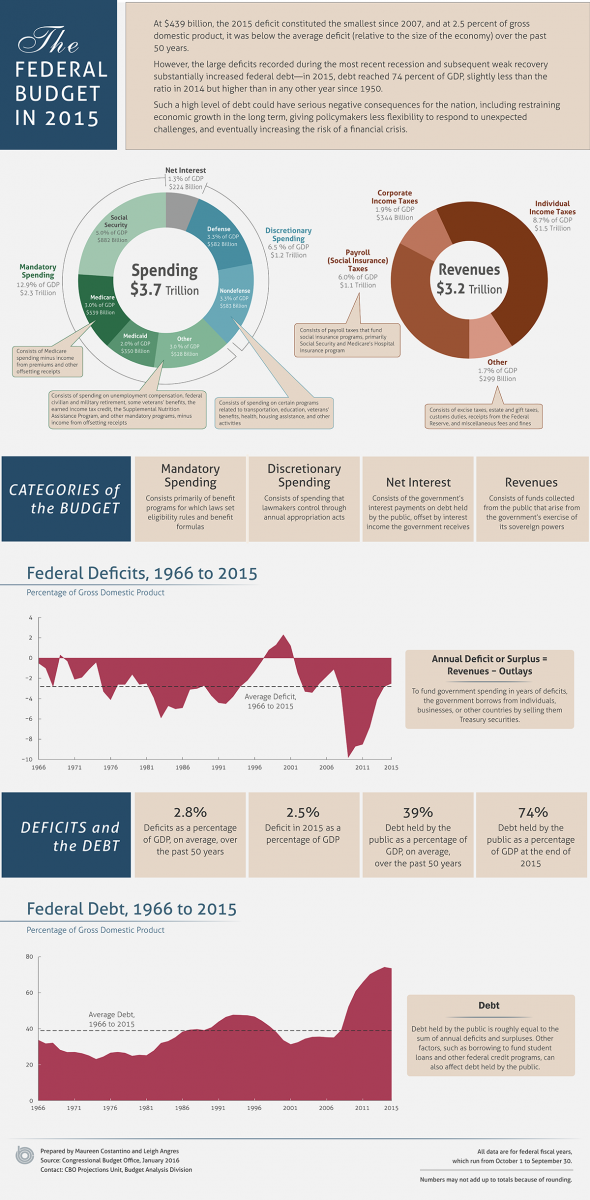
You must be logged in to post a comment.